
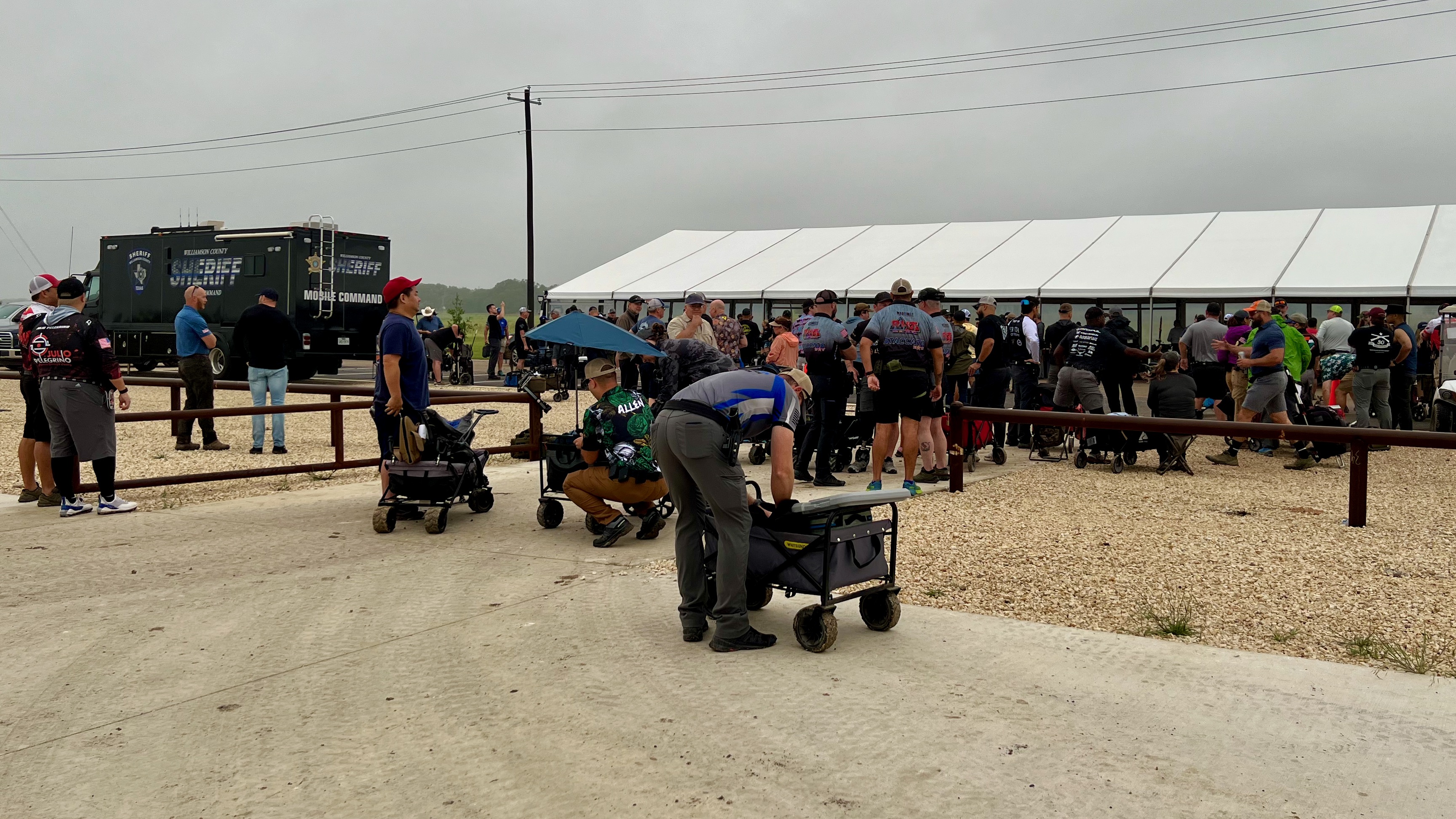
While asking for advice about getting ready for my first major match, my good friend told me that a major match was just another match. I didn’t quite understand what he meant until I attended my first major match. This bit of subtle advice had more to do help stay the pressure I was feeling that wouldn’t help me while competing, but that pressure was also causing me to overthink how I needed to prepare, what I needed to take, when I needed to arrive, and all of the other decisions that I had to make to get everything in order which was eating up a lot of time and energy. After the match, what he said to me made sense. Relax. It’s just another event. Plan for it accordingly. Don’t make it into something bigger than it is.
I haven’t thought much about that realization since then. I’ve attended a handful of other major matches since then. None of which were as big of a deal as the first, but the first was only a big deal because I made it into a big deal.
Great! So why am I writing about this now?
Well, a YouTube subscriber who started competing five months ago commented on a match video asking if I had any advice, aside from the shooting and training part, that I might have for him. Now, this was a very surprising post because YouTube comments are usually nothing but a cesspool of anonymous keyboard expert advice or insults with an occasional attaboy mixed in. So, of course, I gave him a few tidbits that were top of mind and mentioned that I would follow up with a post.
And… here we are.
What To Bring
The starting point for what to take begins with what you would usually take to a local match. While I haven’t written a post about what I take to match, I did write a post several years ago about what I take to a training class and that’s pretty close to what I pack for match (minus the pop-up canopy which I stopped dragging along since it rarely got any use).
Regardless, I’ll go over what I consider to be the essentials in this section although the list won’t be exhaustive. One thing to keep in mind is that conserving your energy for your turn on the current or next stage is critical. So consider lightening the load by taking anything that isn’t necessary out of the load out to minimize what you will have to drag around from stage to stage.
Range Cart
Range carts are life. Okay, I may be exaggerating a little, but hear me out.
Hauling equipment and other necessities from stage to stage takes a lot less effort than carrying that stuff. However, range cart design is important. It should be obvious that it needs to be big enough and sturdy enough to fit everything into it, but that’s not the most important consideration. The wheels. Pay attention to the wheels.
In my neck of the woods, the most common cart I see is the standard issue Academy Folding Sports Wagon. That’s what I started out with. It did it’s job but it wasn’t durable and in less than a year it needed replacing. That led me to the next most common cart I see around these parts, the Academy XL Folding Sports Wagon. To its credit, it has been far more durable. However, it’s more than twice the cost of the smaller one and has a couple of design flaws. First, the front wheels, which pivot, are placed pretty close to each other – this makes it easy for the cart to fold into a thin package, but it likes to tip over when making sharp turns. Next, space between the wheels and where they are attached is virtually nonexistent – this allows the tiniest bit of mud to build up and lock up the wheels forcing one to stop and clear out the muddy mess or drag the cart around with the wheels locked up (like an engaged parking brake) through the mud.
Pay close attention to the wheels and pick something that will be able to make over typical range terrain without locking up when things get a little moist.
Hydration, Hydration, Hydration
Now I’m not exaggerating. Water is life.
I can’t recall a major match that didn’t supply drinking water. However, sometimes the water is not conveniently located at every stage. This can become a problem because once one starts becoming dehydrated there is little to no chance of catching up with it. As such, I make it a point to drink at least one sixteen ounce (or half liter) bottle of water per stage. I also supplement that with an electrolyte packet every six stages starting with the first.
This means that a cooler with water bottles and ice is going to be in the range cart. The number of stages that will be shot in a day dictates the size of the cooler that I use. Again, I want to keep the weight down as low as possible, so I opt for the smallest cooler possible. For a twelve stage day, it might be worth considering keeping a secondary cooler in the vehicle that can be used to resupply a smaller cooler in the cart during the middle of the match which typically coincides with a lunch break. Use that fancy satellite imagery that is available at our fingertips via the internet to check the proximity of the parking area to the bays and take into account the topography to see if juice is worth the squeeze before implementing the resupply strategy.
A cooling towel weighs next to nothing and goes a long way at helping one avoid overheating and heat related illness or injury. Toss one in the range bag to dip in the melting ice in the cooler later in the day as needed.
If it’s going to be stupid hot, then I bring along a portable Dewalt jobsite fan that can keep a personal breeze going all day.
What the Blood Sugar
Sometimes food will be provided during a major match. Other times, you may have the option to purchase food from a food truck. However, both of those calorie intake opportunities are limited to the lunch hour and may not meet one’s dietary requirements.
Packing lunch is always an option. Snacks are a good idea as well. Since these are other things that will need to be hauled around, I suggest taking the hiker approach of light dried food options. Things like jerky, trail mix, dietary nutrition bars. I’m not your nutritionist so you’ll have to figure out what and how much to bring for yourself. Keep in mind that calories will be spent competing, taping, and resetting just like in any other match and the day (or days) may be longer than what you are used to.
Take a Load Off and Get Out of the Sun
A lightweight foldable chair is a good idea unless you have a cart that doubles as a seat, like a ZÜCA. It’s also not a bad idea to toss a sport umbrella that can be clamped to the range cart or the chair in the car that may or may not make it into the cart depending on how much shade is available at the match.
My strategy when arriving at a stage is to set up my chair in the shade and place my cart next to it with the portable fan resting on the cooler (that’s in the cart) oriented towards the chair. Then I sit down every chance I get to minimize energy expenditure. So basically, if I’m not walking the stage before the squad starts, shooting, or reseting, then I’m sitting.
Don’t forget to bring sunblock.
Backup Equipment and Other Doodads
Anything that can go wrong will go wrong, and at the worst possible time.
Edward A. Murphy Jr. (probably)
There are plenty of things that can go wrong that can keep one from finishing the match. Given the associated investments made to attending a major match, it’s prudent to have remedies for equipment failures that will happen when Murphy’s law decides to enforce itself.
Spare batteries are an easy no brainer. They don’t take up much room and don’t weigh all that much. I even bring spares for my spares because there is a chance that you may end up with a squad mate that needs a spare battery and didn’t bring one. That squad mate will likely become your best friend after you hand them a spare. At least, until the end of the match. At a minimum bring a spare battery for the electronic hearing protection and the optic (unless you happen to be shooting irons).
One or two spare magazines and a magazine brush. The magazine brush is essential to keep dropped magazines running throughout the match at ranges with fine ground material (like sand). However, the brush won’t be enough if a magazine suffers a major failure. Hence the one or two spare magazines.
A backup gun for the same division. All sights fail. Whether the optic fails entirely, a front sight shears off, or a dovetail sight walks is of little importance. What is important is that a sighting system failure makes that firearm unserviceable. Heck, the firearm itself may fail due to a broken spring or pin that walked. Thankfully, at the discretion of the match director who must be consulted first, you may be allowed to complete the match with a backup firearm that meets the requirements of the relevant division one is competing in.
The most ideal back up gun is an exact duplicate of the failed gun as the change should be virtually seamless. Same grip. Same weight. Same recoil profile. Same capacity. Same controls. It’s the best option all around that is most likely to be approved by the match director.
The second best choice is a similar gun that at the very least uses the same magazines. Otherwise, one will have to haul around the necessary number of magazines, different magazine pouches, a different holster, and so on. The match director will probably also approve the change assuming it meets the criteria for the division and doesn’t give the competitor an advantage.
Keep in mind that if a change of guns is approved and occurs, then the ammunition will need to be chronographed using both guns unless the failed gun is unable to be fire or is unsafe to fire.
Last but not least, toss a squib rod in the range bag.
Emergency Trauma Kit
Emergency medical response plans should be in place at the range and with the match staff. That said, I still bring my own kit, because match day may be the day that I have to use it.
When to Arrive
Usually the stages of the match will be built one or two days before the first day of the match. This is especially true if it is a multi-day match. Plan on arriving at least the day before the match. This will give you ample time to walk the stages and make your stage plans which can be visualized well into the evening before the head meets the pillow for a final good night’s rest. Then on match day, or match days, the strict and short stage brief and walk through can be used to recall your stage plan and make final adjustments before it’s time to shoot the stage.
Another benefit to arriving the day before is that you will be able to complete the match registration without rushing prior to the match starting which is an avoidable energy expenditure.
Picking Your Squad
I’m sure there are exceptions to this, but in all the multi-day major matches I’ve attended some squads have been designated as single-day squads and others as multi-day squads. Each option has pros and cons.
Single Day Squads
The one day squads are an appealing option to those who have travel constraints. Those who fall into the travel constraints group should pick this option because it’s better to get and enjoy the experience of participating in a major match than to miss it.
Make no mistake though, it is a very long day. I don’t know about anyone else but the local matches around here don’t take the entire day and are limited to five or six stages. Going an entire day to complete ten to twelve stages is exhausting. This will make energy conservation, hydration, and avoiding heat related illness and injury even more important.
A downside to this approach is that it also usually means missing the awards, the raffles, and the celebrations that take place after the match is concluded. This means not getting the full experience. This matters less as major matches really become just another match, but it’s a good time that a major match goer should experience at least once if it is feasible.
Multi Day Squads
There is some game theory behind selecting which multi-day squad is the best option that some competitors participate in. The idea behind it is picking a squad that minimizes the number of stages that are shot where the sunlight can be problematic. There are some mental gymnastics going on here that take into account the stage number, the bay layout, directional orientation of the bays, and so on. I’m not convinced juice is worth the squeeze here and I’ve got better things to do with my time like dry fire, practice, and write these posts. However, I’ve mentioned it and now you know this is a thing.
All that said, multi-day squads are the way to go as it makes the match feel more like shooting back to back local matches in terms of energy expenditure each day. That in of itself I think provides an advantage over the single day squads. Plus getting the full experience of the post match activities only requires one to hang out after their squad is done with their last stage.
The drawback here is that these squads require a bigger time and monetary investment.
Closing Thoughts
Yeah, I did have some advice to offer. Hopefully, this makes gathering what is needed and planning travel a bit easier for that first match.
I did assume travel would be done via private ground transportation. Unfortunately, that is all I can offer. I’ve yet to travel to a match or a class any other way.
One might be tempted to bring additional things that may not be necessary to finish the match. What things? Cleaning supplies. Additional range equipment such as timers, gloves, staplers, and so on. Attempting to name all the possible things would result in a long and inevitably incomplete list so I won’t do that. What I will offer instead is to consider bringing two range bags, one with the essentials to throw in the range cart and another to keep in the vehicle with the extras that can be used wherever one is lodging or can be retrieved over the lunch break.
I’ll tell y’all again what my friend told me, a major match is just another match. Take what’s needed. Nothing more. Nothing less. And do the best you can to not overthink it. I know it’s easier said than done and I hope this post helps.

One response to “How to Prepare for Your First Major Match: Essential Tips”
[…] How to Prepare for Your First Major Match: Essential Tips […]