
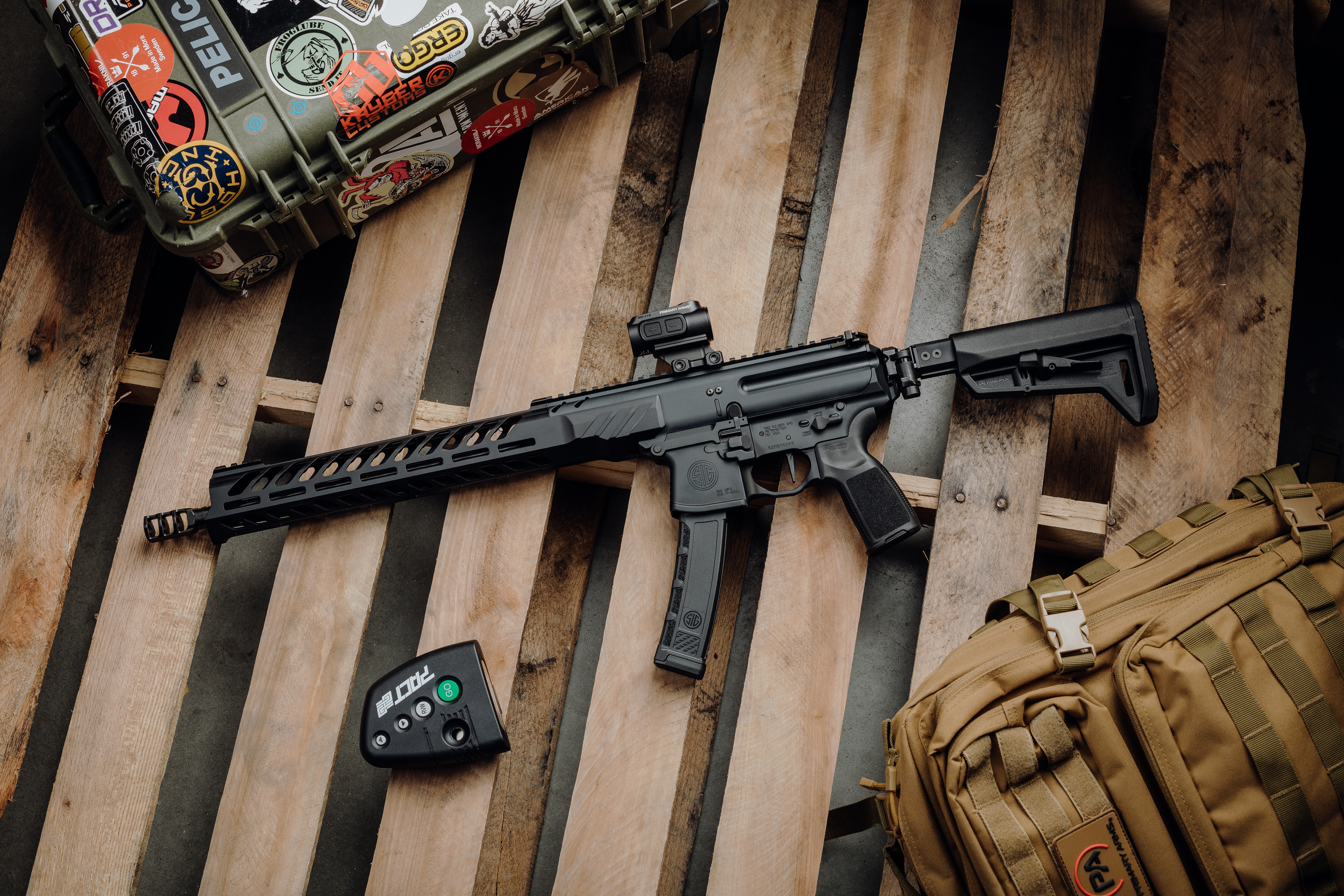
After our friends at Primary Arms stopped by and dropped pistol caliber carbine (PCC) knowledge on us, I invited them to come back with a follow up regarding their thoughts on popular competition upgrades they see their customers most often buying. To our benefit, they came back and delivered.
Uncle Zo
Pistol caliber carbines (PCCs) have seen a remarkable rise in popularity in recent years, especially in competitive shooting disciplines like USPSA, Steel Challenge, and IDPA. Their blend of low recoil, ease of control, and the use of common handgun calibers makes them highly versatile. Whether you’re a seasoned competitor or just dipping your toes into the world of action shooting, the 9mm pistol caliber carbine has become a mainstay in the shooting sports community.
But as any competitive shooter will tell you, having a solid base rifle is just the beginning. The real difference often lies in the upgrades you make to fine-tune your setup. A well-upgraded 9mm PCC can shave precious seconds off your times, improve accuracy, and boost your confidence on match day. From the trigger pull to the optics, every component can either enhance or hinder your performance, depending on how it’s optimized for your style of shooting.
In this guide, we’ll explore some of the most popular and effective upgrades for competition-focused PCCs, breaking down why they matter and how they can improve your performance on the range. We’ll cover everything from trigger enhancements to muzzle devices, showing you how each piece can help you squeeze every ounce of potential out of your carbine.
In this guide, we’ll explore some of the most popular and effective upgrades for competition-focused PCCs, breaking down why they matter and how they can improve your performance on the range. We’ll cover everything from trigger enhancements to muzzle devices, showing you how each piece can help you squeeze every ounce of potential out of your carbine.
Top Recommended Optics for Competition
Choosing the right optic is one of the most important upgrades for a competition-ready carbine. In fast-paced shooting environments, reflex sights, red dots, and 1x prisms are the top choice over magnified optics, and for good reason.
PCCs typically engage targets within 5 to 50 yards, well within the range where magnification isn’t necessary. At the same time, reflex optics and 1x prisms allow you to shoot with both eyes open for better awareness and faster transitions between targets. The simplicity of aiming with a red dot also means quicker target acquisition and faster follow-up shots.

Weight is also a factor when you’re maneuvering between targets quickly. Rifle scopes (combined with a mount) typically weigh 22 ounces or more, while a red dot might be 10 ounces or less. While that might not seem like a big deal, a scope will certainly slow you down somewhat, making them less ideal for the short-range engagements typical in PCC competitions.
Of course, red dots and reflex sights aren’t for everyone, as some folks have astigmatism, which prevents them from using a reflex reticle effectively. Thankfully, there is an alternative. If you have astigmatism, the Primary Arms SLx 1x MicroPrism and GLx 1x MicroPrism offer similar performance with an etched reticle, so it isn’t affected by ocular astigmatism and will work even without batteries.
This etched reticle also provides extra clarity and precision over a simple red dot, making it a compelling alternative for shooters who want a more defined sight picture.
Recoil Reduction: Brakes and Buffers
Recoil reduction is key for improving accuracy and speed during rapid fire, especially in competition. While pistol carbines generate less recoil than rifles, upgrading your muzzle device and buffer system can further smooth out the shooting experience.

Muzzle brakes and compensators are popular for reducing felt recoil and controlling muzzle rise. Brakes redirect gas sideways to counteract recoil, while compensators push gas upward to reduce muzzle climb, helping you stay on target during fast shots. Hybrid options like the VG6 Precision Gamma 9mm combine both, offering a balanced solution for recoil and muzzle control.
For AR-9s specifically, a well-tuned AR9 buffer kit can have a significant impact. Systems like the Taccom 3-Stage Buffer are adjustable to further reduce recoil, particularly bolt bounce, which can improve your dot tracking and follow-up shot speed. For smoother operation, hydraulic buffers like the Kynshot RB5020SS offer a dampened, less jarring recoil impulse, helping you recover faster between shots.
Improving Controls: Mag Releases, Bolt Controls, and Safeties
When optimizing your carbine for competition, upgrading the controls is a smart move to improve your speed and efficiency during a match. The two most impactful upgrades are enhanced magazine releases and safety selectors, which can save valuable seconds and reduce fumbling during high-pressure stages.
An enlarged magazine release allows you to drop your empty magazine and reload faster, without the need to adjust your grip. In competitive shooting, every millisecond counts, and fumbling for the magazine release button—especially under stress—can cost you precious time. The key here is accessibility and ease of use. Look for a release that’s large enough to engage easily but not so oversized that it accidentally gets triggered while you’re firing or moving.

The same logic applies to your other controls. An extended charging handle or bolt release will greatly improve your ability to actuate the firearm quickly, but it’s important not to go overboard. If you have a charging handle that’s too large, it can snag and cause jams, which will instantly cost more time than can be saved.
Safety levers are another area where competition carbines tend to upgrade. A standard safety selector is functional, but in a competition setting, a more ergonomic and user-friendly option is often preferred. Ambidextrous safety selectors, for example, allow you to manipulate the safety from either side of the rifle, which is ideal for weak-side shooting or left-handed shooters. Short-throw selectors (also commonly known as 45-degree safeties) can shave off time during transitions from safe to fire. This allows you to engage your targets faster right off the buzzer.

In any case—whether upgrading your magazine release or safety selector—what you’re aiming for is ease of use and consistency. Never accept less than 100% reliability, especially when you’re modifying a safety. If you are new to gunsmithing or are inexperienced with the platform you’re modifying, it may be worth having a gunsmith install your parts just to be sure they’ve been done correctly.
Magazine & Magwell Upgrades
One often-overlooked upgrade to consider is your magazine and its capacity. The most obvious benefit of high-capacity magazines is fewer reloads, allowing you to stay in the action longer. In competitive shooting, particularly in disciplines like USPSA or 3-Gun, the fewer times you need to reload, the less time you waste.
You can achieve higher capacity by either using larger magazines or by extending your current ones with aftermarket endplates. For instance, a standard 30-round magazine can be extended to 40 or more rounds with the right endplate extensions. These add-ons are popular because they maintain the ergonomics of a familiar magazine while offering the added benefit of carrying more rounds.

While extended magazines give you a significant edge, it’s important to note that reliability is again key. Higher capacity can sometimes come at the cost of feeding issues if the magazine spring or follower isn’t up to the task. Make sure to thoroughly test any extended magazines in competition scenarios before relying on them.
A flared magwell is another game-changer for competition shooters. This upgrade is designed to make magazine changes faster and smoother by increasing the opening where you insert the magazine. It essentially funnels the magazine into the well, making it easier to complete reloads quickly, even under pressure.
Flared magwells come in different designs, some more aggressive than others, and are often customized to suit the shooter’s preferences. The key is to balance the size of the funnel with the overall handling of your carbine. A properly installed magwell should speed up reloads without making the firearm bulky or difficult to handle.
Match-Grade Triggers: What to Consider
Upgrading to a match trigger is one of the most popular modifications for competition PCCs, as it directly impacts accuracy, speed, and overall performance. Match triggers are designed with a lighter, crisper pull with a short reset, providing more control for quick double-taps. They are often available in different configurations, including single-stage and two-stage options, each offering unique benefits to competitors.
Single-stage triggers are favored by many competitors for their simplicity. These triggers break cleanly with no noticeable take-up, meaning the shooter can quickly pull the trigger without needing to feel for a second stage. This makes single-stage triggers ideal for fast-paced competition shooting, where the goal is to minimize movement and maintain precision. If you’ve ever shot a 1911 pistol, a good AR-9 single stage trigger will feel similar.

On the other hand, two-stage triggers offer a bit more control by providing a distinct take-up before hitting the wall where the trigger breaks. The first stage allows shooters to prep the trigger before firing, which can be helpful for more precise shots or when shooting from awkward positions. While two-stage triggers are slightly slower than single-stage models, some competitors appreciate the additional feedback and control they provide.
Regardless of the type, match triggers generally come with a lighter pull weight—often in the range of 3 to 4 pounds—which allows for quicker and more accurate shots. Some competition shooters opt for even lighter triggers, but it’s important to balance weight with safety. A trigger that’s too light can increase the risk of accidental discharge, particularly when under stress or when transitioning between targets rapidly.
Proper installation is also crucial when upgrading to a match trigger. Triggers that aren’t installed correctly can lead to malfunctioning, reduced reliability, or even safety hazards, such as a negligent discharge. Competitors should ensure that their triggers are installed by a qualified gunsmith or follow manufacturer instructions closely to avoid issues. As always, we recommend testing your firearm thoroughly at the range before bringing it to a high-movement competition setting.
Wrapping Up
Upgrading your pistol caliber carbine for competition is all about fine-tuning it to match your style and needs. From optics and recoil reduction to controls, magazines, and triggers, each upgrade plays a specific role in enhancing your performance on the range.

By carefully selecting components that improve speed, accuracy, and handling, you can give yourself a competitive edge while ensuring your PCC feels intuitive and reliable during matches.
However, it’s important to balance performance with safety. Whether you’re upgrading a trigger or installing a new buffer system, proper installation and testing are crucial to ensure your firearm functions correctly under pressure. A well-upgraded carbine can make all the difference in a competition, but safety and reliability should always come first in any firearm modification.
One response to “Popular Pistol Caliber Carbine Competition Upgrades”
I’ve been looking for a “trunk gun” to supplement my EDC handgun for some time now. I didn’t want to keep an AR in my trunk, living in northwest Oregon, it can be rather damp at times. I tried a stainless Mini-14, but I was looking for something I could get from my car that that wouldn’t freak-out the local soccer moms. I came across a Kel Tec Sub 2000 at the local Cabella’s in .40 S&W. Exactly what I was looking for. Folds into a lap-top carry case. I’m loading up on Beretta magazines and some upgrades, it fits my bill exactly. Accurate out of the box, zero malfunctions with self defense ammo and low profile.