
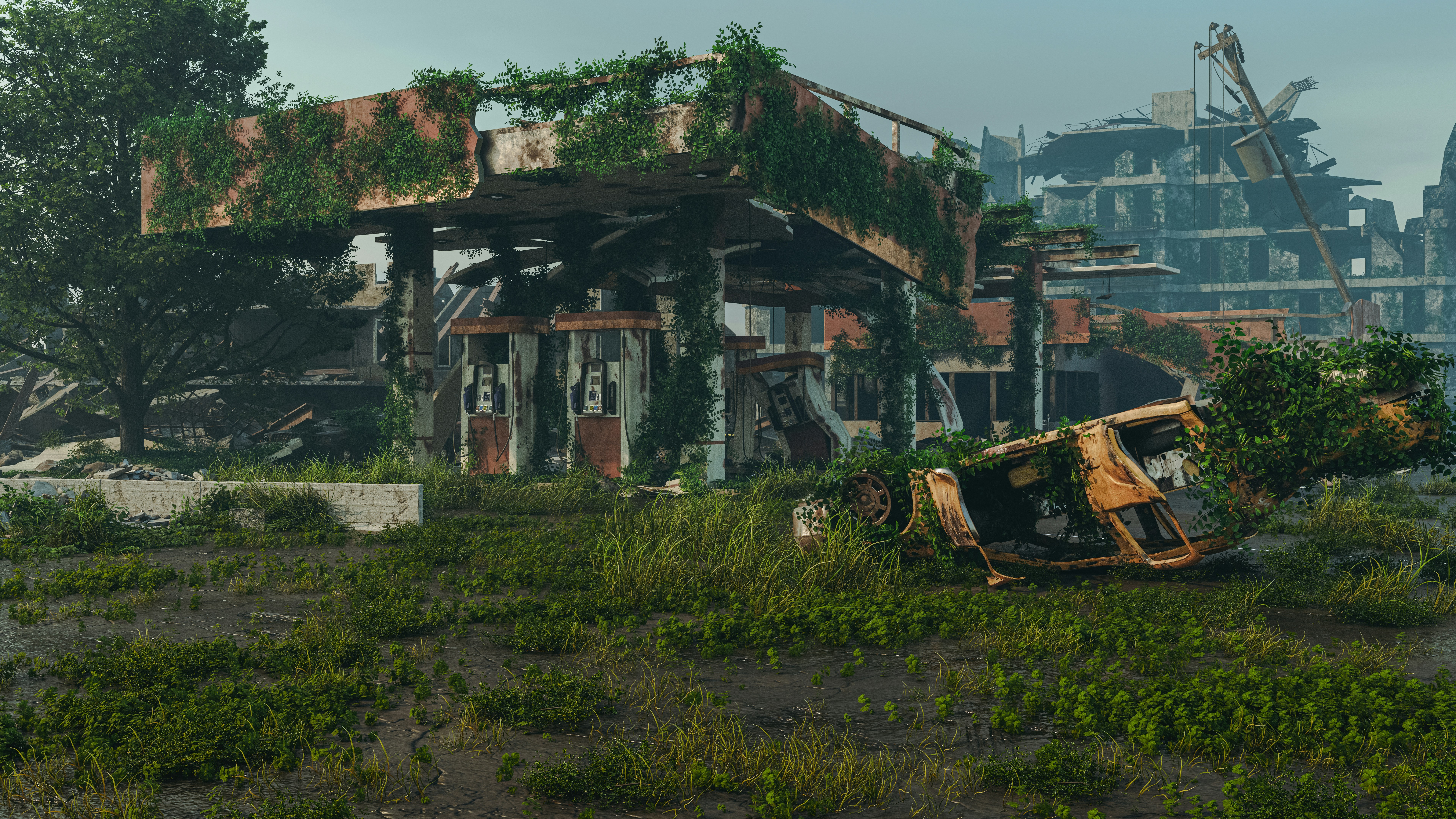
I’m writing this post in October 2024, with the election just around the corner. Crime has been climbing, immigration’s a tangle, and the economy’s on shaky ground. Political division feels deeper than ever, infrastructure’s crumbling, and global events are spinning out of control. I don’t have a crystal ball to say what’s coming or when, but you don’t need tea leaves to see the writing on the wall—things look rough ahead.
Most folks involved in the prepper communities will tell you that if you are just now thinking about starting preparations for difficult times you are way behind the curve. They are probably right. In fact, Joe Dolio reminded me of that in his recent blog post aimed at, once again, helping folks find their people. The signs of troubling times ahead have been abundant for quite some time and things that point to their imminence have been accelerating quickly since the lockdowns. The path to self reliance isn’t easy and there are no shortcuts. It demands significant investment.
So, is it too late to start preparing? I don’t have the answer to that. There is an old adage that says, “the best time to start preparing was long ago, but the second best time is right now”. Does that adage still hold true? Again, I can’t answer that. All I can offer is that whether you are starting right now or started a while ago, today is as good a day as any to improve one’s self reliance.
Where to begin?
First off, I’m going to tell you right now to be prudent. Don’t go off and take a bunch of debt to prepare for something that may never come to pass. I have very little doubt that times are about to get very tough. I suspect growing economic pressures will precede anything catastrophic. As such, taking on debt is a bad move. Do what you can within your means, but nothing beyond.
When I first got into “emergency preparedness”, I came across Jack Spirko and the Survival Podcast. While that resource gets into the weeds of the survival lifestyle, there are few nuggets of knowledge that have stuck with me as guiding principles:
- Whatever we do to be better prepared, those things should help us live a better life even if nothing bad ever happens.
- The likelihood of a disaster is inversely proportional to its magnitude.
- Self-reliance is about reducing dependency on the proverbial system which is much easier to do with the support of a community than going about it alone.
In other words, while there is nothing wrong with stacking MREs, weapons, ammunition, and survival gear per se, that activity by itself doesn’t do much more than fill available space.
Consider bad things that happen frequently in your area starting with things that have happened to you. Things like:
- Abrupt loss of income: How long can you keep the lights on and food on the table before replacing that income? Can you adapt without losing the roof over your head if you were only able to replace part of the lost income?
- Power or water outage: Can your household get through a few hours without power or water unscathed? What about a few days? On the hottest or coldest days of the year?
- Forced evacuation: Are you ready to get the heck out of Dodge right now?
Attempting to prepare for large-scale long-term apocalyptic scenarios when one is ready to deal with a single localized short-term fairly common event is a fool’s errand.
So where should one start?
The best place I know right now to find a somewhat prescriptive plan to get started with emergency preparedness is Paul T Martin’s Ready Citizens Manual. It’s a well thought out and organized manual that includes an action plan and recommendations for acquiring items needed for food, water, cash, health, sanitation, energy, lighting, security, and communications.
While simultaneously looking at putting a plan using the aforementioned manual into practice, it would be exceptionally prudent to start building a community of like minded people. The operative word there is “building” and not “joining”. There is a reason for this, but I’ll defer the details and how to go about it to Joe Dolio’s recent post on the topic mentioned earlier in this post.
Quick Start: Preparing for a Camping Trip
Preparing for a camping trip is, in many ways, putting an emergency preparedness plan into action. Think about it. One has to plan for survival in a known environment and prepare for variables that are mostly out of your control for a specific duration. We can use this to our advantage as an inexpensive way to start building self sufficiency and put it into practice. Let’s work through how this might work.
We can pick the location later, but we have to start with a duration. To start small, we can begin with a simple overnight camping trip.
So what do we need for an overnight camping trip? Well we will need:
- Shelter for the night,
- Appropriate clothing and footwear,
- Enough food for at least two meals,
- A plan for water to drink, cook with, and wash with,
- Tools to set up and tear down camp with in addition to prepare meals with,
- A way to make fire for cooking, sanitation, and possibly warmth,
- Communication tools to connect with call for emergency assistance and stay up to date with weather and local current events,
- Emergency medical supplies to cover everything from life threatening bleeding trauma to minor boo boos,
- Light sources to see in the dark,
- Energy sources to power devices (don’t forget about medical devices),
- Medications,
- A plan to deal with bodily waste,
- Self defense tools,
- Hygiene items,
- A plan to pass the time when there isn’t work to do,
- And a way to pay for transportation costs associated with getting to and returning from the destination.
Did I miss something? Probably, this isn’t an exhaustive list. You might already have a better list and if not I’m sure your list will be better once you make one or update the existing one.
Now that we have our list, the next step is to gather the items and stage them. I know we haven’t picked a destination and don’t know exactly when we will go on this camping trip. But let’s get everything together and ready to go.
Start with items you already have on hand in your home and check them off the list. What you are then left with is a shopping list for the items you need to be sufficient for one night. Well, almost. There is one more thing to do before we are truly ready to go shopping.
I’m going to put one constraint that will make sense at the end of this post if it doesn’t make sense immediately. That constraint is: All items must be staged in such a way that they can be transported to and loaded into the vehicle in one pass. Meaning at a moment’s notice, we can say let’s go camping and the entire group can walk out of the house with everything needed for the trip quickly.
That constraint might cause some selected items to be removed because they are too big or bulky and force us to either find another solution or add something to the shopping list. It may also add camping or hiking packs to the shopping list so that small items can be organized into a single carry-able unit.
Additionally, the constraint will also suggest skills that may need to be developed because the camping will be a lot more primitive than initially expected given the size and weight limitations imposed. What skills? Shelter building, fire building, water collection and purification, wood working, and so on.
Now we are ready to go shopping. Remember to buy what you can when you can with your available means. Don’t go charging up the credit card just to complete this exercise in a hurry.
Once all of the items are assembled and staged, we now have everything we need to go on an overnight camping trip. We also have what we need if we need to bug out overnight for something like a mandatory evacuation. We also have everything to bug in overnight for something like a bad storm that knocks out local utilities overnight.
Best of all, we can go on that overnight camping trip with just these items as a test run to see what we missed or what skills we need to learn in order to be better prepared to survive overnight.
Increasing and Improving Emergency Preparedness Duration
With the ready to go overnight camping set up, we can now begin improving it so that we can go on longer trips with decreasing reliance on the grid.
How do we go about that?
The most obvious step is to improve the camping supplies so that we can go on a multi-day trip at a moment’s notice. That entails:
- Increasing the amount of packed food,
- Improving water collection and sanitization plans and equipment,
- Adding the ability to gather, fish, or hunt for food,
- Packing a more clothing items and adding the ability to wash and dry those item,
- Increasing packed medications,
- Add items to repair clothing and shelter,
- And so on.
We can also do things like:
- Preload vehicles with get home bags (which aren’t all too different from the overnight camping packs),
- Add cash to the plan to reduce or eliminate the reliance on payment methods that require the grid to be operational,
- Add a NOAA capable radio (or two for redundancy) to stay informed without having to rely on the smartphones,
- Add maps, compasses, and GPS devices for land navigation without relying on smartphones,
- Install generators,
- Start producing our own food and have plans to scale food production,
- And so on.
At some point the items will become too many or too heavy to transport out of the house in one fell swoop. That’s okay. With some advance notice, those things can be loaded into a vehicle for transport if need be. Additionally, those items can be used for longer “bug in” situations.
Depending on how far along one gets into preparedness additional supplies can be stashed at a bug out location or in resupply caches along the route to the bug out location. Ideally, that location is one where the group and community will regroup at, in the event of a large-scale scenario which I still don’t think is likely in the imminent future (but I don’t have a crystal ball).
Once again, I will remind readers to avoid the Chicken Little mindset. I get that things look bad. I, like many others, think things will continue to get worse. While the potential for disastrous large-scale events exists, debt is one of those things that decreases one’s ability to be self-sufficient and decreases our preparedness.
Stop worrying about whether or not it’s too late to start preparing. There really is no way to know for certain.
Start small. Build your community. Live better.

4 responses to “Is It Too Late To Start Preparing?”
Thanks, Zo! Very timely post. I just had a conversation about this with my family. This just validated my thoughts on the subject.
[…] the previous post, we asked the question, “Is it too late to start preparing?” While we couldn’t answer that without a crystal ball, we did look at some resources to […]
[…] Is It Too Late To Start Preparing? […]
[…] have to be dedicated survival food. Whatever you do, do something. At the beginning of this month, Uncle Zo asked, “is it too late to start preparing?” With groceries on the shelves and things humming […]