Something that I find a lot of people struggle with or don’t have at all. It is also something I’ve struggled with, find difficult to do, and, admittedly, don’t always have. And that is a plan. More specifically a practice plan. This applies to all types of practice, including dry fire practice.
Now I might be projecting a little here, but as I help more and more folks get better with dry fire practice, it seems like folks often confuse a routine for a plan. That’s not to say that a routine doesn’t have a place in plan, but one doesn’t require the other and neither guarantees the inclusion of the other. Even if and when one begins with a plan, practice can sometimes become a mindless routine. And a mindless routine is something that should be avoided since it violates the, arguably, most important tenant of dry fire practice – being present.
Mindless routine has additional downfalls. One of which is that it becomes boring, if not tedious. And when practice becomes boring or tedious, it becomes something to avoid. That may eventually lead to skipping practice or stopping practicing altogether. Neither of which is beneficial to skill development.
In previous posts within this series, we’ve discussed tools of the dry fire practice trade, the value of presence, the importance of awareness, and covered various drills that can be used in practice. While all of these things have a place in practice, we can get more mileage out of them when they are done in conjunction with a plan. The plan gives every drill in each session a specific purpose to help us achieve a goal.
As you may have guessed, plans require goals. While risking sparking a debate on goal achievement and personal development frameworks, I’m going to mention SMART goals because they have been a widely accepted framework for effective individual personal development. SMART is an acronym which stands for: Specific, Measurable, Achievable, Relevant, and Time-bound. I’ve found that the more specific the goals are, the easier it is to come up with a plan to achieve them.
The easiest way to convey breaking down goals and turning them into dry fire practice plans I can come up with is to work through a hypothetical example starting with the general shared goal anyone who engages in dry fire practice has. That goal is to get better.
Becoming a better shooter is way too vague and broad. We can be more specific than that. So let’s make that more specific and rephrase it as: to become a better USPSA competitor.
That’s better, but it’s still not specific enough. So let’s dial it in even more: to become a USPSA Carry Optics Grand Master.
That’s pretty specific. It’s also measurable thanks to USPSA’s classification system. But is it achievable? Assuming one is able bodied and in good physical condition, it should be. Otherwise, then one probably needs to set some fitness goals and work on them. But let’s avoid going down that rabbit hole and steer back towards dry fire.
We can further breakdown the technical and practical skills one needs to become a GM and create more specific goals from that. Some of those goals can even come from match performances after identifying one or two skills or abilities that need to be shored up.
Once we are down to one or two specific skills that can benefit from improvement, we are now ready to create a practice plan. However, improvement doesn’t have to be the purpose of all practice plans. I’ll circle back to that in a bit. For now let’s stick with improving one or two things to build a couple of practice plans.
Let’s assume that match performance demonstrated that our standing draw to first shot is averaging about two seconds and we know we need to get that down to a second to have a shot at putting up GM class hit factor scores on classifier stages. We can set a SMART goal as follows: develop a 1.5 second draw to first shot with the Carry Optics division equipment in one week. That’s specific, measurable, achievable, relevant, and time-bound. And we can plan our next dry fire session to include one or more drills to work on the draw to first shot speed and accuracy, such as the drill covered in part 2 of this blog post series.
Let’s also assume that match performance demonstrated that our average standing reload takes about three seconds and that is also a process that needs to be compressed into less time to improve hit factor scores. A SMART goal for this might be: develop a 2 second speed reload with the Carry Optics division equipment in one week. We may or may not want to work on two goals during the same week. That’s a decision that should be informed by available practice time. Depending on that decision we might also want to add one or more drills to work reload time improvement, like the one presented in part 3 of this series. Or make that a plan for future dry fire sessions.
Whether or not we work on those goals simultaneously, at some point it makes sense to come up with a new plan or adjust the existing plans to include drills that combine both skills. Something along the line of the Four Aces drill covered in part seven of this series.
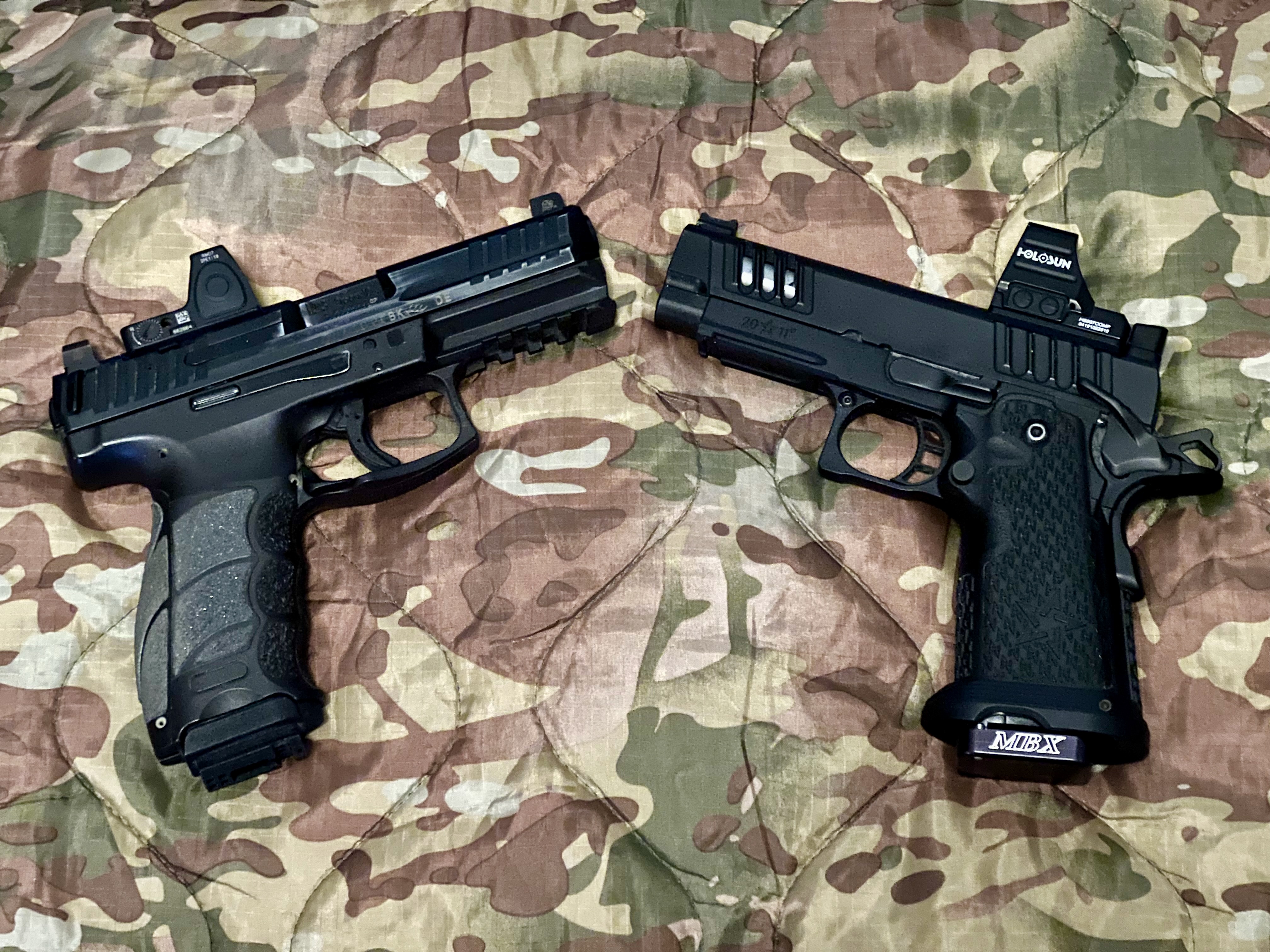
While this example has been hypothetical, it isn’t far off from my plan for this week as I make the transition from shooting USPSA matches with the Staccato P in Limited Optics division to the Shadow 2 in Carry Optics division. My presentation and reloads, quite literally, need work. As such, my plan is as follows:
- 4-3-2-1 Reverse Draw Drill; No Time Limit
- Draw to First Shot; 2 second par, step -0.1 seconds to 1.5 second par
- Aimed & prepped trigger, reload, aimed & prepped trigger; 3 second par, step -0.2 seconds to 2 second par
- Four Aces at 10 yards simulated; 5 second par
The point is to not randomly or without purpose select drills and compose a routine, but rather to select specific drills to work on specific things we want to improve. Once the SMART goals are achieved, we create new SMART goals and create new plans to achieve those.
Circling back as promised, improvement doesn’t always have to be the purpose of a plan. We might have a goal to pass a qualification or perform at a certain standard and have already developed all of the individual skills and mechanics to the point where the qualification can be passed or the standard can be met. When that happens, the goal may become something along the lines of: Maintain the skill level required to pass the qualification (or meet the standard) next week (or next month). That goal, which is still a SMART goal, might result in a plan where dry fire practice is nothing more than the upcoming qualification or standards course of fire. Again, it’s important that this plan doesn’t become a mindless routine. As such, we need to be watching or specific skills or mechanics that might benefit from a little focused tune up. If one or more are identified, then goals can be made to tune those things up and dry fire plans can be adjusted accordingly.
The bottom line is your dry fire practice needs a plan and that plan should be informed by SMART goals (or goals using your preferred goal achievement framework).