
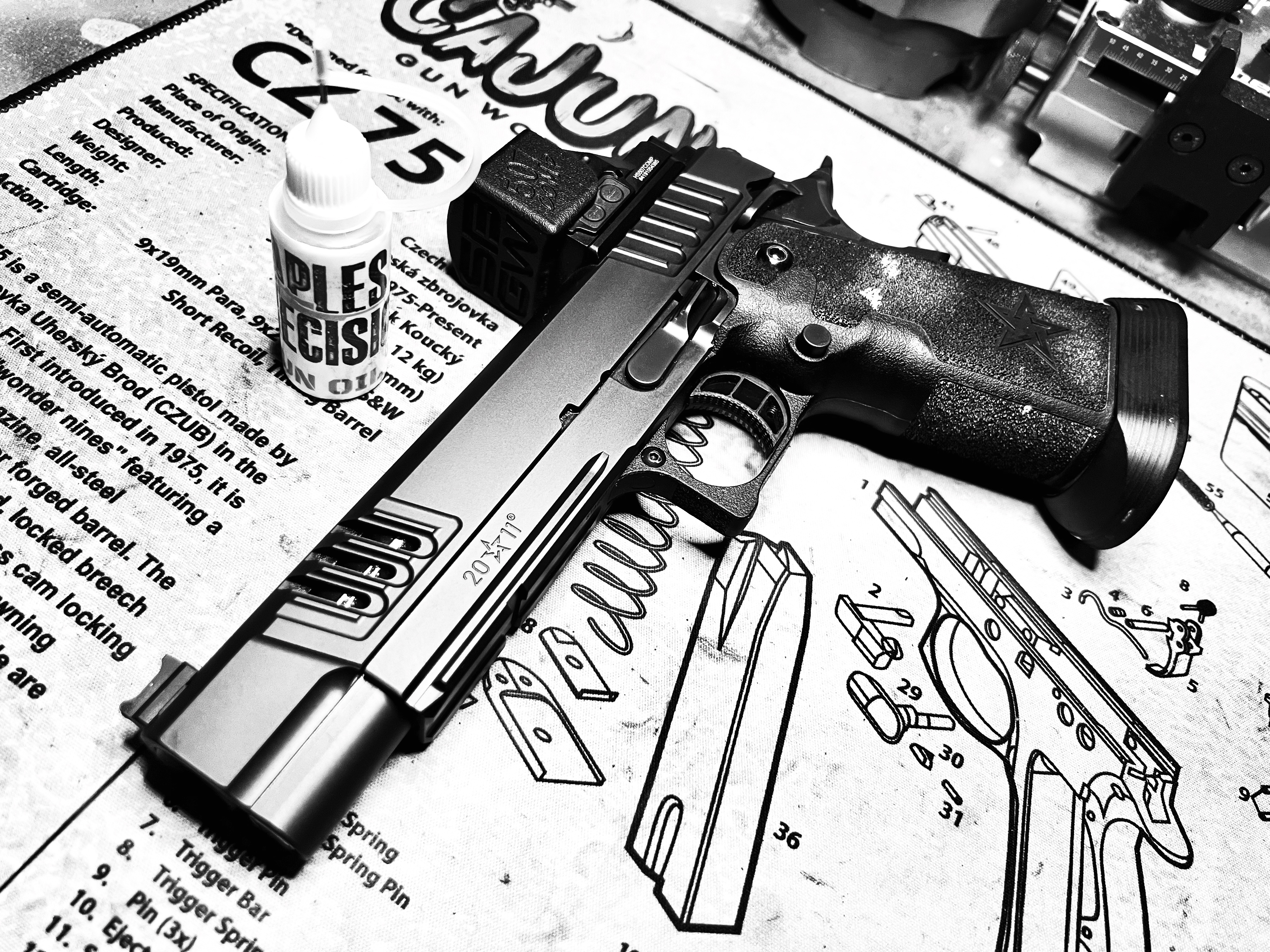
While wrapping up final edits on the Greybeard Actual Pistol Skills Development after-action report, I noticed the Staccato XL hit the 2,000-round milestone. My first thought? “Geez, that was fast!” But when I checked the timeline, the gap between the XL’s 1,000-round post and this one wasn’t any shorter than other pistols I’ve run hard in competition. The numbers don’t lie, but they don’t tell the whole story either. Truth is, the XL racked up those 1,000 rounds in just 10 high-volume shooting days—three local matches and Matt Little’s class. However it happened, it’s time to dive into the details.
Return from the Mothership
If you caught the last milestone post, you might remember the XL had a single hammer follow incident right at the 1,000-round mark. Once I got past the denial phase, I was pissed. Frustration led to a snarky customer service survey response after a couple of email and phone exchanges with Staccato didn’t instantly produce a return label. In hindsight, a bit more patience would’ve kept me from being a jerk. The reality? Staccato stepped up. They had the XL back in my hands two weeks after I shipped it, with a total turnaround from initial contact of under three weeks.

When I say Staccato took care of me, I mean it. They kept me in the loop every step of the way—from the moment they received the pistol to the day it shipped back. This was right on par with the stellar customer service I got with my C2. And the XL? It’s been flawless for the last 1,000 rounds. Even better, the gunsmith’s trigger tuning is next-level. The break is lighter and crisper than when I first got it. It took a minute to adjust, but I’m loving every pull.
Recoil Tuning
As soon as the XL came back from Staccato, I hit the workbench to tweak the recoil system based on a tip from a Master-class buddy who also runs an XL. I swapped the factory 7# recoil spring for a 7# variable power recoil spring and added an aluminum shock buffer. The result? Exactly what he promised: that slight muzzle bounce at the end of the slide’s cycle is gone.

The tuning also seems to have tweaked the slide’s perceived cycle time. I know, words like “seems” and “perceived” sound wishy-washy, and I don’t have hard data to back it up. But the recoil profile feels different. I’m no longer mistaking slide motion for muzzle rise as I track the dot’s arc during recoil—likely because that final muzzle bounce is history. The recoil still feels as smooth as before, but now there’s a subtle quickness to it, a liveliness that wasn’t there. Yeah, this is subjective as hell, but the point is I dig it. A lot.
On the Horizon
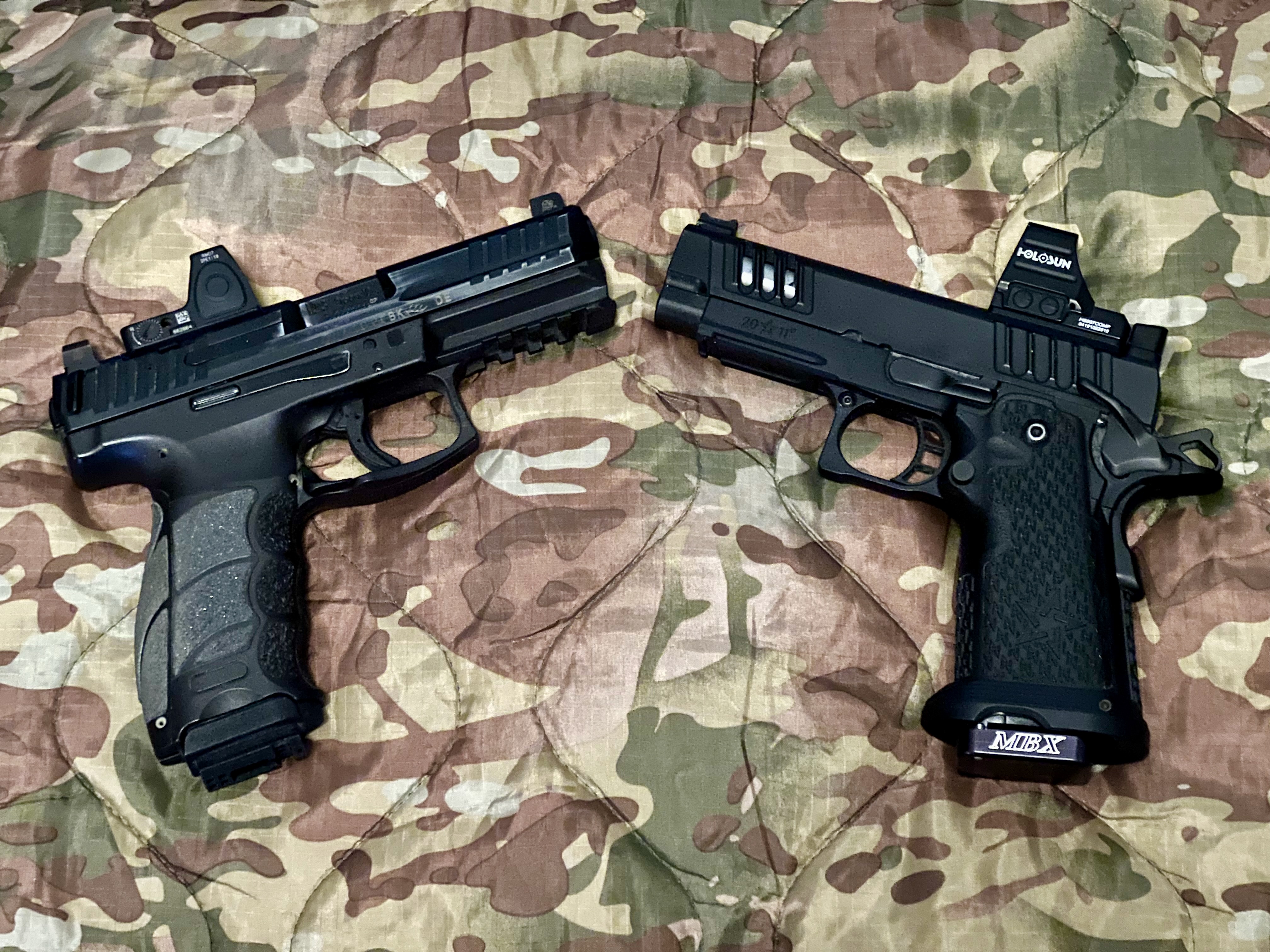
Given my plan to keep hammering local USPSA matches, I’m betting the Staccato XL will close in on 5,000 rounds by the end of 2025. I expect it to run like a champ, just like my C2 has. Unless something wild happens, I probably won’t write about it again until then—with one exception. I’m swapping the Holosun 507COMP optic for a Cyelee Bull X Pro as soon as I grab a new optic mounting plate. The 507COMP isn’t slacking; I’m just stoked to play with the massive Cyelee optic they sent me. So, expect the XL to pop up in some optic-related posts soon.
Leave a Reply