
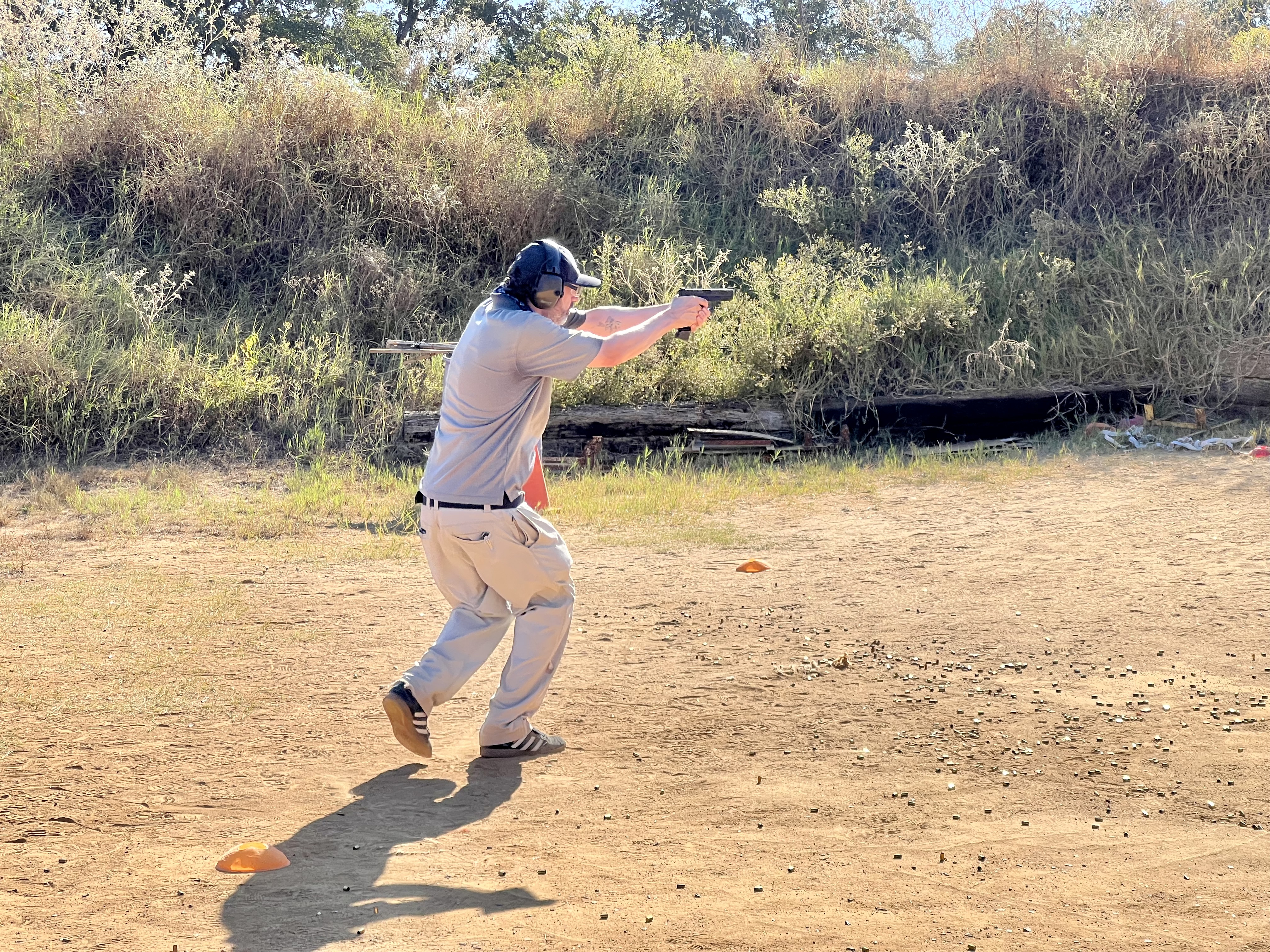
Returning readers are most likely aware that I’ve spent the better part of the last two months preparing for my third attempt at a turbo pin from Gabe White‘s Pistol Shooting Solutions class that I just took. And those who are reading this but were not aware now are.
As per usual, this post serves as my after action report for it. However, I suspect that this after action report will be uncharacteristically brief.
Why? The answer is rather simple. The core and essence of the course remains the same. To that end, I already covered the class structure and content in the after action report following the first time I attended the class. The report following the second time I attended the class where I earned a light pin rehashed the content and took a more nuanced look at Gabe White and his budding music production career. Furthermore, I’ve performed a relative difficulty analysis of his technical skills tests and even shared my dry fire practice approach to them.
So instead of rehashing all of that all over again, this report will be a retrospective analysis. But before we get into all of that, let’s cover the gear I used in the class because folks are always curious about it:
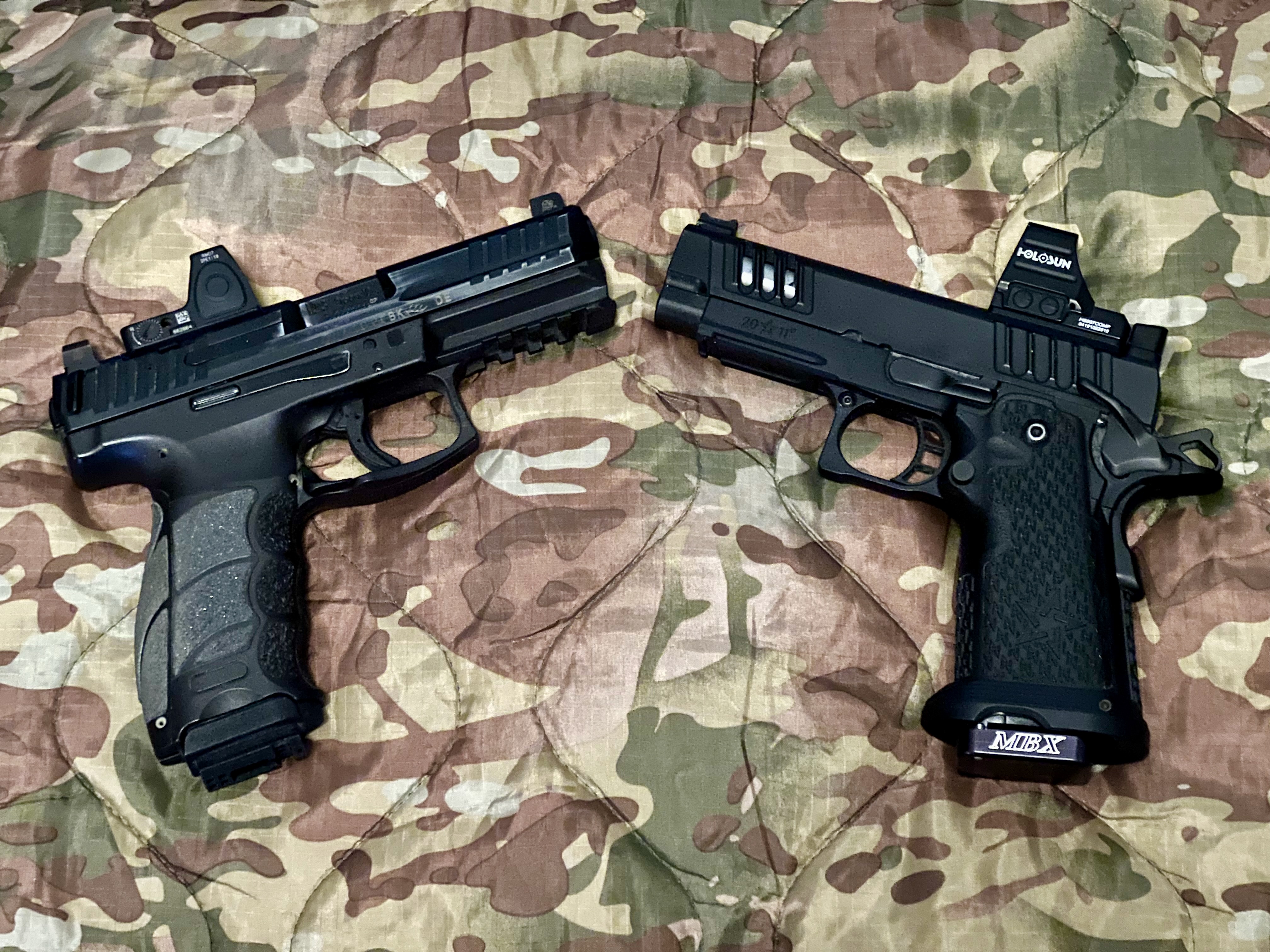
- Gun: Staccato C2 with a Holosun 507COMP
- Holster: JM Custom Kydex IWB 3 holster on my strong side
- Mag pouches: Concealment Solutions Venom Single Magazine Carrier x2
- Belt: Nexbelt Titan EDC Belt
- Ammo:
- Fenix Ammunition 9mm 147gr Ammo (round count for the course was roughly 960 rounds)
- And one box of Federal Syntech Action Pistol 9mm 150gr ammo for the technical skills tests
With that out of the way, let’s get started with the after action report.
Range Pokemon
I suppose the best place to start is with the turbo pin that I was hyper focused on earning. It’s the elephant in the room. The short of it is that the turbo pin continues to be the range Pokemon, as Caleb Giddings calls performance based class awards, that eludes me.
I choked. It’s as simple as that. Every single one of the eight test runs came up short due to at least one mechanical error. A fouled grip. A janky trigger press. Loss of target focus. Each of those errors added time or resulted in a hit outside of the target A, or zero down, zone that compounded to some other than a turbo pin run.
I suspect that a minor contributing factor was the swapping of ammo between the more affordable Fenix Ammunition ammo I used throughout the class for the more premium Federal Syntech I used exclusively for the scored runs. While the differences in point of impact and recoil impulse between the ammo are negligible, they do exist and I suspect that change didn’t do me any favors.
That said, the primary source of the mechanical errors was due to tension I allowed to creep in due to the test pressure. The most frustrating thing about this is that I took every mental precaution I know of to stave off the tension. I cleared my head. Visualized each drill. Did the pre-run breathing exercises. Checked my indexes. Yet every single time the shot timer beeped the same thought entered my head and remained until the final shot was fired. That thought was, “A turbo pin run is in the realm of possible” which is a result oriented mental focus that allowed tension to creep in and errors ensued.
The worst part about it is that the thought wasn’t false confidence. It was a known fact evidenced by the results I experienced in practice and even in class when the drill wasn’t being shot for score towards a pin.
While I am disappointed that I didn’t walk away with a turbo pin, I’m not mad or upset by it. In fact, I’m quite happy and pleased with test results which yielded my second light pin. The reason I’m happy is because it affirms that even under pressure and with less than the best technique I am capable of I am still able to put good hits on anatomically vital structures in a hurry.

So yeah, I’m disappointed that I wasn’t able to put six hits into the A, or zero down zone, in two seconds with my defensive carry tool from concealment. Of course, I want more skill so I can do that or better consistently in less than ideal conditions. But knowing that I can do that given two to three tenths of a second longer gives me a good deal of confidence. Confidence in my ability to solve a problem to which the only answer is a shooting solution should I ever be faced with one. How can anyone be mad at that? I certainly am not one iota mad about that.
Tactical Timmy Enhancement Package
Several folks say that Gabe White’s range Pokemon (the pins) are marketing genius because the desire for another attempt to earn one results in returning customers and repeat business always desirable to business owners. I agree with them. The technical skills tests and the pin make up a significant portion of the class and I’ll admit that catching that elusive turbo pin certainly played an influential role in my decision to attend the class a third time. The thing is, technical excellence in shooting is heavily emphasized in the class. However, skill is only part of the equation. The other parts of the equation are tactics and mindset which are also emphasized in the class.
There is no such thing as being too good at fighting for your life with a pistol.
Gabe White
Towards the end of the second day, Gabe White referred to his class as “Tactical Timmy enhancement package #1” which I found both amusing and fitting. To one extent or another, each student that attends the class has Tactical Timmy tendencies. While Tactical Timmy is sometimes used as an insult, the term describes somebody who is obsessed with everything tactical and being the best at it. To that end, those who attend the class already have a sound foundation in defensive use of a pistol, but are investing in becoming better. However, I wouldn’t refer to this class as package #1 because it implies that after taking the class once one needs to look elsewhere for package #2 and that’s not accurate. I think it would be better to refer to the class as a power up because each time I’ve taken it I end up leaving with something different that accelerates my development as a defensive pistolero.
To an extent, I believe I’ve left with something different each time due to changes in my perspective that have resulted from my improvement over time. That change in perspective alters how I filter the information presented and the work done in class which affects what I retain. In other words, while the class hasn’t changed all that much since the first time I took it four years ago, I have and therefore I’ve gotten something different out of it each time. I’ll attempt to illustrate what I mean in more concrete terms.
When I took the class in 2020, I was a minimally competent defensive pistol practitioner. I was unsure if I could keep up in class and doubted if I could even hit the target on some drills. In the class, I saw the “art of possible” demonstrated by other students and by Gabe White. I stepped out of my comfort zone and realized that if I was willing to invest in doing the work, then I might also be able to perform at those levels. That realization led me to start practicing and increase my participation in activities like competitive shooting sports using my everyday defensive tools. Looking back on that and after rereading my AAR on the class, I now realize that what I retained and took away from that class was almost entirely skill focused – more specifically around the role that frequent dedicated practice has on skill development.
By the time I attended the course again in 2022, I had logged over a hundred hours of formal training, earned a C classification in USPSA and Sharpshooter classification in IDPA, and had earned my initial Rangemaster instructor certification. I was confident that I was now a proficient practitioner and wanted to affirm my investment. As such, I went into the class with the goal of leaving with a pin. Which I achieved with a light pin. While I had changed, most of the information that I retained and internalized was still predominantly skill focused. However, it was more nuanced with much more emphasis on how to practice better by planning practice sessions better and being mentally present and actively observant in the sessions.

This time around I paid more attention to how the class was organized and run. The best way to say it is that I was listening while wearing my instructor hat. That’s not to say I wasn’t paying attention to the material as a student should. In fact, I still heard bits and pieces of skill related bits presented in class, but I internalized far more of the tactics and mindset aspects of the course. While I didn’t achieve the turbo pin goal I had set and practiced for, I was keenly aware of the minor errors that were paid with fractions of seconds and hits just outside the A (or zero down) zones on the target. Furthermore, the feedback I was getting from Gabe White matched what I was aware of. I suspect it allowed me to subconsciously relax the skill specific filters which allowed me to internalize more of the tactics and mindset bits.
For example, there is a good deal of discussion and work surrounding the use of movement. While moving and shooting in and of itself is a skill, it is some that can be used to solve “rule 4” problems. Rule 4 refers to the fourth rule of gun safety typically recited as, “know your target, what’s around it and behind it”. In the context of defensive firearm use, what’s around and behind those who must be shot is usually others who must not be shot and probably shouldn’t have a gun pointed at them. Movement in this context can be used to create a line of fire free from folks who must not be shot. However, movement can also be used to create new or improve existing advantages or to remove or reduce existing disadvantages there by increasing the odds to secure a win condition. Likewise, barriers can be used in the same fashion.
There are plenty of examples that I could go into the mindset bucket, but I’ll highlight one aspect of mindset that really stuck with me as a takeaway. That aspect is confidence. In one of the blocks, Gabe White referenced the British SAS motto: “Who dares wins”. The motto emphasizes the importance of courage, initiative, and willingness to take calculated risks in order to achieve success especially in the face of uncertainty and adversity. Confidence, and I mean real confidence not a false sense of it, improves one’s willingness to dare.
When Gabe White referenced the motto towards the end of the second day, I found myself thinking back to the first head to head challenge on day one where I mentioned that I wanted a shot at going head to head against Gabe White and he indulged me. The challenge mimics a “drawing from the drop” scenario. It’s a high stakes scenario where a defender is faced with an armed adversary who already has a gun in hand and decides that the right move is to draw and shoot first. In the challenge, the person with the holstered and concealed weapon initiates the challenge by drawing to a steel target 10 yards away. The other person starts with their gun in hand in ready position not aimed at their steel target that is 15 yards away and reacts to the drawing action of the other challenger that is standing on the firing line next to them. The first person to hit their target wins. With the entire class watching, Gabe White took the role of the holstered defender and I started with my gun in hard. He hit his target before I could hit mine, but I wasn’t far behind him. We then switched roles. He reacted to my draw and got off three misses before I hit my target first. I won. I couldn’t believe it, but I won. I dared to challenge him and I won.
Stepping out of our comfort zone and achieving results we didn’t think possible builds confidence. The more real confidence we have, the less we hesitate and the more we are willing to take calculated risks. There is a whole lot more to mindset than confidence. Nevertheless, confidence is an aspect that I believe improves our mindset while also shaping it. It allows us to consider taking courses of action that we wouldn’t otherwise take because our subconscious risk calculation might yield a “too much risk to act” result rather than a “go ahead and dare” result.
So, yeah. This class certainly feels like a tactical Timmy enhancement upgrade. What gets upgraded each time a person takes it depends a lot on their current skill level and perspective.
Cha-Cha-Cha-Changes
While the class, at its core, has been the same class each time I’ve taken it, it hasn’t been identical. This is a good thing. After all, lesson plans are living documents that are refined over time. And they should evolve based on student feedback and instructor observation. Ideally, changes should increase the value of the class for the students and increase overall safety.
Disorganization is the enemy of safety.
Gabe White
There were a couple of changes that I noticed this time around that I think are worth mentioning. I’ll do my best to keep them brief as this post is already longer than I imagined it would be.
The first change is really a set of changes related to iron sights. More specifically it is the exclusion of iron sight specific lessons. This change makes sense since the ratio of students using iron sights to students using pistol mounted optics continues to decrease. According to Gabe White, the make up of a class’ student body now consists of zero to two students using iron sights only. This matches what I have observed over the past few years as well.
According to the AAR from the second time I took this class, there wasn’t a lot of iron sight specific content to begin with. There was a small block of instruction that contained a sight misalignment drill that showcased how much lack of “equal height and equal light” impacted hit quality at five (5), ten (10), and fifteen (15) yards. Understanding that is beneficial to learning how to call shots while using iron sights as the aiming system. This small block was missing this time around.
Additionally, there was a small discussion concerning visual focus and convergence which has now become a brief discussion held over one of the lunch breaks with iron sight users when one or two are present in class.

The other notable change was a movement block. This change is bittersweet for me. The bitterness is present because it is a block that I’ve never seen offered in any other class I’ve taken. The block consisted of drawing and getting good hits on a single target while moving as fast as physically possible. This was replaced by a more conventional shooting on the move block where the movement is still intentional and practical (as opposed to a slow roll of the feet performed to minimize pistol movement). The sweetness of the change is because it allows the student to explore moving at different rates of speed while putting good hits on a single target. Furthermore, it makes the block less physically demanding and reduces the time it takes to complete it which minimizes down time for the students who are waiting for their turn up to bat on a drill that is performed one student at a time.
Overall, it seems to me that the changes have decreased the physical demands of the class overall by a smidge. It still continues to be an exhausting weekend, but not as physically exhausting as I remember it. Additionally, the changes have packed in more information that is relevant to users of pistol mounted optics which increases the value of the course for the majority of the class without drastically decreasing the value of the course for iron sight users.
Closing Thoughts
I’m going to take this class again. Not going to lie, part of that decision is driving my desire to catch that elusive turbo pin range Pokemon. However, I strongly suspect that I will pick up and internalize more lessons that will continue to help me grow as a pistolero and as an instructor.
Since I’m going to go back for more, it should not be a surprise that I will continue to stand by my recommendation for Gabe White’s Pistol Shooting Solutions course for those who already have a solid defensive pistol foundation and are looking to improve. If this sounds like something that describes you and you are interested in it, then I will encourage you to go to his website and register for a class or learn more about how to bring Gabe White to you. Alternatively if you are located in the Central Texas area or can travel there for a weekend, then check the KR Training class schedule periodically to see when Gabe White will be hosted again.

3 responses to “Gabe White’s Pistol Shooting Solutions Yet Again”
Don’t say I didn’t warn you! You need Uncle Karl’s secret sauce – Atlanta Arms ELITE 147 gr Match ammo. It’s better than a compensator. NOTE: I use Syntech 150gr as well, but the Atlanta Arms Elite (Karl specifies the ELITE) has consistently and noticeably performed better. As the modified saying goes, “It’s the Indian, not the bow…. but good arrows help”. Have a great weekend!
[…] you have described”. While I might be mistaken, I suspect that qualification is referring to Gabe White’s Pistol Shooting Solutions class that I recently attended. In my opinion, that specific class, which is single target focused, is a […]
[…] Gabe White’s Pistol Shooting Solutions Yet Again (2024) […]