

Every year, Greg Ellifritz publishes two year end summary posts on his blog. The first is a summary of his most popular posts – that is the published posts that had the most views. The other is a summary of his best posts – that is the posts he believes were most valuable. I always find the second list much more intriguing since the traffic data on this blog suggests that what you, this blog’s audience, read (predominantly gear reviews) has no correlation to what I think the most valuable posts are (predominantly skill development posts).
At any rate, as I was reviewing Greg’s best work of 2024 I came across a post he wrote on revolvers in a hypothetical future collapse scenario. A single line in that post resonated with me deeply and that line was, “The problem is that not everyone is a ‘shooter.’”
The problem is that not everyone is a “shooter.”
Greg Ellifritz, April 11, 2024
The context of that line in his post was a rebuttal to the predictable and inevitable grumblings from Greg’s audience of skilled pistoleros. Folks who are highly likely to scoff at the notion that his suggested primary benefit of a revolver is its ease of use given its manual of arms compared to a typical semi-auto pistol. This benefit, Greg argues, might come in handy in a situation where one may need to arm unskilled folks without having the luxury of time or resources for practice to become proficient with semi auto-pistol or AR-15. While I’m not sure I fully agree with Greg’s arguments, the notion that not everyone is a “shooter” is real and one I think is worth consideration.
I don’t see not being a skilled “shooter” as a problem by itself. I suggest there are at least two contexts when a lack of skill is a problem. The first is when the level of skill is so low that one is unsafe and incompetent with a firearm. The other is when additional skill that one doesn’t have is needed to solve the problem at hand. The latter of the two contexts is a problem regardless of the skill level one currently has. That is, when a problem presents itself, one is going to have to deal with it with the skills and tools they have at that moment regardless if one is good enough or not. That fact is one of the motivating drivers for developing a surplus of skill that skilled shooters share.
Unfortunately, I find that skilled shooters often expect every other gun owner to recognize and share a similar drive for skill development or quality gear. While that expectation might very well be well intentioned, it is a short sighted projection that is often off putting to others. The scoffing Greg expected regarding benefits a revolver might have in a collapse scenario because they aren’t as tactical or capable as a modern semi-auto pistol is an example of this off putting behavior, but I also see it elsewhere. I often see those behaviors directed at products or services that have little value to skilled shooters or maybe detrimental to their performance, but maybe of benefit to unskilled shooters who may never develop a desire to get better.
An example of the product directed behavior is the scoffing towards Primary Arms’ ACSS Vulcan reticle. This reticle gets a lot of hate from folks who know how to shoot well. And I get it, I don’t care for it on my guns and I’m thankful I can turn the outer ring of the reticle, that generates all the hate, off. I’m also sure that Primary Arms, who has been kind enough to send me several optics with that reticle to review, isn’t happy to hear that. I think they saw that coming and is probably the reason why they implemented the reticle in such a way that the outer ring can be turned off.
That said, I still stand by my argument that the outer ring of the ACSS Vulcan reticle can be used for skill development by those who want to improve (just like training wheels on a bicycle). I also still see no harm in leaving that outer ring crutch in place on pistols for those who don’t have that level of skill yet, or have no desire to develop it, should they need to defend themselves or their loved ones with it. And again, as a shooter and armed self defense practitioner, I would encourage those folks to build a surplus of skill and ditch the crutch, but I’m not going to browbeat them over it. As the saying goes, you can lead a horse to water, but you can’t force it to drink.
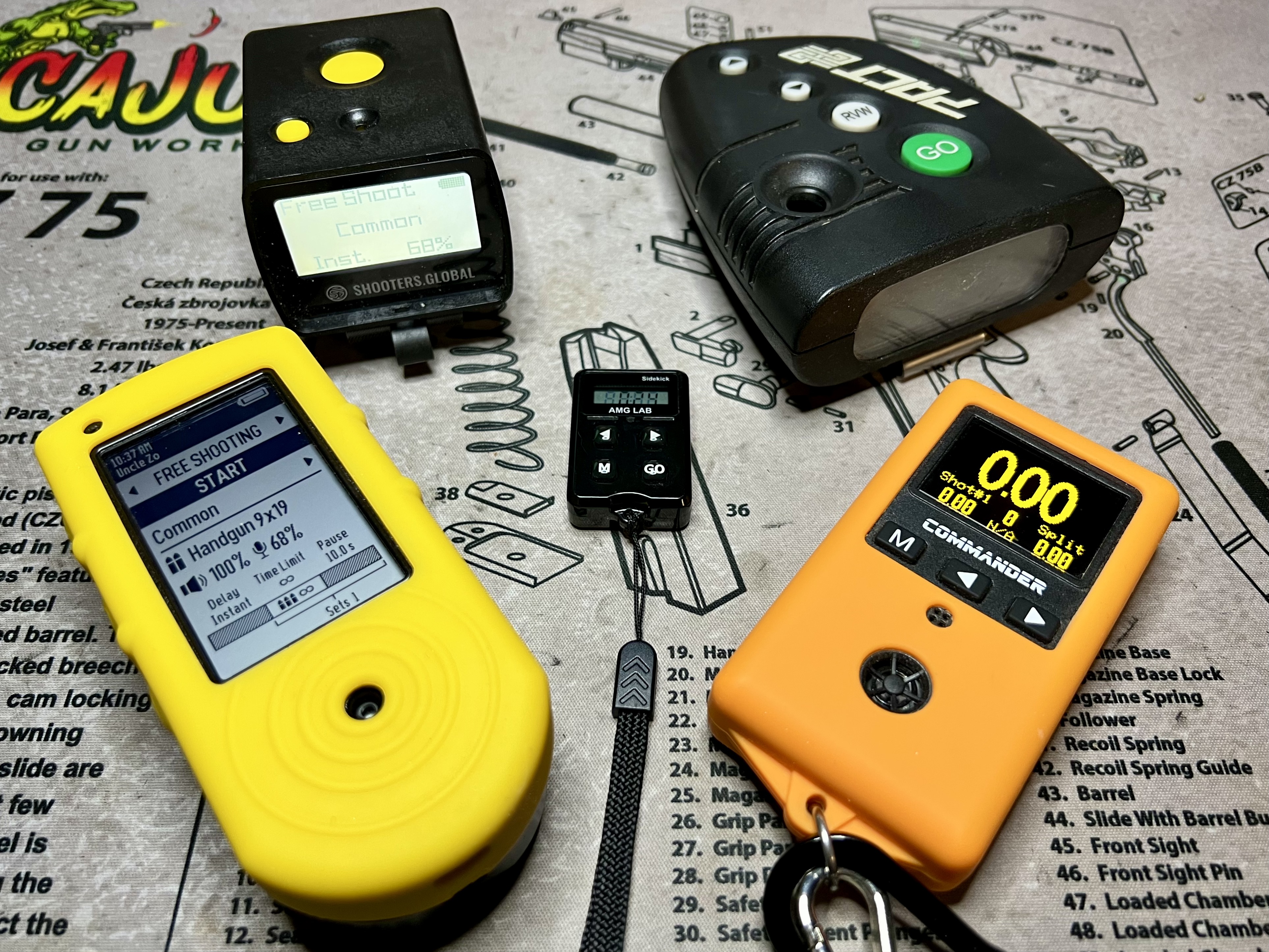
Another example of this is the heat the Mantis X dry fire aids, and other dry fire aids for that matter, get. Long time readers are well aware that I’ve used several dry fire aids over the years and that I have ditched them all in favor of a shot timer and dry fire targets. The exception to that is Ace Virtual Shooting, but I consider that more of a simulator rather than a dry fire aid, but I digress. While I have ditched those products altogether, that doesn’t mean they weren’t valuable. Quite the opposite really, they helped me get better when I was early in my skill development journey and helped me get started with dry fire practice. I once said that the value of the Mantis X is inversely proportional to one’s skill level and I still think that holds true.
A common counter argument I get when I bring up these details is that these sorts of products that are aimed at unskilled shooters hinder and delay their skill development. I don’t have a counter to that. I simply do not have and am not aware of any data that supports or contradicts that claim. When I have asked for supporting data to that argument, I instead get some sort of “well, if they do outgrow the product, then it was money that could have been better spent on more training and ammo” response. That might be the case, but it’s not for us, skilled shooters, to decide how to best spend someone else’s money. The best I can do is provide my analysis and the warning that they might someday out grow that product. In my opinion, that is a lot more useful and valuable than saying “that product is trash” and leaving it at that.
Not everyone is a “shooter”. Not everyone wants to become a “shooter”. And that’s okay as long as folks are safe and competent. Like most “shooters”, I think things would be better if every gun owner wanted to become and eventually became a “shooter”. To that end, I think we should do what we can to stop projecting because being off putting is a problem to the growth of our community. There certainly are unsafe and unreliable products that are trash which we should help those who don’t know any better avoid. At the same time, we shouldn’t be so quick to scoff at products that, in the right context and situation, might be beneficial even when the benefits are marginal and limited.

5 responses to “Not Everyone Is A “Shooter”, And That’s Okay”
I’ll suggest a third time when a lack of skill is a problem: low skill shooters that don’t know what they’re doing directing training for others. This is especially problematic in military circles.
That’s a fair point.
RE ACSS VULCAN RETICLE – I have seen pundits scoff at the chevron, claiming (and rightly so) that it’s silly to use this for ranging on a handgun. I agree…but the real utility of the chevron is that you can use the entire chevron just like a dot for “near” targets and the apex of the chevron for precision on “far away” targets.
Further, for many people with astigmatism, the chevron reduces or eliminates the “comet” effect.
I agree with you about the big outer ring and have never used it (actually, I didn’t realize it was there until I read your prior review.
SKILL: The mark of an wise shooter is recognizing the holes in his or her game.
ACE VR: Plus it’s just plain fun. Ever see Karl’s pics playing with it in OH?
Stay safe!
[…] Uncle Zo tackles the subject from a different angle in Not Everyone Is A “Shooter”, And That’s Okay. […]
[…] Not Everyone is a Shooter, and That’s OK – Uncle Zo […]