
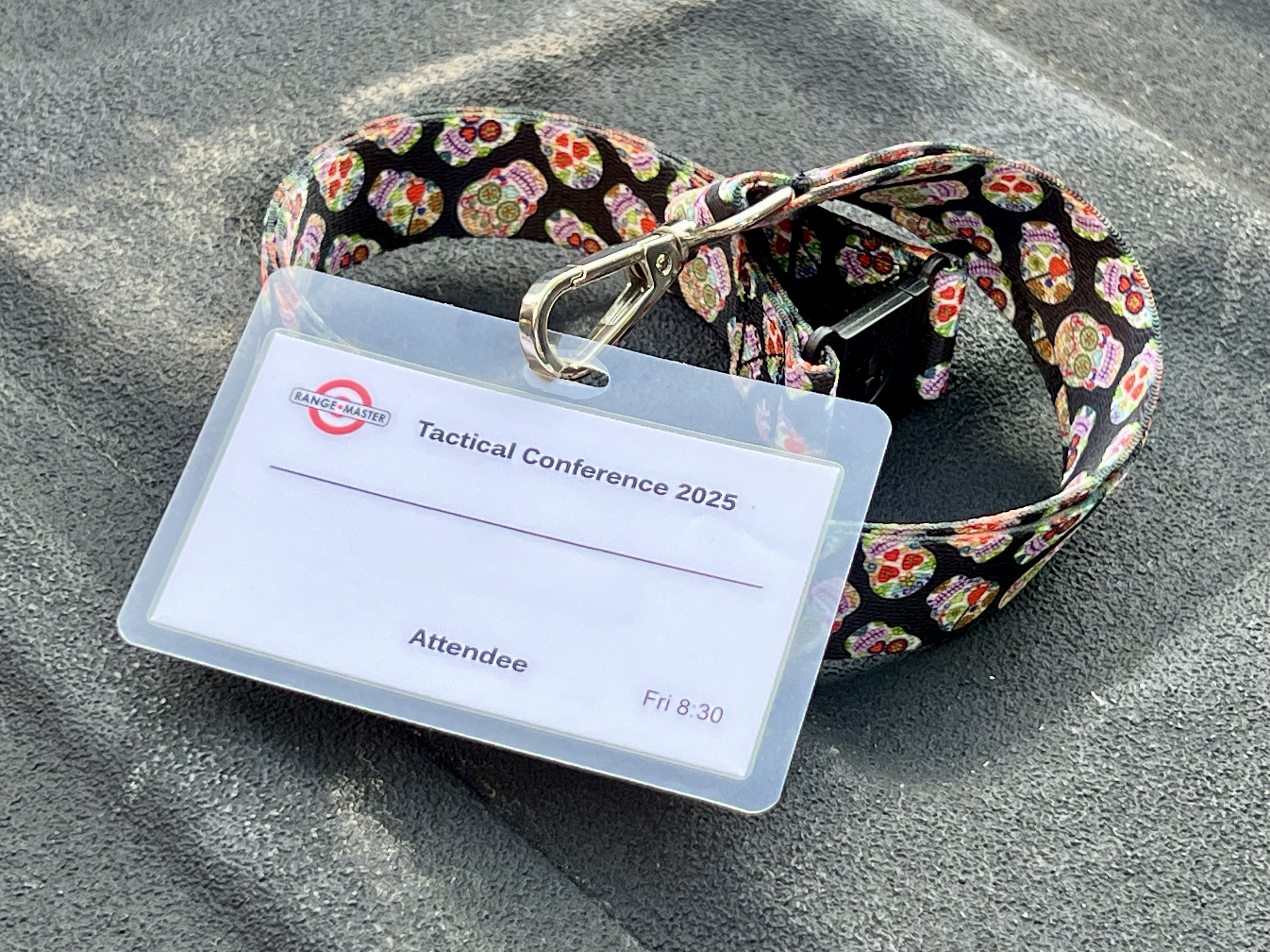
Holy smokes! After three fantastic days of learning and shooting at the Rangemaster Tactical Conference, or TacCon, I am exhausted. This year’s event, my second time attending, was exceptionally fulfilling in a rather interesting way. As y’all have come to expect, I’ll provide a full rundown of the event in this after-action report. Fair warning, though—this is gonna be a long one.
Before we dive in, I need to give y’all a little context, which starts almost a year ago—about one month after last year’s TacCon. Those who read my 2024 AAR might recall I was absolutely thrilled with my first TacCon experience and dead set on attending this year. Knowing how fast the 2024 tickets sold out—literally the same day registration opened—I monitored the TacCon Facebook group like a groupie, waiting for the 2025 registration announcement. I caught it, snagged a ticket, and reserved a room at the host hotel (something I failed to do last year).
With everything set, I put the event on the back burner until the course descriptions dropped in December. When I first glanced at them, I got the sense they were awfully similar to 2024’s lineup. That, combined with recent economic challenges—which I’ve most definitely felt—had me wondering if attending TacCon annually might not be the greatest idea. After all, it’s a modest investment. Registration, lodging, food, travel, ammunition, time—it adds up fast. I’d be lying if I said I didn’t consider skipping out to avoid the post-registration expenses more than once.
Regardless, I attended. Skeptically. Keeping my eyes peeled for just one reason to skip the next event or two. I can’t say I found one, though. I’m not sure if I’m disappointed by that or not. I guess you could say I’m still processing the experience. Writing this AAR will probably help with that and might lead me to a conclusion. We’ll find out together, I suppose.

The Gear
Someone’s bound to ask about the gear I used, so let’s start there.
My choices won’t surprise anyone familiar with Tom Givens and Rangemaster. Everything they do revolves around the armed defender. When it comes to pistols, it’s expected you’ll use one designed for personal defense—specifically concealed carry applications. The Rangemaster standard, which applies to TacCon, is that everyone shows up wearing their defensive pistol concealed, as they would in daily life, along with their usual everyday carry gear. So, I stuck with my EDC setup, except for the magazine pouches since I don’t carry a reload.
Here’s what I used:
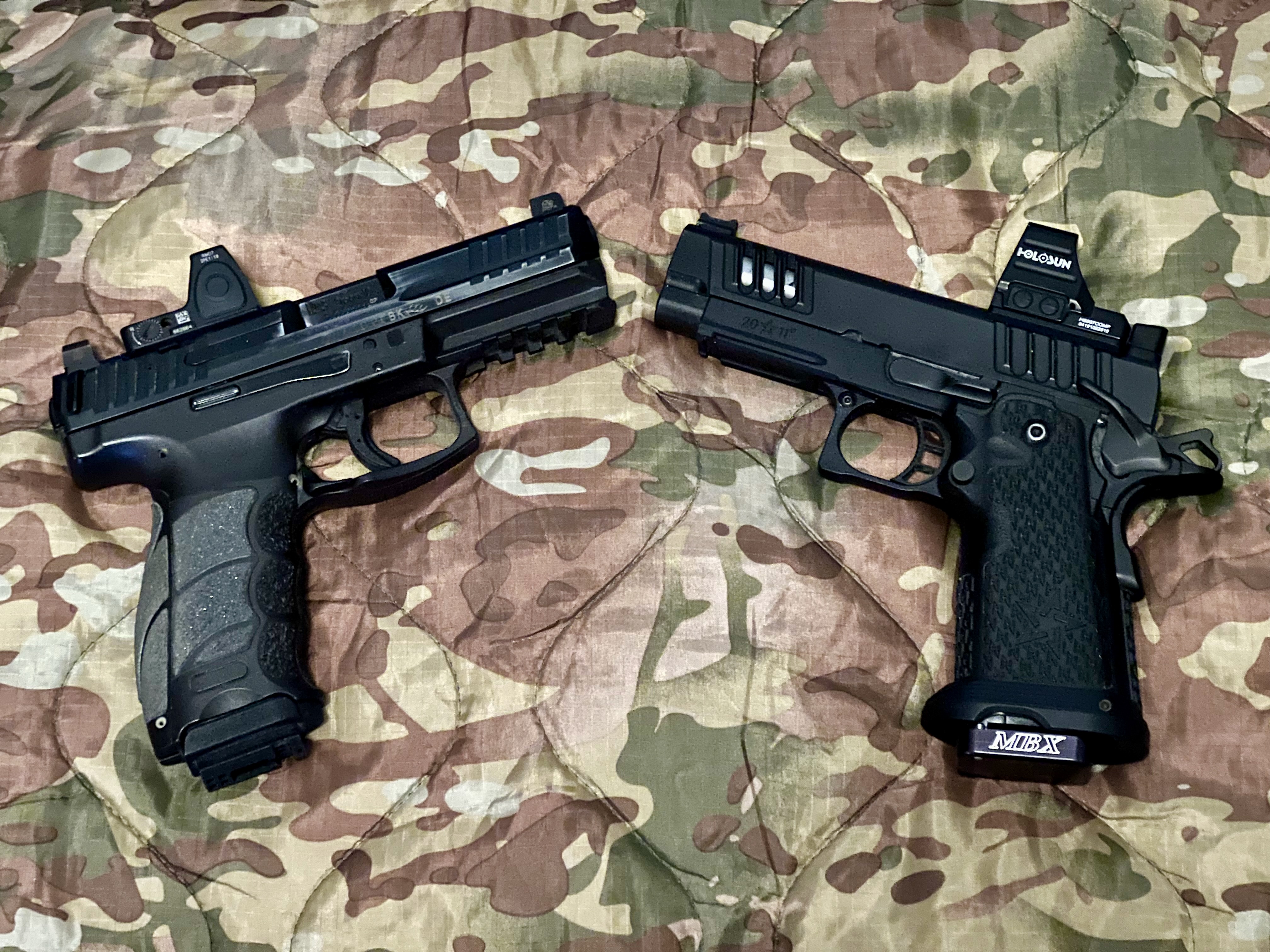
- Gun: Staccato C2 with a Holosun 507COMP
- Holster: JM Custom Kydex IWB 3 holster on my strong side
- Mag pouches: Concealment Solutions Venom Single Magazine Carrier x2
- Belt: Nexbelt Titan EDC Belt
- Ammo:
- Blazer Brass 9mm 147gr FMJ (for live-fire participation)
- Federal Premium 9mm 147gr HST (for carry)

I lugged the ammunition, personal protection equipment, medical gear, and all the other range accoutrements in an S3 range cart.
It’s worth noting there were live-fire blocks geared toward competitive shooting, off-body carry, and shotgun use. Like all the other live-fire blocks, those had specific equipment lists that went beyond EDC gear while still fitting what I call “Rangemaster standard equipment.” None of those applied to me, so I stuck with my EDC setup.
Day Zero
While TacCon is a three-day event, early check-in is available for three hours at the host hotel the day prior, starting at 4 PM. As I learned last year, this turns into a busy, densely populated social gathering in the hotel lobby. It kicks off hours before check-in and stretches well beyond it into the wee hours of the morning.
The social aspect of TacCon is an unwritten, value-added benefit that can’t be overstated. Familiar faces start gathering as folks arrive from all over the United States—some by air. Before long, the lobby fills with smiles and laughter, supplementing heartfelt greetings that constantly interrupt boisterous storytelling.
Many people grab dinner there, enjoying the full-service bar. Others break away for an hour or two for pre-event dinner traditions. I was in the second group, continuing a tradition I’m told was started by my friend and mentor John Daub—who’s missed TacCon since I started attending—of Korean BBQ at a local joint down the street from the hotel.
As you’d expect, there are plenty of familiar faces from returning attendees, but also lots of new ones. I don’t know the exact registration numbers, but I heard several folks mention that first-timers made up 47% of this year’s attendees.

The gathering was still going strong when I called it quits around 10 PM. Part of that was because I’m not a spring chicken anymore. The other part was wanting to get some dry-fire practice and Ace Virtual Shooting time in before hitting the sack, since my scheduled match time was 8:30 AM the next morning. Yes, there’s a pistol match. And yes, I wanted to do well.
Day One
The gates at the Dallas Pistol Club, where TacCon was hosted again, opened at 7 AM. It was still dark and wet with steady rain, but I got there as the gates opened nonetheless. I sat in my truck for a bit, finishing my coffee and getting my head in the game for my scheduled match preliminary.

Pistol Match Preliminary
Every attendee gets an assigned time for the match preliminaries, which take place over the first two days. A lot of folks say the time slots are just a suggestion—and in many ways, they are. The match officials will let you join the firing line anytime there’s a spot open. I suspect this flexibility exists to encourage participation, letting attendees who’d rather not miss an instructional block shoot when it suits them.
I mention this because I was tempted to take advantage of it. I wasn’t keen on shooting the match cold—I’d have preferred to go after a live-fire block to warm up. The rain wasn’t helping either. Shooting cold and in the rain was the exact opposite of advantageous. But I channeled my inner Tom Givens and decided to shoot at my assigned time anyway. After all, no self-defender gets to pick the time, place, or conditions of an attack. If it comes, it’ll be when you’re at a disadvantage. My time was my time, and it was now.
Before heading to the pistol match range, I administratively swapped out the magazine with self-defense ammo in my carried C2 for one filled with range ammo. This involved pressing the magazine release while the pistol stayed holstered, pulling out the released mag, and inserting the new one. I felt it click into place and gave it a tug to ensure it was secure.
I was the only shooter on the line in the second relay. The match director offered me a chance to check my gun. I should’ve taken it, but still channeling Tom Givens, I politely declined. I’d shoot it as it was, confident in its condition.
Standing ready at the three-yard line, set to deliver six rounds to the body of the turning target for the first string of fire, I waited for the target to face me—the start signal. As it turned, I began my draw. The presentation was perfect—nothing I’d change. I defeated my t-shirt concealing the pistol and established a picture-perfect master grip. The gun came out of the holster, met by my support hand to form a textbook two-handed grip. The dot arrived at the center of the A-zone just as I finished extending the pistol, a split second after the target finished turning. I pressed the trigger, saw the dot lift and return. But as it settled, my eyes caught something moving below my hands—the magazine I thought was secure, falling to the ground. My inner voice screamed a long, drawn-out “Nooooooo!” that peaked as it hit the dirt. I snapped back, grabbed a spare mag, inserted it, racked the slide, and got on target—just as it began turning away, the stop signal. With five unfired shots counting as misses, I knew right then my shot at the finals was gone.
I shot the remaining strings conservatively—no dropped shots, all within the time limit, no heroics as I’d intended.
After getting my score, the match director commended me for not throwing a fit or asking for a mulligan. I’m not gonna lie—I was mad. Mad at myself for being stubborn and stupid enough to skip checking my gear when I had the chance. Lesson learned: never pass up an opportunity to safely double-check your equipment.
Instructional Development for Our Art – John Farnam
After stashing my range cart in my truck post-match, I trudged like a beaten dog—tail between my legs—to a classroom where I caught the second half of John Farnam’s “Instructional Development of Our Art” block. This was my first repeat from last year—same name and description. But it wasn’t the repeat I expected. It felt like a different class.
You might assume it only felt different because I’m not the same person I was last year, hearing the same material through a new filter. I’ve grown as a shooter and instructor, so that’s fair. It’s probably true, except I don’t think Farnam uses planned material for this lecture. I could be wrong, but he didn’t refer to notes this year or last. It’s less a lecture and more a stream of consciousness—quips, anecdotes, historical references, and literary quotes, all tied to the art of instruction.

At any rate, it didn’t feel like a repeat. It was pleasant and valuable. What struck me was how deeply the grandfather of traveling firearms instruction has internalized the subject. That internalization—obviously born from planning and preparation—is a prerequisite for delivering content masterfully without visible reference materials.
Off-Duty Shootings of the LAPD – Claude “The Tactical Professor” Werner
My original TacCon plan was to sit in Lane Thayer’s “Disengaged: Teaching in an Over-stimulated Culture” block. Unfortunately, Thayer was very ill and had to cancel his presentations.
Since it was still raining, I stayed put and sat in on Claude Werner’s “Off-Duty Shootings of the LAPD”—another repeat from last year. This one felt more like a repeat, with a few changes and updates.

Memory’s fickle, and maybe it’s failing me. But comparing this year’s notes to last year’s, it seems The Tactical Professor spent less time on the structure of incident summaries and more on additional notable incidents. At least two were new to me—no recollection, no notes. Either way, reviewing these incidents is a great exercise for evaluating and improving practices and tactics to minimize negative outcomes after self-defense incidents.
If you get a chance to hear this lecture, do it—it’s well worth it. Whether you do or not, I’ll encourage every armed self-defense practitioner to read his blog. It’s a treasure trove of practical tactical info.
Elements of the Concealed Draw – Tim Kelly
About two months before TacCon, in late January, attendees submitted live-fire class requests. Then Tom Givens works his magical Jenga skills to assign everyone. I’m pretty sure he factors in skill levels from registration and survey data, plus any prior knowledge he has. He might even consult presenters. Whatever goes into the formula, the live-fire class love gets spread out, with assignments sent two weeks later.
I requested “Teaching Elements of the Concealed Draw” by Apache Solutions’ Tim Kelly but didn’t get it. Instead, I was assigned “Elements of the Concealed Draw”—the standard block, not the instructor development version. Probably a scheduling thing, but part of me thinks Tom was saying, “Your concealed draw needs work.” I’d agree. Even though I think my draw’s solid, it can always use more polish.

The block was a 100-round workshop focused on effectively drawing a handgun from concealment—specifically, achieving a perfect presentation where the sights or dot arrive on target where and when you want them.
We worked the draw in reverse: starting at full extension, then from “compressed ready” to full extension, then forming a two-handed grip to full extension, and finally holster to full extension. Some time went to defeating concealment too. Breaking the draw into parts isn’t new to me, but seeing it chunked in reverse was interesting. I wonder if it could ease the learning curve for newer shooters—something to experiment with.
A couple of notes:
- Starting with the concealment garment already gripped isolates the technical draw skill. I’m not sold on this—gripping the garment’s part of the skill and can be tricky if unpracticed. Still, worth testing.
- Introducing “pumping the brakes” earlier in draw development is something I hadn’t considered but seems promising.
After lots of dry fire and several live-fire drills, we got to shoot Apache Solutions’ Everyday Carry Standard for a poker chip—three strings, all holstered and concealed:
- 7 shots from 7 yards in 7 seconds into an 8” circle
- 5 shots from 5 yards in 5 seconds into an 8” circle
- 3 shots from 3 yards in 3 seconds into an 8” circle

Earning that chip was a pleasant surprise, especially after my rough morning.
Task Confidence: Building Skills You Can Believe In – Justin Dyal
The last block of day one was Justin Dyal’s “Building Skills You Can Believe In” seminar.
Honestly, I don’t recall much. Exhaustion hit hard, tanking my retention and obliterating my note-taking. It’s a shame—I was really looking forward to my first direct exposure to Dyal, whose drills pepper coursework I’ve done.

It wasn’t a total loss. I jotted down TERFI: time, energy, resources, facilities, and instruction—the ingredients for quality training and skill development. I was clearly short on energy.
If Justin reads this (a real possibility since he mentioned he’s read my work when I introduced myself), he might be glad I remember “SICness”—his catchy phrase for “skills in context,” especially under pressure.
The most valuable takeaway? Limit yourself to two emotions when practicing, training, competing, or testing: satisfaction and curiosity. Satisfaction with good performance, curiosity to explore why it was what it was—to replicate what you want and improve what you don’t.
And that wrapped day one.
Day 2
I got an unintentional late start on day two. I’d planned to rise early and hit the facility when the gates opened. But exhaustion from day one and the festivities—er, traditions—that followed meant I slept through my alarm, waking up fifteen minutes past my target arrival time. Oh well—no use crying over spilt milk. I skipped breakfast and coffee, hustling out of the hotel as fast as I could, and arrived just in time for the first block.

The Million Dollar Shot: Accuracy When It Matters – Justin Dyal
I felt huge relief making it in time for this block. Like most attendees, Justin Dyal’s “The Million Dollar Shot: Accuracy When It Matters” was my top live-fire request. Demand was so high that Tiffany Johnson, TacCon’s primary coordinator, posted in the TacCon 25 Facebook group that day: “Who’s the meme guru in here? I need a funny meme that says all y’all can’t take Justin Dyal’s class.” I’m no guru, but I fired off a response.

The premise hooked me: making an extremely precise shot under pressure—like hitting a 1.2” bottle cap at 25 yards for a million bucks on your first try. It dovetailed nicely with Dyal’s day-one seminar.
We started with two attempts at a 1.2” target from 10 yards. My first missed high and right by an eighth of an inch; I nailed the second.
Dyal explained the value of experimenting with conscious focus on grip, vision, and trigger in practice to see their effects on precision. There’s no one-size-fits-all secret sauce, but deliberate exploration unlocks mastery.
After playing with those fundamentals, he introduced “the obelisk”—a visualization for a neutral stance for precision (versus explosive movement), followed by a deep breath released as you work. The triangular peak represents the three fundamentals, with the top point as your focus for the shot.

Dyal shared how he shifts focus between grip, vision, and trigger as needed—like on a plate rack, starting with vision, then grip to keep it solid, then trigger or back to vision. It reminded me of Eno’s book on emptying the mind for shooting, letting the subconscious drive while you ride along—flow state stuff. But emptying the mind’s tough, so filling it with a singular thought (like “center the dot, call the shot”) might work. Dyal seems to suggest focusing on the fundamental most likely to get results.
For my “million dollar” shots, I quieted my mind—no conscious thought. Sleeping on it, I wonder if I’m unaware my focus is on vision, since that’s what works best for me in practice. Maybe I should step out of my comfort zone and focus more on grip or trigger.

The block gave me plenty to chew on—and another range Pokémon: a Million $ Shot bottle cap.
Unconventional Wisdom – Massad Ayoob
I missed this block last year due to live-fire conflicts but was thrilled to catch it this time—Massad Ayoob’s “Unconventional Wisdom.”
I had two goals. First, experience Ayoob firsthand. He didn’t disappoint. Arguably the top expert on use-of-force legalities, he’s getting up there in age, so these chances are dwindling. He’s a masterful presenter—prepared and engaging, no small feat for legal topics that could double as sleep aids.

Second, I wanted to corner him about the “hair trigger” legal concern from my “Tinkering with the Defensive Pistol” post last May. I caught flak for suggesting leaving triggers stock or at factory weight, with critics noting a lack of cited cases. Funny enough, I didn’t need to corner him—he cited two cases where a “hair trigger” became an issue:
- Santibanes vs. City of Tomball
- Galmon vs. Phebus
I stand by my point: modifying a defensive pistol’s trigger complicates self-defense cases. A lighter trigger can be explained, but might not sway a jury. Even if it doesn’t lead to conviction, it could hike civil liability or legal bills. I’m not saying don’t lighten your trigger—just know the risks.
The rest of the lecture covered mistakes that can tank a defense case—often advice or strategies for defending criminals, which don’t apply to justified defenders who aren’t criminals. It was masterful and valuable.
Instructor Development: Drills More Relevant Than the Bill Drill? – Lee Weems
My third live-fire block came after lunch on day two. Quick note for TacCon organizers: the taco truck was okay but pricey; the pizza truck was money again this year.
This block checked a bucket-list item: train under all Rangemaster staff instructors. Lee Weems was the last one I needed.

The premise? The Bill Drill’s fun and useful but overused—especially when tied to range Pokémon awards for ultra-fast times, or what John Hearne calls “stupid human tricks.” It’s not that the Bill Drill’s bad, but when awards emphasize preprogrammed technical skill over skills in context (Dyal’s “SICness”), it’s less valuable for defensive students. Research on “interleaving”—the current state-of-the-art in firearms instruction, which Weems loves—backs this up.
Interleaving mixes skills in a session (shooting, reloading, drawing, clearing malfunctions) rather than focusing on one at a time. It builds adaptability for real-world scenarios. We progressed through six-ish-shot exercises over two hours, adding skills:
- Draw, shoot one. Draw, shoot two. Draw, shoot three.
- Draw, shoot one, reload, shoot one (x3).
- Draw, shoot two, reload, shoot two (Four Aces, x3).
- Draw, shoot two, reload, shoot two to body, transition, shoot one to head (x2).
- Draw, shoot two to head, reload, shoot four to body (F.A.S.T., x2).
- Draw, shoot three to body, transition, shoot two to head, transition, shoot one to 2” dot (x2).
- Draw, shoot six to body with unpredictable reload (partner-set).
The all-instructor class discussed skills worked in each exercise. Then we collaborated with Weems on a final drill: six shots, unpredictable reload, dummy round for malfunction clearing, scored on a B-8. I cleaned it in 7.7 seconds and recorded it. Weems asked if I’d put it on “the grams.” You bet.
The interleaving made the final drill feel manageable—no stress, even with the class watching. The malfunction threw me briefly (we hadn’t worked it), but everything else flowed.
I still love the Bill Drill—it stress-tests grip for six quick shots. Do we overemphasize it? Maybe, especially with awards. To the detriment of students? Depends on the class—technical skill focus, no; defensive tactics focus, maybe yes. I still want Gabe White’s Turbo pin (sub-2-second Bill), so that might bias me.
Run the Line: Live Fire Range Safety Concepts – Gabe White
Speaking of Gabe White, my last block of day two was his lecture, “Run the Line: Live Fire Range Safety Concepts.”

Exhaustion hit again, hurting retention and notes, but dozens of detailed slides and photos I snagged helped me recall it.
I’m a Gabe White fan—cool dude, great teacher, sweet tunes, and a friend. He’s a monster pistolero and an instructional wizard, often cited for organization and safety. His key principle, “Disorganization is the Enemy of Safety,” came up, along with:
- Lead by example
- Handful and a half
- Think it all the way through
The presentation wove in instructor development throughout—deeply intertwined, as Gabe explained. He packed every moment with info: gun handling principles, line procedures, PPE, props, holster management, expectations, communication, maintaining a firing line, physical intervention, medical issues.
I kept recalling how instructors (including Gabe) handled these topics and compared it to my own conduct, noting things to adapt as I grow. I’d love to see him develop a multi-day instructor course—it’d be fantastic.
Day 3
Day three started right. I woke up on time, no rain, had breakfast and coffee, and arrived when the gates opened. Probably thanks to an early bedtime—tough with all the after-hours fun.

Jeff Cooper and the Southern California Revolution – Andy Stanford
It wasn’t the first time a Rangemaster day kicked off with a kilt, but it was the first with a kilt-wearing, self-described “Fuddite” (half Fudd, half Luddite) sporting a skunk sporran—Andy Stanford, ex-full-time trainer, now overseeing curriculum for SureFire’s developmental firearms simulation system.

His presentation was a show-and-tell of his early shooting years in the Southern California Pistol League, sharing Jeff Cooper’s influence and instructional advancements—like aimed fire at close range eventually overtaking instinctive point shooting after a decade and a half.
He passed around out-of-print books, each tying to his story of instruction’s slow evolution and the politics gamifying shooting sports. This dude was slinging lead before many of y’all were born.

No storytelling’s complete without song—his accordion didn’t make it, but his tales and tunes were entertaining and insightful. He ended with modern instruction trends, predicting neuroscience-based training as the future, citing John Hearne and John Holschen’s interleaving-focused offerings as early evidence. Interleaving and “SICness” were daily TacCon themes.

As a bonus, he handed out copies of Dustin Salomon’s Building Shooters: Applying Neuroscience Research to Tactical Training System Design and Training Delivery.
Process vs. Outcome: The “Helluva Little Drill” – Jim Shanahan
My fourth and final live-fire block was with Jim Shanahan of Advanced Performance Shooting. I requested it for two reasons. First, Jim’s a good friend and a former classmate. He’s a great shooter—I’ve read his book, 1 of 100 A “Deliberate Responder”: Firearms Training and Performance Shooting—and I wanted to see him teach.
Second, the name—“Process vs. Outcome: The ‘Helluva Little Drill’”—piqued my interest. Jim’s a control guy, balancing speed and accuracy skillfully. He’s rarely off, and when he is, it’s not by much. He’s a process guy—detailed and thorough. A new drill with a cool name? I was in.

It’s a spin on a cloverleaf drill—usually 3-5 yards, no time limit, three or four “perfect” overlapping shots. We ran it at three yards. Jim’s version is seven shots, changing grips each time:
- Freestyle two-hand
- Strong hand only
- Weak hand only
- Reversed freestyle two-hand (strong hand supports, weak hand grips)
- Weak hand only
- Strong hand only
- Freestyle two-hand
Easy? Nope. Guns can drop, thumbs can slip behind the slide, and perfect one-handed or reversed shots are tough. For seven touching holes, you must focus on each process: grip (or switching hands), settling the dot/sights, pressing the trigger without disturbing alignment.
Jim worked his process magic: grip (TWA: trap, wrap, anchor), one-handed grip (thumb up, elbow in), changing hands (expose backstrap, grip with opposite hand, wipe off original). That last one was gold—I’ve struggled with consistent hand switches in practice and matches. Now I’ve got a process to tweak.
We crawled through it—Jim talking us through each step, aiming for a 5” circle. Walk mode had reminders; “clean” shooters moved to a 2” square. Run mode was just step cues; “clean” shooters (not me—I dropped one) went for a 1” circle. I planned to stick with the 2″ square, but Jim piled on pressure, calling me out as someone who should hit the smallest target. Thanks, Jim! I dropped one again—always the second shot.
The test was the full drill, solo, on a 2” business card, no hints. I printed a tight group coverable by my Million $ Shot bottle cap.


Pistol Match Shoot-Off
Competition to make the shoot-off was stiff. For men, the top 16 needed clean standards and a tiebreaker of 1.62 seconds or better. My mag drop and conservative 3-second tiebreaker landed me 234th out of 251—bottom 10%. Them’s the breaks.

For ladies, the top 8 needed near-clean standards and a 2.55-second tiebreaker. A couple made it with one point down.
I didn’t qualify but watched this year—missed it last year due to a conflict. The talent was impressive. Making the shoot-off at a future TacCon would be cool, but it won’t happen without work.
Ready Positions for Better Outcomes – Eric Gelhaus
The final block with Eric Gelhaus of Cougar Mountain Solutions was a treat. He bridges academic research and practical application. This block explained what data says about ready positions.

TL;DR: The more threat you see from a low-ready, the less likely a mistake-of-fact use-of-force error, with first-hit time delayed by .10-.15 seconds. Studies compared high thoracic, navel, and below-belt positions—there’s likely a diminishing return (like aiming at your feet).
He also covered handheld light positions (FBI, face index, Harries). TL;DR: FBI’s great for searching; face index and Harries are better for fighting, each with context-specific perks.
It was short, concise, and echoed what I’ve learned and teach—relieving, honestly. Chatting after, Gelhaus hoped for a positive review. I said, “We’ll see.” This blurb in a long-winded AAR might not count, but he’s a good sport who delivered valuable info succinctly. His academic-trainer bridge is vital. I’d love to take his Pistol Mounted Optics course someday.
Closing Thoughts
As I said early on, I went in skeptical, looking for a reason to skip future TacCons. The quality of the event, presenters, sessions, and social camaraderie tipped me toward doing everything I can to attend next year. It’s that simple—no evidence supported any other choice.
Guess it’s time to stash some cash and watch for TacCon 26 registration. Word is Tom Givens’ Patreon subscribers hear first.
Leave a Reply