
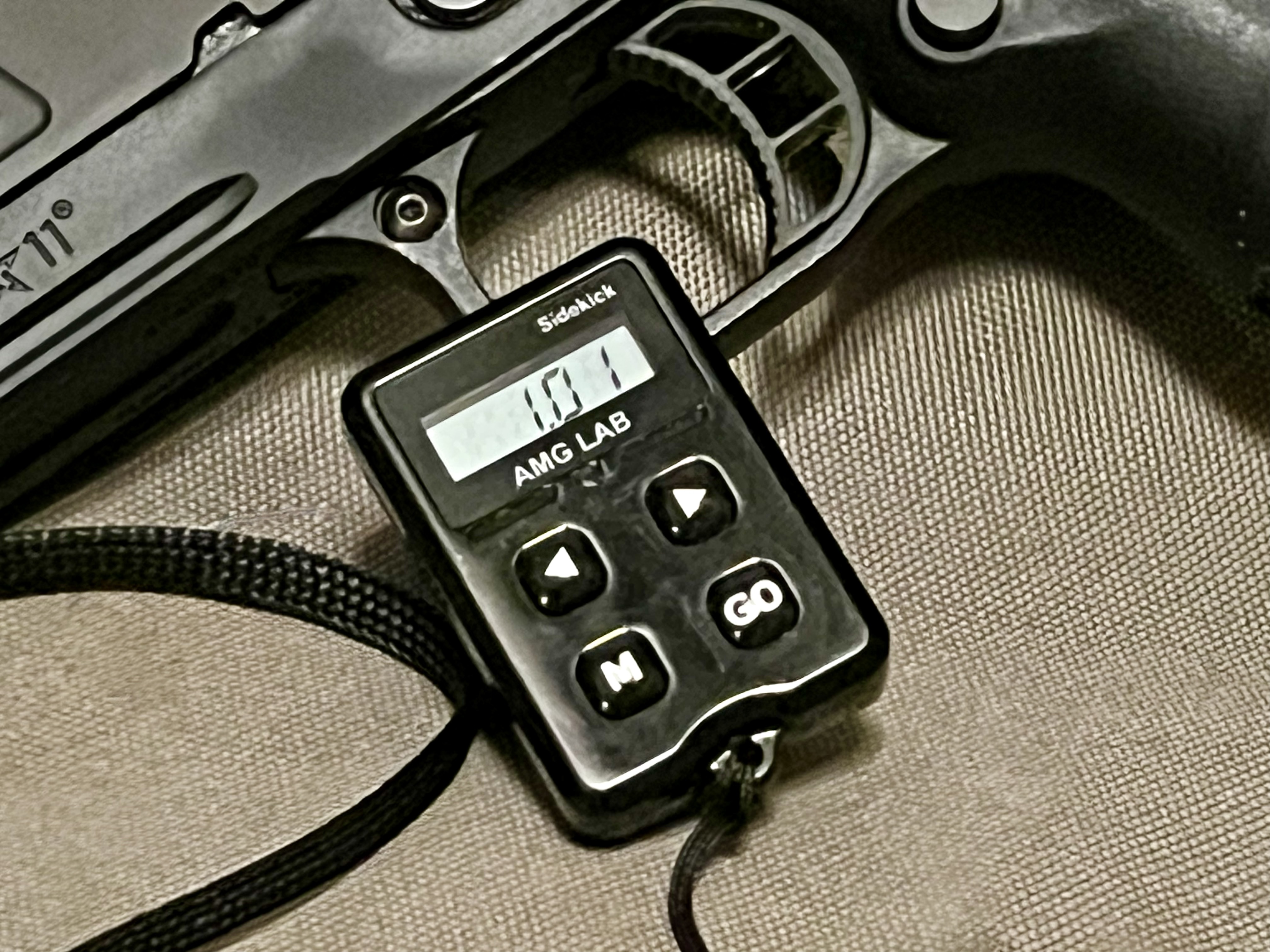
As the title suggests, this post is about the sub-second draw—specifically, my pursuit of it. Again. Initially, I considered adding this to my dry fire series, which has been quiet lately. But the more I thought about it, the less it fit. While I’ll touch on dry fire techniques, my sub-second draw didn’t develop intentionally through dry fire. Plus, I want to explore the sub-second draw broadly, so this isn’t a guide or part of that series. It’s more of an opinion piece—or at least, that’s the category it fits best. Let’s dive into the sub-second draw.
What is a Sub-Second Draw?
A sub-second draw is exactly what it sounds like: drawing a pistol from a holster, presenting it to a target, and delivering an acceptable hit in under one second. It’s not just a process—it’s a skill. Skilled handgunners aim to perform it consistently, on demand, even under stress. And that’s no small feat.
A few factors can make a sub-second draw easier. Gear selection is the most obvious. Drawing a full-size pistol with a reflex sight from a slick, openly carried competition holster is far easier than pulling a compact, iron-sighted handgun from a snug, concealed strong-side inside-the-waistband (IWB) holster. Guess which one I’m chasing? The harder one: a concealed draw with my everyday carry (EDC) pistol from a strong-side IWB holster.

Target difficulty also matters. Hitting an 8-inch IDPA A-zone at three yards is easier than nailing a 4-inch IDPA head box A-zone at 25 yards. My goal—hitting an 8-inch IDPA A-zone at seven yards in under a second—is on the easier side of the spectrum.
Cool, but Why?
People chase sub-second draws for various reasons. Enthusiasts often want to level up their skills. Competitive shooters aim for faster stage times, which, with equal accuracy, boost their scores. Others pursue standards or tests to earn what Caleb Giddings calls “range Pokemon”—patches or pins. Then there are those who carry for self-defense and want to be as prepared as possible for a lethal threat. Me? I’m a bit of a nomad, wandering between these camps.
Generally, a faster, consistent draw is rarely a bad thing. It’s like faster, accurate shooting: as long as shots are controlled and accounted for, quicker acceptable hits beat slower ones. Unacceptable hits, including misses—since those bullets hit something—are, by definition, unacceptable.
But there’s a big caveat. Hyper-focusing on a single skill like the sub-second draw can lead to training scars. It’s easy to get caught up in the Instagram-worthy coolness of a fast draw. Some folks, especially less experienced ones, practice nothing but fast draws, session after session. The result? A single, inconsistent draw—maybe even a terrible one with a poor grip that sends a “to whom it may concern” bullet nowhere near the target. That’s no good for competitions, won’t earn awards, and in a real-world self-defense scenario, could lead to a catastrophic outcome.
I won’t tell anyone to skip the sub-second draw, but I will say: practice smart. Be deliberate. Plan sessions to pursue your goal while minimizing training scars. Not sure how? Take a class—that’s exactly what they’re for.
Okay, but Why Now?
I’m chasing the sub-second draw now because I’m preparing to attempt Gabe White’s turbo pin in the not-so-distant future—like, a few weeks from now. That’s not much time.
I won’t rehash what earning a turbo pin entails; I’ve covered it in three prior AARs on Gabe’s Pistol Shooting Solutions course, broken down the tests’ difficulty, and written about my preparation for my second attempt, which earned me my first light pin. Check the dry fire series for more.
This time, my approach is different, so let’s talk about that.
What’s the Approach?
My approach is different because I’m not the same shooter I was last time. That should’ve been obvious, but it only clicked when I adjusted my practice plan a week ago.
Based on my last attempt, which earned my second light pin, I focused heavily on my draw, as a sub-second draw was the missing piece. I used Gabe White’s performance improvement approach: starting with an on-demand modality, moving to a pushing modality, and finishing with on-demand work. I began with a 1.3-second par time, a pace I could consistently hit. After warming up, I pushed to a 1-second par time, aiming to go just fast enough for things to fall apart so I could fix them. To my surprise, I was hitting or beating the 1-second par consistently.

That’s great, but it’s not enough. A recent conversation with Karl Rehn reminded me that to hit one-second draws consistently in live fire, I need to be about 20% faster in dry fire—meaning a 0.8-second draw.
On a separate occasion, Karl also shared a different approach to building speed he used while working towards his USPSA Grand Master classifications. Instead of pushing speed at the desired target difficulty, start with an easier target to get comfortable moving at the needed speed. Then, gradually increase difficulty while maintaining speed and fixing issues. It’s a nuanced difference, but I’m giving it a shot.
I haven’t changed everything, though. I’m still working on other marksmanship fundamentals and finishing with on-demand practice to maintain them. Recency in training matters for optimal cold, on-demand performance—whether planned or unplanned—as Matthew Little and Chuck Pressburg discussed in The Way is in Training podcast.
Will this be enough for a turbo pin? I don’t know, but I hope so. I’m a better shooter than last time, and I’ve improved at practicing. I’ve got a better shot at it, but time is tight, and shaving fractions of a second gets harder the faster you go. Whether I pull it off remains to be seen, but it’s definitely within reach.


Leave a Reply