
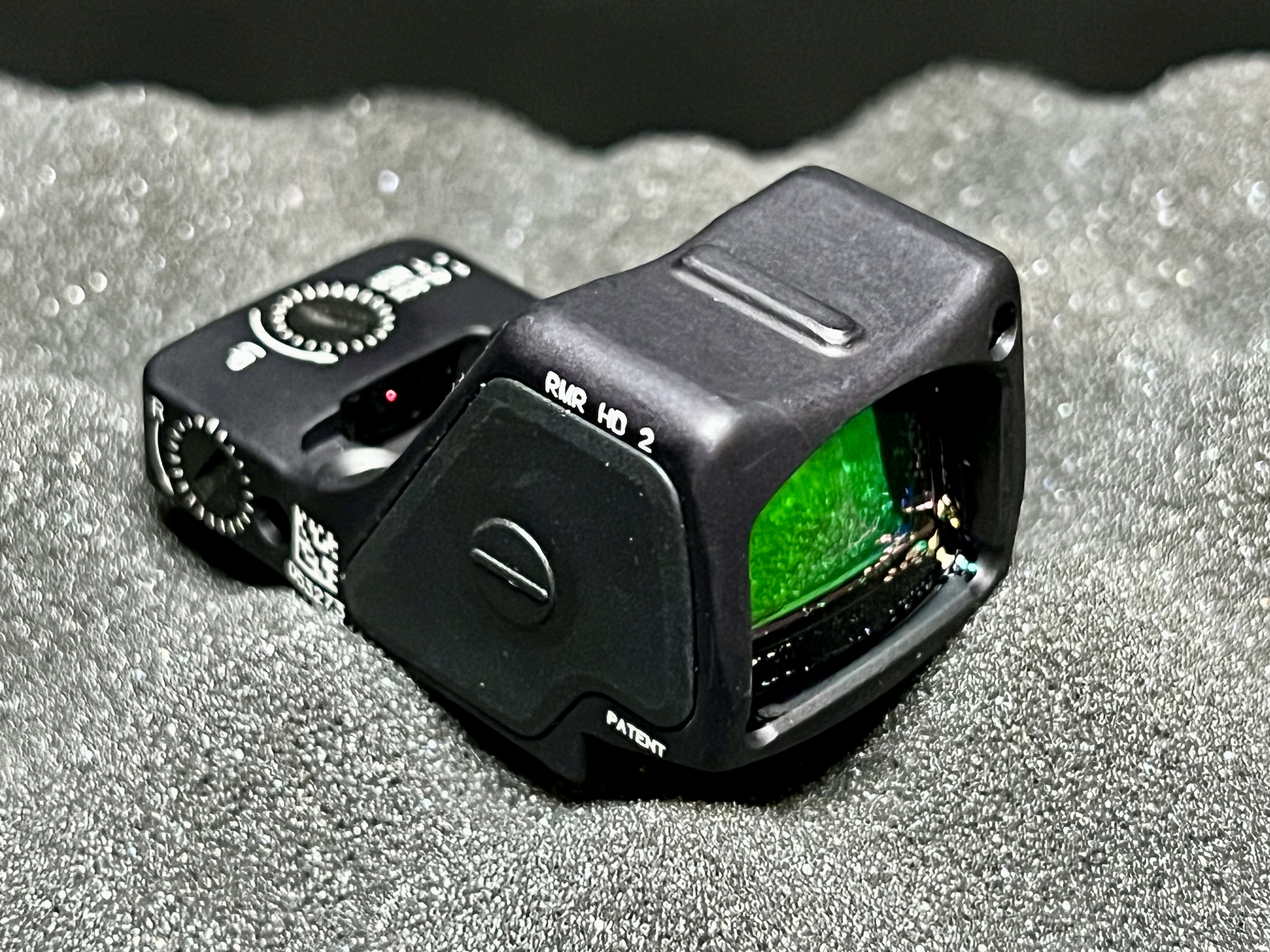
Running UncleZo.deals is a double-edged sword. On one hand, I keep a pulse on market trends while helping y’all score the best prices on products, earning a bit of cash through affiliates to keep the site running. On the other hand, my wallet takes a hit whenever I update the site with a hot deal on a product I’ve been eyeing. That’s exactly what landed me here—writing about the Trijicon RMR HD, an optic that rarely goes on sale due to Trijicon’s tight price controls.

Let me back up and provide some context. I’ve been a huge fan of Trijicon red dots for years. The RMR and SRO are stellar optics, widely regarded as the gold standard for rugged duty (or concealed carry) and large-window competition dots, respectively, by anyone who knows their stuff. The only common complaint I hear—and share—is their price. That steep “Trijicon tax” pushed me to dabble with Holosun optics. I haven’t parted with my Trijicon RMRs or SROs, but I haven’t bought any in years because Holosun’s balance of quality and affordability is hard to beat. I still believe Trijicon optics are superior, but the price gap often feels unjustifiable.
Now, you might be wondering where the RMR HD fits in. Bear with me—I’m getting there.
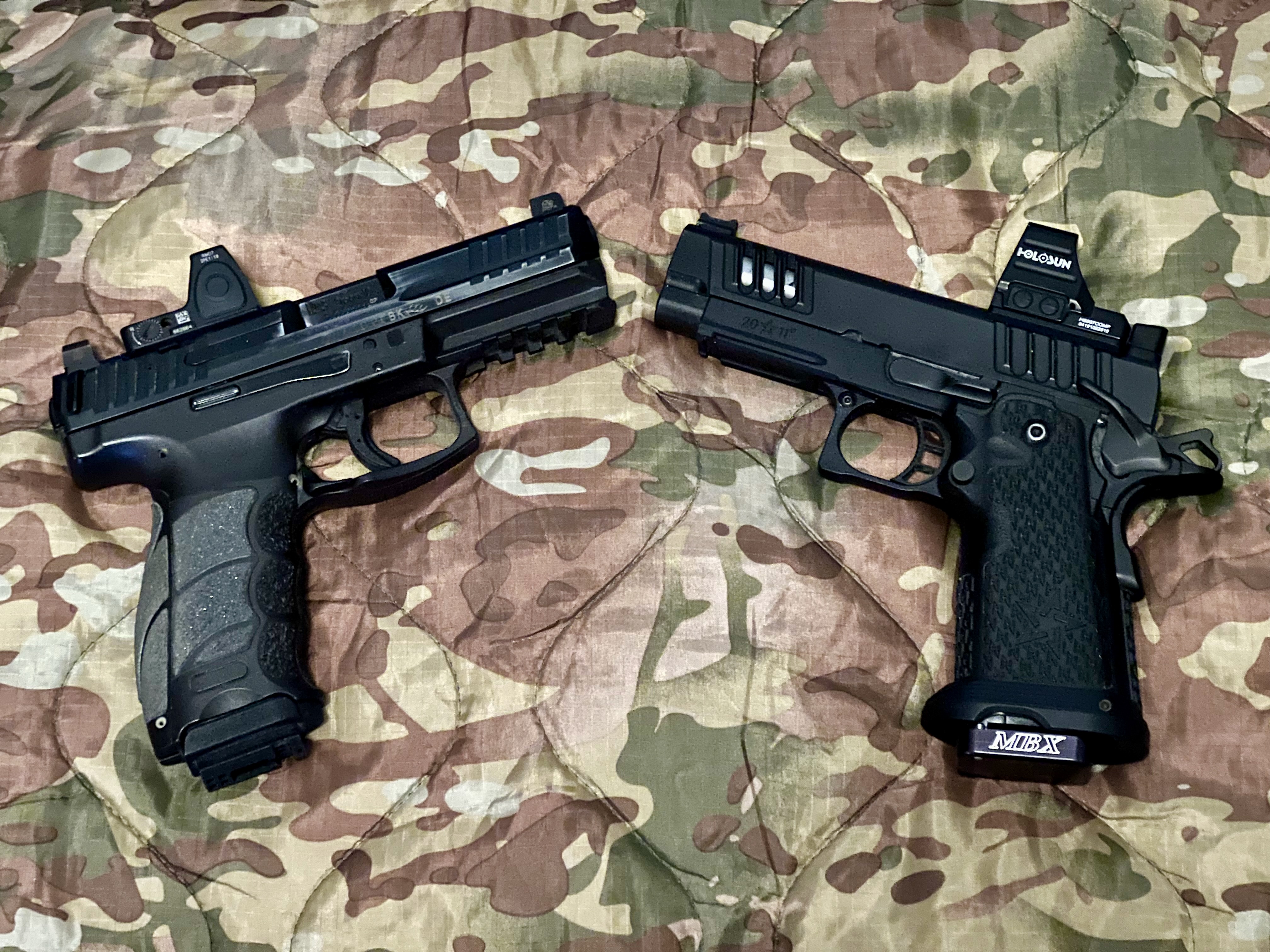
The RMR is legendary for being virtually bomb-proof, arguably the most rugged pistol-mountable red dot out there. However, by today’s standards, its window is relatively small—not as tiny as compact dots for slimline pistols, but small for a “full-size” optic. From a practical pistol marksmanship perspective, larger windows are simply better. As I honed my skills as a pistolero, my preference for larger-window dots grew. Eventually, that preference overruled my better judgment about prioritizing ruggedness for concealed carry, which is how I ended up with a Holosun 507COMP on my Staccato C2.

I can’t recall if I ordered the C2 before the RMR HD hit the market, but both events happened around the same time. The RMR HD caught my eye because it promised RMR ruggedness with dimensions closer to the SRO—seemingly the perfect blend for defensive carry. Still, its price tag, more than double the Holosun 507COMP’s, and limited availability kept me at bay. Availability improved over time, but the price stayed high—until a few weeks ago, when I saw it drop well below its typical $727–$798 street price. It still wasn’t in 507COMP territory, but it was low enough for me to lose my composure and impulsively buy one.
The Trijicon RMR HD
I might have given the impression that the RMR HD is just an SRO-sized RMR. It kind of is, but it’s also more. Let’s start with its RMR roots, specifically its legendary ruggedness. While not indestructible, the RMR is a tough little bastard, earning its reputation through years of rigorous use by military, law enforcement, and concealed carriers. Aside from its high price and smaller window for a full-size duty optic, its only other frequent criticism was the bottom-mounted battery, which required dismounting and remounting for replacement. The RMR HD addresses two of those issues: it’s bigger and features a top-mounted battery.
Size-wise, it’s a bit shy of the SRO. The RMR HD’s window measures approximately 0.93″ x 0.67″—slightly larger than the RMR’s 0.87″ x 0.63″ but smaller than the SRO’s 0.98″ x 0.89″. The SRO’s window remains noticeably larger, but the RMR HD’s is considerably more forgiving than the original RMR’s.

The RMR HD also inherits the SRO’s front-biased window overhang. Depending on how far it extends over the ejection port, this can interfere with spent case ejection, potentially reducing a pistol’s reliability. This isn’t an issue for all pistols, but it’s something to watch for. Unfortunately, there’s no easy way to predict interference, as it depends more on ejection patterns than pistol dimensions or mounting interface. I’ve heard of cases where two identical pistols with the same ammo and SRO had different outcomes—one with interference, one without. Manufacturing variations might explain this, but I can’t say for sure. The good news? The RMR HD’s overhang is tapered in a way that makes interference less likely than with the SRO. Plus, Trijicon optics hold strong resale value, so offloading one that doesn’t work out isn’t too painful.
The RMR HD shares the same mounting footprint as the RMR and SRO. It also offers multiple illumination brightness settings (three night vision, five daylight, and one super-bright), controlled by plus (+) and minus (-) buttons on the left and right sides of the housing, respectively. The button functions remain consistent, including enabling/disabling auto-brightness, powering the optic on/off, and engaging/disengaging lockout mode. But that’s where the similarities end.
The RMR HD introduces a multi-reticle design with either a 1 MOA or 3.25 MOA dot paired with a 55 MOA segmented circle. Like other multi-reticle systems, it can be configured to display the dot, the circle, or both.

Another upgrade is the forward-looking light sensor, which adjusts reticle brightness based on lighting conditions at the target when auto-brightness is enabled. This is a step up from the original RMR’s sensor, which adjusted based on the optic’s surroundings—a less-than-ideal setup when lighting conditions differ significantly between the optic and the target.
Here’s what comes in the box with the RMR HD:
- The Trijicon RMR HD optic
- A manual
- A Torx wrench
- Tall and short mounting screws
- A battery cover convenience tool
- An obligatory hazards and liability warning card
- A couple of marketing inserts
- A Trijicon sticker
- An iconic foam-lined, hard-sided Trijicon case (perfect as a range ammo box)
First Impressions
I expected the window to feel larger. I knew from the specs it wasn’t quite SRO-sized, but it feels closer to the RMR than I anticipated. I suspect Trijicon’s design team constrained the window size to maintain compatibility with Safariland duty holsters. From a business perspective, that makes sense. From a practical marksmanship standpoint, it’s a bit of a letdown, but not enough to dampen my excitement about putting the RMR HD to work.

Aside from the window size and the price—which, even with the sale, is a hard pill to swallow—I think this optic is going to shine. As I mentioned earlier, I suspect it’s the perfect blend of ruggedness and size. I have high hopes and fully expect it to live up to them. If it does, the RMR HD could become my go-to defensive carry optic.
There’s also a new “Brightness Response Mode” that lets you configure how the auto-brightness feature responds to changing lighting conditions. I’ve read the manual and think I get how it works, but I haven’t tinkered with it enough to form a strong opinion. It sounds like an interesting feature, though.
One thing I don’t care much for is the multi-reticle system. It might matter if I were using this optic on a carbine or shotgun, but for a defensive carry pistol, anything beyond a simple dot feels like a distraction. Context matters, as I often say. My bias comes from how I understand and use pistol-mounted optics. I’m not saying the multi-reticle system is useless—just that it’s not for me. Honestly, an RMR HD variant with a dot-only reticle at a slightly lower price would be even more appealing.

Overall, my first impressions are mostly positive, and I’m eager to put this dot through its paces.
What’s Next?
The Staccato C2 feels like the perfect home for the RMR HD, so I’ll mount it there soon and start putting in work. I’ve got a few classes lined up this year, which should put a healthy round count on the RMR HD before 2025 wraps up. You’ll likely see it in action in videos I post on social media. I also expect to write more about it, either in upcoming Staccato C2 milestone reviews or after-action reports.
Until then, I’d love to hear about your experiences with the Trijicon RMR HD. Love it? Hate it? Drop your thoughts in the comments below.
Leave a Reply