
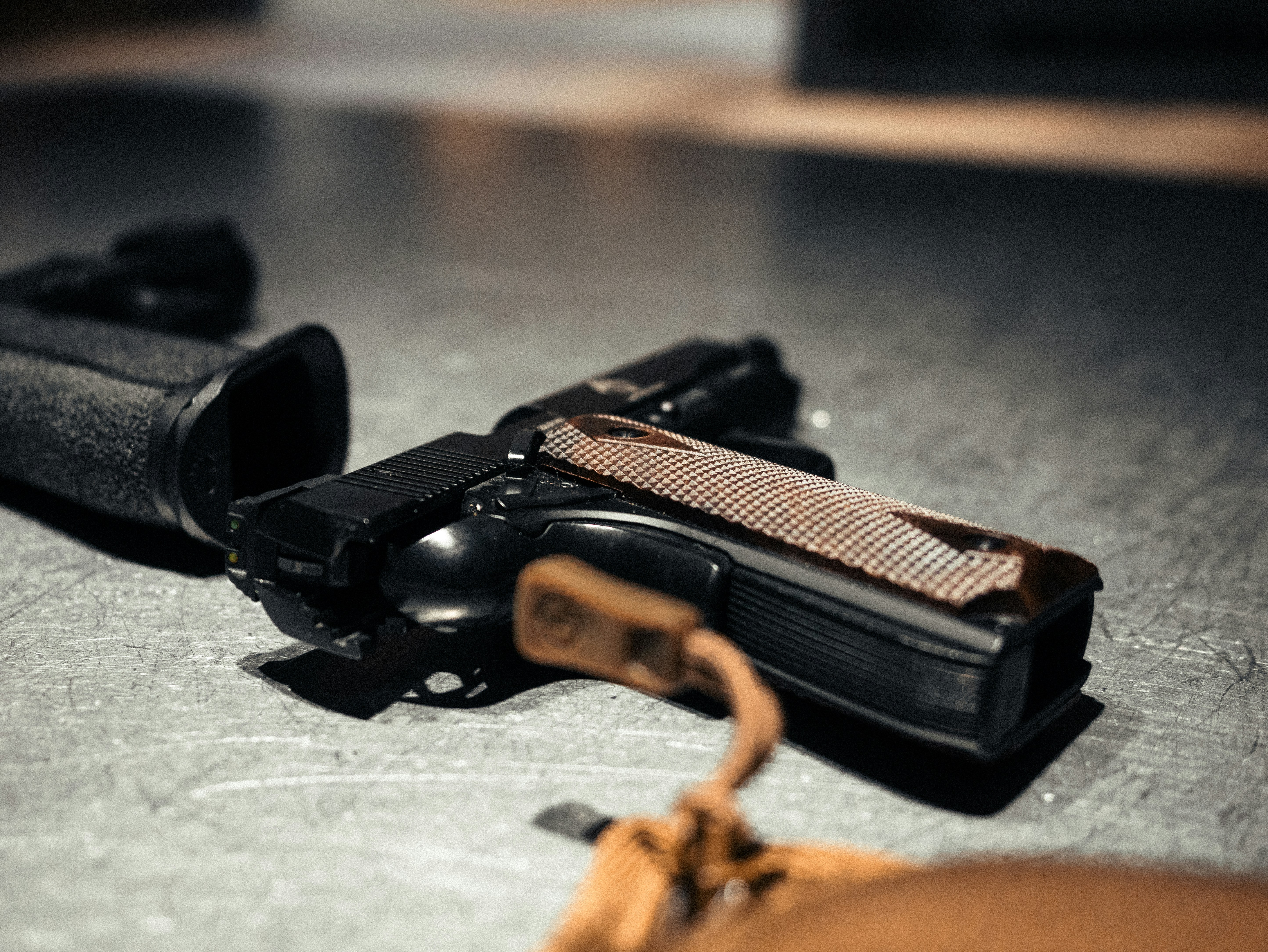
Picking out a firearm for self-defense is a big decision. It’s not about finding some mythical “best gun” that works for everyone. It’s about finding the right tool that fits you—your skills, your body, your home, and the situations you’re most likely to face.
As a defensive firearms instructor and someone who’s spent a lot of time on the range and in classes, I’ve seen plenty of folks overthink this or jump in based on what looks cool online. This is informational, based on my experience and opinions. It’s not legal advice—always know and follow your local laws, and get proper training.
Bottom line up front:
- There is no universal “best” self-defense firearm. Match the tool to your skills, body, lifestyle, and environment.
- A solid handgun for everyday carry paired with a carbine or shotgun for the house covers most prepared people well.
- Nine millimeter is my usual starting recommendation for the balance of effectiveness, controllability, and ammo cost.
- Training and the four fundamental safety rules matter far more than any mechanical feature or the latest model.
- Try guns on the range before you buy whenever possible. Then train like it matters—because it does.
Let’s walk through the essentials so you can make a solid, informed choice.
Understanding Firearm Types
Most people consider three main types for self-defense: handguns, shotguns, and rifles (usually carbines). Each shines in different scenarios. In addition, plenty of prepared folks end up with more than one.
Handguns

Handguns give you the most versatility. You can carry one concealed every day, stage one at home, and handle them in tight spaces or with one hand if needed. In addition, they offer portability, easier secure storage, and the ability to have the gun on you constantly. That said, the trade-offs are real: they’re harder to shoot accurately under stress than a long gun, capacity can be limited depending on the model, and they demand more practice to master.
Popular options that have served a lot of people well (and that I’ve recommended or carried myself) include duty-sized guns like the Glock 19, H&K VP9, Walther PDP, and S&W M&P. For something more concealable, look at the Sig P365 series or Glock 43X/48.
I dive deeper into starting choices in What Gun Should I Get First For Self Defense? and update my top picks regularly, like in Best Concealed Carry Pistols 2025. Nine millimeter is my usual starting recommendation for the balance of effectiveness, controllability, and ammo cost. If you’re looking at a red dot, check my recent thoughts on the pros and cons of optics on handguns—they help once you train with them.
Shotguns

Shotguns have stayed a home-defense staple for good reason. With the right buckshot load they deliver serious stopping power at typical indoor distances, and that pump rack can act as a psychological deterrent.
Advantages: high terminal effect up close, relatively straightforward operation on pumps, and often more affordable entry points. Disadvantages: limited capacity (usually 5-8 rounds), significant recoil that can slow follow-ups, bulk that hurts maneuverability in narrow hallways, and the need for solid aiming. As a result, the old “just point it” idea is a myth at realistic ranges.
Reliable choices include the Mossberg 500 or 590 series and the Remington 870. Semi-autos like a Beretta 1301 reduce felt recoil if you prefer that. I’ve discussed their place in broader preparation in Preparing for Violence.
Rifles and Carbines

Rifles and carbines, particularly AR-15-style platforms in 5.56 NATO, excel for home defense in my experience. You get high capacity (30 rounds is common), low recoil that makes accurate hits easier under pressure, modularity for lights and optics, and solid terminal performance with the right defensive ammo. In addition, many shooters find them easier to shoot well than handguns.
Trade-offs: they’re not practical for everyday carry, longer overall length can matter in very tight spaces (shorter barrels or SBRs help where legal), and some jurisdictions restrict them.
Examples range from solid budget builds from Palmetto State Armory to higher-end ones from Daniel Defense or others. I made the case for prioritizing a short AR for home defense in A 2021 Guide to the Home Defense Firearm and suggested pairing a pistol with one in Advice for New (or Soon To Be) Armed Self Defenders.
In the end, plenty of people settle on a solid handgun for carry and a carbine or shotgun for the house. The key is matching the tool to the job.
Safety Features to Consider
Mechanical safety features are nice, but the most important safety is the person holding the gun. Still, features matter for usability and peace of mind.
Common options include passive trigger safeties (like on many striker-fired pistols), manual thumb safeties (on 1911-style or some others), loaded chamber indicators, decockers on double-action/single-action designs, and various internal blocks. A well-designed manual safety can add a layer if you train with it properly—see my thoughts on using the manual thumb safety… safely. That said, a safety that’s hard to disengage under stress or that you forget about creates problems. Never sacrifice reliability and consistent operation under pressure for extra gadgets.

Some prefer the simplicity of no external safety (common on many modern striker guns) for faster presentation once the decision is made. On the other hand, others like the deliberate action of a manual safety. Train with whatever you choose.
More important than any lever or button are the fundamental handling rules. I like the four rules popularized by Jeff Cooper, and I’ve got a simple way to remember them in Let’s Meet For Tacos:
- All guns are always loaded.
- Never let the muzzle cover anything you’re not prepared to destroy.
- Keep your finger off the trigger until your sights are on the target.
- Always be sure of your target (and what’s beyond it).
Treat these as lifestyle rules, not just range rules. In addition, add proper secure storage (a good safe is essential, especially with kids or visitors around), regular maintenance, and consistent dry practice of safe handling. These habits impact real-world reliability far more than any feature on the gun itself.
Evaluating Your Needs
This is where it gets personal. Start with an honest assessment of your own situation.

How much experience do you have? If you’re newer, a full-size or compact handgun or a carbine with manageable recoil will usually be more forgiving and help you build skills faster than the smallest, snappiest pocket gun. Hand size, grip strength, ability to rack a slide or operate controls (even one-handed if injured), and comfort with recoil all matter a lot. As a result, comfort equals more practice equals better performance.
Think about typical usage. For everyday carry outside the home, concealability, comfort against your body all day, and ease of access become priorities. Meanwhile, pure home defense opens up long guns. Many of us do both.
Your living environment and potential threats count too. In an apartment or dense neighborhood, overpenetration is a bigger concern—for example, choose platforms and defensive ammo carefully so energy stays in the threat. Rural settings might involve different distances or animal threats. Consider family members who might need to use the gun or who need to be kept safe from unauthorized access. Physical limitations and local laws (again, know yours) factor in.
Budget isn’t just the sticker price. In addition, factor in quality holsters or slings, extra magazines, defensive and practice ammo, a safe, and—most importantly—training. As I’ve noted in Selecting a Firearm for Concealed Carry, the total cost of ownership and use matters.
Testing and Training with Firearms
Please don’t buy a gun based solely on reviews or what your buddy likes. Instead, get hands-on experience first whenever possible. Many commercial ranges rent popular models. Take a few different ones to the line. Feel how they point for you, how the recoil manages, how the controls work with your hands, and whether the sights or optic work for your eyes. Try them from a holster or ready position if allowed. That real-world feedback is gold.

Once you’ve narrowed it down and made a purchase, the real work begins: training. A firearm is only as good as the person running it. Start with solid fundamentals—safe gun handling and marksmanship—then move into defensive application. Resources abound: NRA basic courses, local defensive pistol or carbine classes, and quality instructors. Here in Central Texas I’ve long recommended outfits like KR Training; nationally, places associated with Rangemaster or similar high-quality programs. I even offer some virtual classes like Firearms 101 on pistol, ammo, and gear selection.
Practice regularly. Dry fire (safely, with no ammo present) builds muscle memory without cost. In the same way, live fire builds the full picture. Work drills that stress speed and accuracy under mild pressure—I’ve shared ones like the Central Texas Standards and Ken Hackathorn’s Wizard Drill over the years. Competitive shooting can add useful stress inoculation. Beyond that, force-on-force training with simunitions or airsoft under good supervision is excellent for decision-making.
As I keep saying across my posts, the gun is a tool. Therefore, competence comes from consistent, deliberate practice. Prioritize that over the next upgrade.
Choosing and then becoming proficient with a self-defense firearm is a responsibility. Take your time, be honest about your needs, try before you commit where you can, and train like it matters—because it does. Stay safe out there, and if you’ve got questions or experiences to share, drop them in the comments.
Leave a Reply