Many returning readers know I preach the “buy once, cry once” gospel for optics. Value-priced scopes often skimp on features and capabilities compared to their pricier siblings. But hey, technology marches on, and manufacturing costs drop—ignoring that pesky inflation—and now we have budget options that pack real punch. The Vortex Optics Diamondback series fits this bill perfectly, and today I’m zeroing in on the 3.5-10×50 variant.
Vortex Diamondback 3.5-10×50 Specs and What’s in the Box
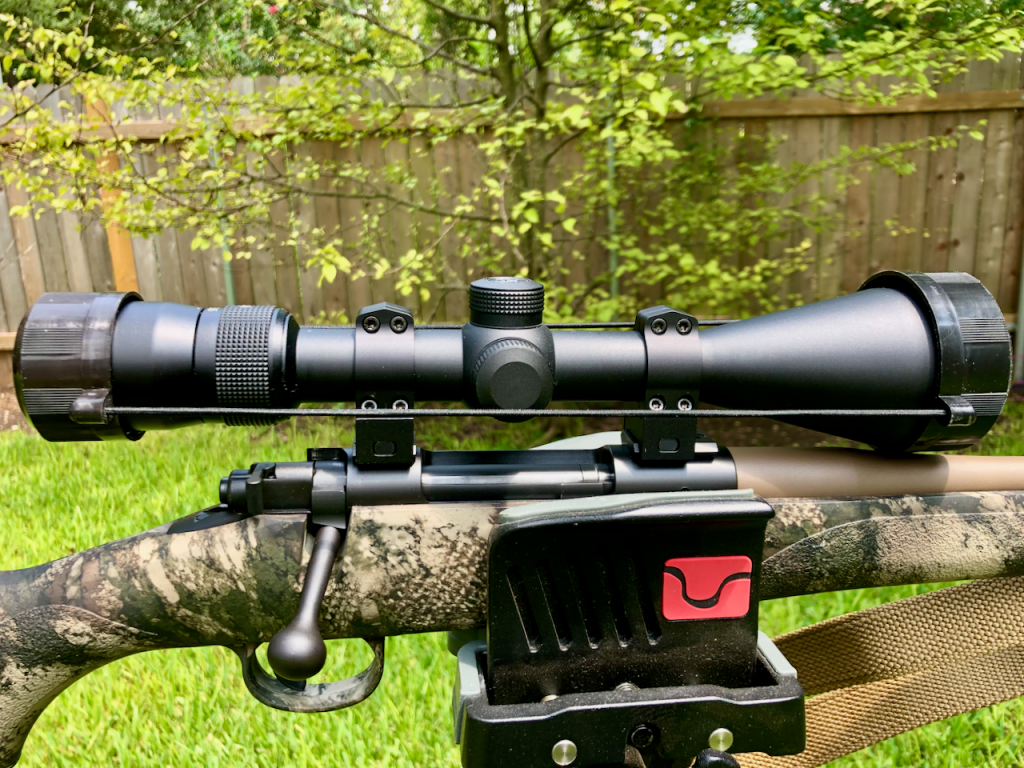
This one’s built tough: the Diamondback 3.5-10×50 has a one-piece aluminum tube and weighs 16.2 ounces. You get a 1-inch main tube diameter, which keeps costs down and compatibility high with tons of mounts.
In the box? Removable lens covers, a lens cloth, the product manual, and a reticle manual. Straightforward stuff—no frills, but everything you need.
- Magnification: 3.5-10x (close to the classic 3-9x, but with a slight edge)
- Objective Lens: 50mm
- Adjustment Range: 65 MOA elevation and windage
- Click Value: 1/4 MOA
- Parallax: Fixed at 100 yards
- Eye Relief: 3.3 inches (forgiving and easy to mount)
- Field of View: 35.8 feet at 100 yards (3.5x) down to 13.5 feet (10x)
- Purging: Argon (a nice upgrade over nitrogen at this price)
- Reticle Options: Dead-Hold BDC or V-Plex (non-illuminated; I went with BDC for my review unit, bought with my own cash)

The Objective Lens Trade-Off: Worth the Extra Bulk?
I found the Vortex Diamondback 3.5-10×50’s magnification range intriguing—it’s basically the go-to 3-9x range for general hunting that newbies often start with, but Vortex ups the ante with a 50mm objective instead of the usual 40mm or 42mm.
Bigger lens means better light gathering. That translates to brighter, clearer images at dawn and dusk, when game loves to show up.
But nothing’s free. A 50mm objective demands taller rings or mounts, and you might need a cheek riser for proper cheek weld. It also adds a couple ounces.
So weigh that against your setup: If your rifle’s for low-light hunts, it’s a win. For ultralight backcountry rigs? Maybe stick to smaller objectives.

From Front to Back: Breaking It Down
So let’s walk the Vortex Diamondback nose to tail.
The 50mm objective we’ve covered—light hog, but bulky.
Next, the 1-inch main tube. Common as dirt, so mounts are everywhere and cheap. Downside? Less room for internals, capping elevation and windage at 65 MOA. That’s fine for most hunting and plinking, but it’s on the skimpy side for maxed-out adjustments.
Turrets: Functional, But Not Fancy. Capped elevation (top) and windage (right), as expected in budget hunting scopes. 1/4 MOA clicks are precise, with audible and tactile feedback.
They wiggle a tad between clicks, screaming “value engineering.” But tracking? Rock solid. It holds zero through bumps and bangs. Good thing they’re capped—adjustments turn easy, maybe too easy.
Bonus: Re-index the zero by popping off the outer dial and realigning. Handy for field tweaks without losing your baseline. Still, they lack that premium snap.
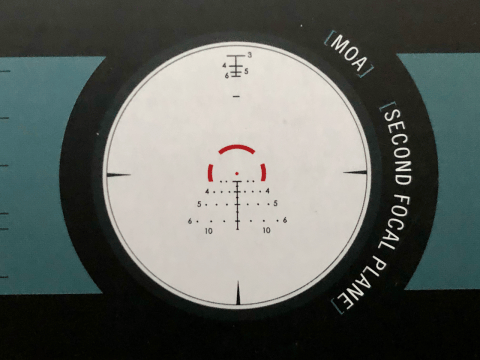
Reticle Choices. Second focal plane, non-illuminated. The Diamondback 3.5-10×50 comes with Dead-Hold BDC (my choice—more info in the full review) for holdover help, or V-Plex for simple crosshairs. No bells like illumination, but clean and effective.
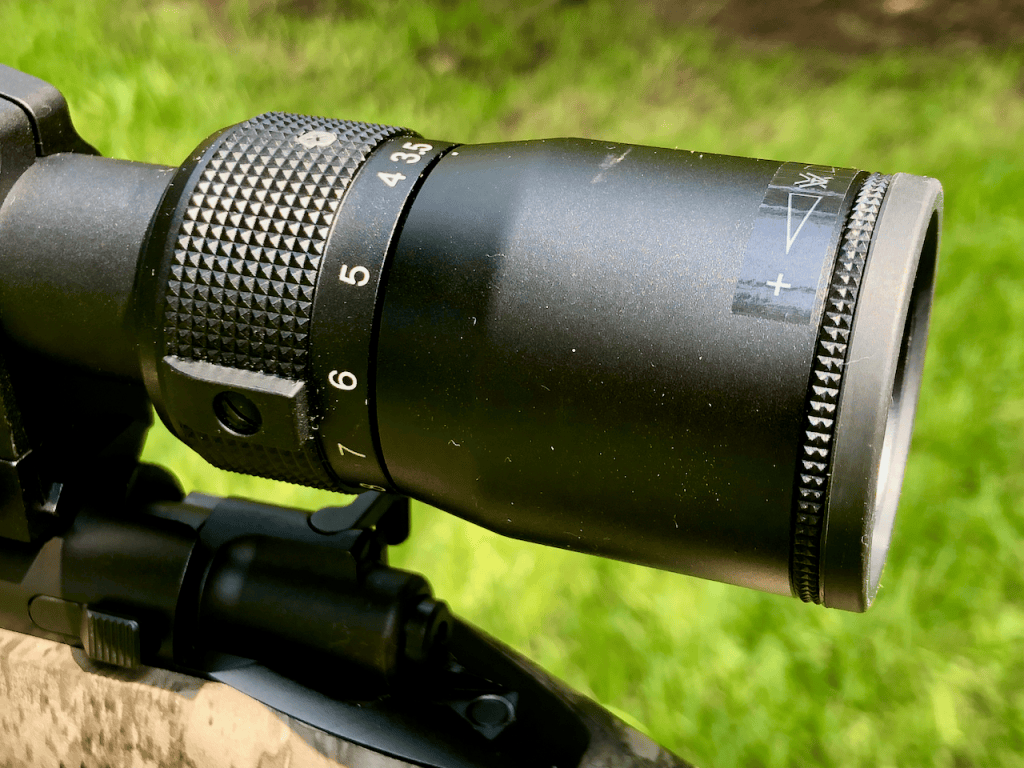
The magnification ring? Smooth operator. Great knurling and a raised index make glove-friendly tweaks a breeze, even in rain.
Finally, at the rear, the ocular lens and focus ring. Vortex calls it “fast focus,” but it’s standard fare. It works fine, though nothing revolutionary.
How It Performs in the Real World
I put the Vortex Diamondback 3.5-10×50 through its paces, and it impressed—especially for the price.
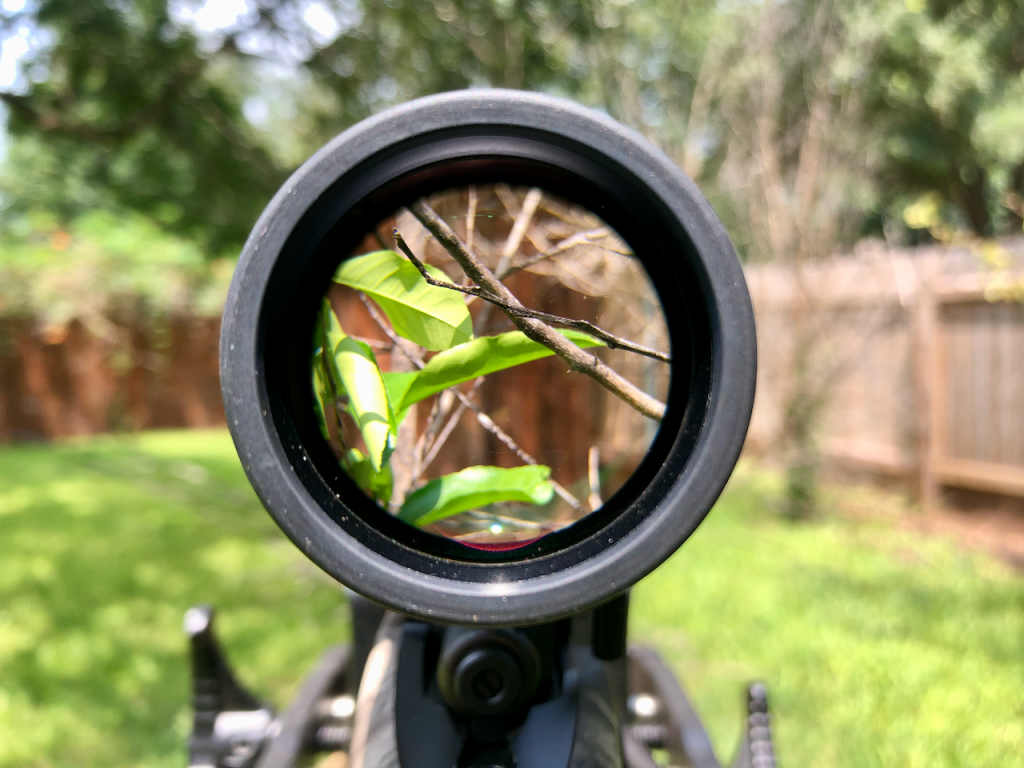
Clarity and Low-Light Magic. Excellent glass, brighter than expected in dim conditions. Credit the 50mm lens. Eye relief is also generous, so mounting is forgiving.
Field of view feels right: Wide at low mag for quick acquisition, tight enough at 10x for precise shots using the BDC reticle.
It’s argon-purged, which beats nitrogen for fog-proofing and corrosion resistance. A pleasant surprise at this tier—I figured it’d be nitrogen.
The Diamondback 3.5-10×50 isn’t perfect, though. Fixed parallax at 100 yards skips adjustability found in pricier long-range optics. And yeah, those turrets feel budget. But for general use? It nails it.
How the Vortex Diamondback Stacks Up
The Vortex Diamondback 3.5-10×50 holds its own or edges out rivals. That 65 MOA adjustment? Low-ish for 1-inch tubes, but beats many under-60 MOA competitors. Argon over nitrogen? Another win.
Great for varmint or deer rifles needing extra light transmission. If you’re on a budget but want quality, this won’t disappoint. New hunters and budget builders won’t be upgrading in a hurry.