
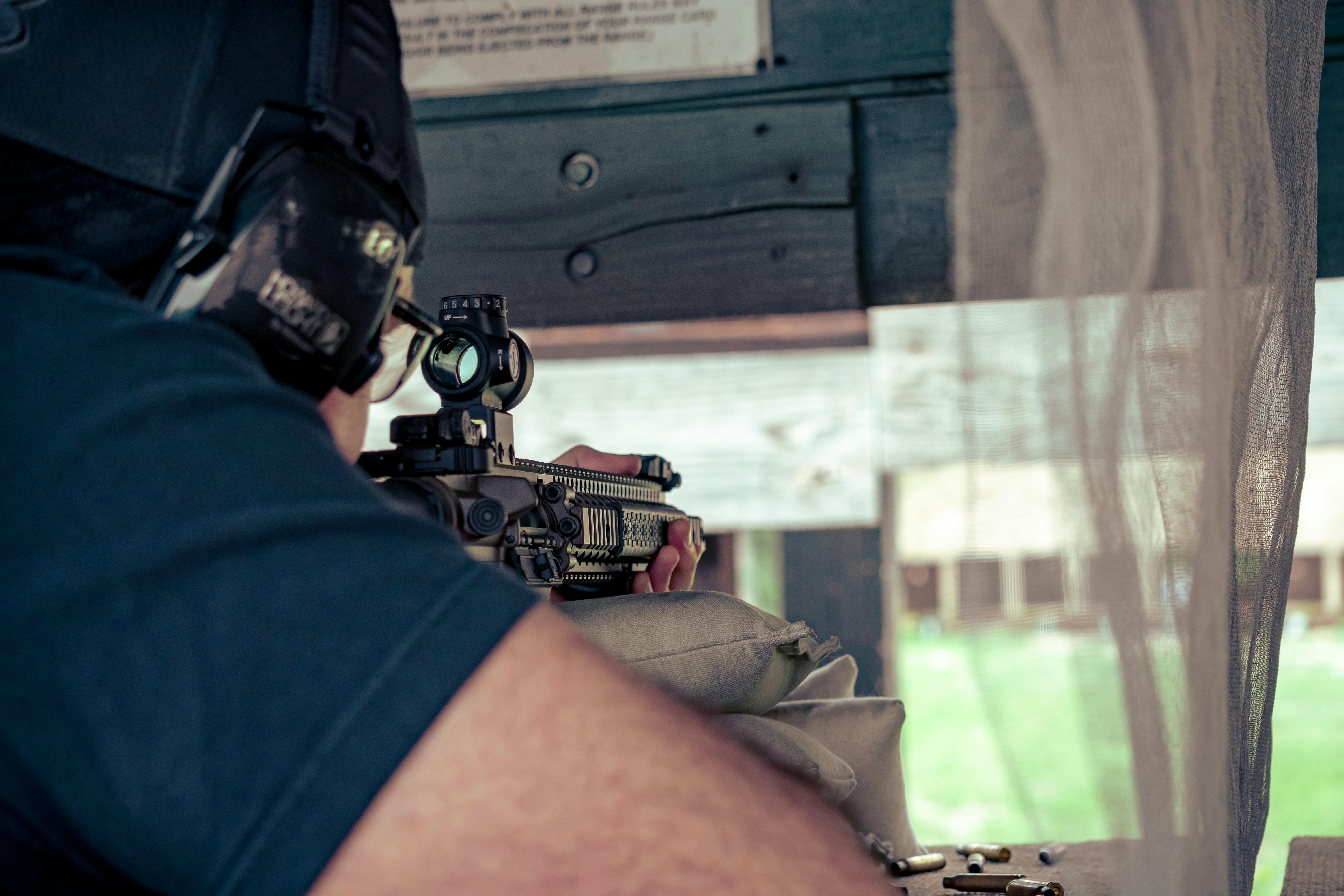
Not long ago, I was at a range with a couple of buddies, checking out some premium Sig P320 variants one of them had just picked up. We were having a blast, behaving like unsupervised guys do, mercilessly busting each other’s chops. I was probably the worst offender, slinging a barrage of jabs about uncommanded discharges and self-kabooming Sig P320s, riffing on the ongoing chatter about the P320’s questionable quality and safety record—a real dumpster fire for Sig Sauer’s consumer-side PR. Anyway, there we were, messing around with the guns, when a breach of etiquette went down. One of the guys raised a P320, pointing it downrange while I was just beyond arm’s reach downrange. I quickly barked at him that I was in front, and he instantly adjusted the muzzle while apologies poured out. The muzzle never lined up on me, but seeing the business end of a pistol—condition unknown—was enough to rattle me. It got me thinking: revisiting safe gun handling practices never hurts.
Let’s Meet For Tacos
I’m pretty sure Tim Reedy from TDR Training came up with “Let’s Meet For Tacos” as a mnemonic to help folks recall the core firearms safety rules. At the very least, he’s the one I heard it from during the Citizens Safety Academy’s Gateway Instructor Development Course he hosted a couple of years back.
The four core safety rules, attributed to Jeff Cooper, started as three but were expanded to four shortly after being established at Gunsite. They are:
- All guns are always loaded.
- Never let the muzzle cover anything you’re not prepared to destroy.
- Keep your finger off the trigger until your sights are on the target.
- Always be sure of your target.

Cooper’s approach was to create a safety framework that’s easy to remember and apply at all times, both on and off the range, making them lifestyle rules.
If you handle firearms frequently, like I do, remembering these four rules is second nature—especially if you’re teaching them regularly. But for folks who don’t shoot often, recalling even these simple rules can be tough. That’s where “Let’s Meet For Tacos” comes in handy.
Here’s how it breaks down:
- Loaded → Let’s
- Muzzle → Meet
- Finger → For
- Target → Tacos
I find mapping the mnemonic to the rules more effort than just memorizing them, but that’s my bias as someone who’s always armed, dry-fires almost daily, and rarely goes a week without live fire. That said, students—especially kids and their parents—find this mnemonic super helpful, which is exactly why I’m sharing it here.
Keep It Simple, Stupid
The KISS principle is never a bad idea, and I’d bet that’s what Cooper was channeling when he codified the Gunsite safety rules. I’m not saying the four rules should be simplified further, but you can boil them down to the two most critical: muzzle and finger.
If you never let the muzzle cover anything you aren’t prepared to destroy, you won’t put a hole in anything you don’t mean to. And if you keep your finger off the trigger, the gun won’t fire. Unless it’s a P320 (sorry, couldn’t resist).
The other two rules aren’t less important—they’re vital. They add layers of redundancy, requiring a comedy of errors for a tragedy to unfold. That’s why they’re part of the framework. But sticking to the muzzle and finger rules eliminates most safety issues right off the bat.
Additional Safety Rules
There are always extra rules to follow, depending on where you are and what you’re doing. For example, a public or private shooting range might run as a cold range, meaning firearms must be unloaded and cleared everywhere except the firing line. Most sanctioned matches operate this way. The core four Gunsite rules always apply, keeping everyone safe, while additional rules prevent trouble like getting disqualified from a match or banned from a range.
In a way, extra rules are more like guidelines or requirements. Some, like those outlined in this Ammo.com post, boost overall safety and promote well-being. Others are just standard operating procedures or good etiquette. Sometimes, they’re requirements imposed by lawyers to minimize liabilities and keep insurance premiums low. I’m not saying you shouldn’t follow them—quite the opposite. Ignore them, and you might find yourself uninvited, possibly with some force.
The thing is, remembering the four core rules is hard enough for some folks. Expecting anyone to memorize a 137-rule manual printed in microscopic font is absurd, even for regulars. As a certified USPSA range officer who shoots and volunteers at matches two to three times a month, I’ll admit I can’t recall every rule all the time. I know the gist, but I still check the rulebook for specifics now and then. That’s why every match starts with a shooters’ meeting to review the key rules. We can apply that practice ourselves: make a solid effort to learn a range or event’s additional requirements on your first visit and brush up on subsequent ones. That way, you avoid being “that guy” who does something safe by the core four but still breaches etiquette—like what happened to me and sparked this post.
5 responses to “Let’s Meet For Tacos”
I almost expected a bawdier version from Tim (or a limerick)!
Larry Mudgett taught it to me as “I’ll Never Keep Bees”.
I’ll sounds like ALL as in All guns are always loaded.
Never let the muzzle cover anything you are not willing to destroy.
Keep your finger off the trigger until your sights are on the target and you intend to shoot.
Be(e) sure of your target.
He requires students to recite the rules verbatim (as he says Jeff Cooper taught them) before every class.
Mike,
I took a 4-day course from Larry Mudgett as well–it was outstanding.
[…] Let’s Meet For Tacos […]
Unc, you are correct in that I coined the mnemonic (or at least I had never heard of it from anyone before).
It’s actually version 2 of a mnemonic for the 4 rules.
Version 1 was: “Leftovers Make Fat Thighs.” :p
Tim
“I know the gist, but I still check the rulebook for specifics now and then.”
That is a great practice. As an attorney, I learned early on that “the first rule is to check the rule.” Sometimes we may not remember the rule correctly, or it may have changed. 🤭 (Although the 4 Rules of Safety haven’t changed in my lifetime).