

Industry news isn’t my usual beat. A reporter? Not even close. I’d rather write up a class or a match than a press release. When the news hands me an opinion, though, I’ll offer it. This one hits close to home, because I own two of the three revolvers this post is about. One of them is the Ruger LCRx in 22 LR I wrote up in 2020, and the other is a GP100 Match Champion I’ve never gotten around to writing about. The third, the SP101, I’ve only ever handled across a gun store counter.
So here’s what Ruger said, why I’m not surprised, which loss actually matters, and what I’d tell a friend who wants one of these revolvers now.
What Ruger Said, and What It Didn’t
On October 13, 2026, Ruger sent its distributors a memo. Four product families stopped the same day, and Ruger canceled the open distributor orders for them: the LCR, the SP101, the GP100 and the Bearcat. Fifteen more lines, including every other centerfire revolver Ruger makes, get a final production run through the end of 2026 and then go on allocation until the last ones ship. Ruger confirmed the memo to NRA’s American Rifleman the next day.
| Status | Lines |
|---|---|
| Halted October 13 | LCR (including the LCRx), SP101, GP100 (including the Match Champion), Bearcat |
| Final run, ends with 2026 | Redhawk, Super Redhawk, Blackhawk, Super Blackhawk, Single-Six and the rest of the Single-Series, Vaquero, SR1911, LC Carbine, LC Charger, PC Carbine, PC Charger, No. 1, 77-Series, Hawkeye, Ruger Precision Rifle |
| Continuing into 2027 | Wrangler and Super Wrangler (the only revolvers left), LCP, RXM, MAX-9, Security-380, Security-9, Ruger-5.7, Mark IV, 22 Charger, American Rifle, American Rimfire, Ruger Precision Rimfire, Harrier, 10/22, Mini-14 |
Ruger’s spokesperson, Abbey Clary, gave the reasons as “consumer demand, evolving market preferences, manufacturing complexity and the long-term profitability of each product family.” The stated goal is to put resources into the products people buy most while freeing up capacity for new products and modernized manufacturing. All of that falls under the “Ruger 2030” plan the company has been talking up since Todd Seyfert took over as CEO.
Is the Ruger LCR Discontinued or Just Paused?
Ruger’s exact words were that this “does not necessarily mean these product families are permanently discontinued.” Some names might come back in new forms. There’s precedent, and Ruger cited it in the memo: it paused the 77-Series rifles, the 22 Charger and the SR1911 before, and all three came back. Then again, Ruger hasn’t announced anything specific or given a date.
Here’s what I’d point out, though. As I write this in late October 2026, the LCR, LCRx, SP101 and GP100 pages on ruger.com already return “page not found,” and the site’s revolver menu lists eight families, none of them these. Ruger canceled the distributor orders, so what’s on dealer shelves and in distributor warehouses is what’s left. Whatever Ruger calls it, the LCR is gone for anyone who goes looking for one in the spring of 2027. Ruger has also said nothing yet about parts or service for the ones already out there, so I’d assume the usual: it’ll fix what it sold, for a while.
Why I’m Not Surprised
My first instinct, when I heard Ruger had discontinued the LCR, was to blame the market. Gun sales have cooled since the pandemic years, and every election cycle brings a wave of ban talk that pulls demand forward and then leaves a hole behind it. Tidy story? Sure. True? Not according to the numbers, so I’ll give you the numbers instead.
Revolvers Are a Small Slice, and Ruger Is Doing Fine
The ATF’s annual manufacturing report (AFMER) for 2024, the latest final one, counts 4,025,829 pistols made in the United States against 639,742 revolvers. Call it one revolver for every seven handguns. Nearly half of those revolvers, 309,702, were rimfire, and the biggest revolver maker in the country was Heritage, which mostly makes inexpensive single-action 22s. Smith & Wesson came second and Ruger third, and Ruger’s count includes the Wranglers, the only revolvers it’s keeping. So the double-action centerfire revolver, the thing the LCR, SP101 and GP100 are, is a slice of a slice.
That slice shrank with everything else after 2021, when U.S. makers built almost 1.2 million revolvers (RocketFFL keeps a year-by-year table of the ATF data). By 2024 that was down 45 percent, about the same drop as pistols. In other words, revolvers aren’t collapsing on their own. They’re a stable, small niche riding the same wave as the rest of the industry.
What about Ruger? Its second-quarter 2026 report showed net sales up 19 percent from a year earlier, and sell-through from distributors to dealers up 19 percent against a 5 percent rise in adjusted background checks. New products made up 29 percent of firearm sales. That’s not a company cutting lines because it’s in trouble. That’s a company with a new CEO pruning the catalog down to what sells and what’s cheap to make, and a double-action revolver is neither. Fitting a cylinder, timing a hand and tuning a trigger take skilled labor that a striker-fired pistol like the RXM doesn’t.
What I See at the Range
The numbers match what I see. Revolver division at my local matches is empty most months. Every so often one or two folks shoot it for a change of pace, and that’s about it. At the 2025 USPSA Factory Gun Nationals, revolver drew 22 entries out of 532, against 412 in Carry Optics. I rarely see a revolver-specific class on a local schedule. The two national revolver events I can think of are the Pat Rogers Memorial Revolver Round-Up at Gunsite, which caps at 100 students, and Revolver Fest in South Carolina, which ran in October 2026 and sold out. Colt, Smith & Wesson, Taurus, Diamondback, Manurhin and Uberti were on the exhibitor list there. Ruger wasn’t. Gunsite even lists a Ruger LCR among the rental guns for its Round-Up, a discontinued gun by the time class starts.
I think of revolvers the way I think of cars with manual transmissions. They’re still around, they still work, and the people who own them love them. Dying? No. Shrinking? Every year, by a few, and I’m one of the few left. I’ve had wheel guns on the brain for years, and I still think they’re viable for self defense. I just don’t kid myself about the size of the club.
The Ruger LCR Is the Loss That Hurts
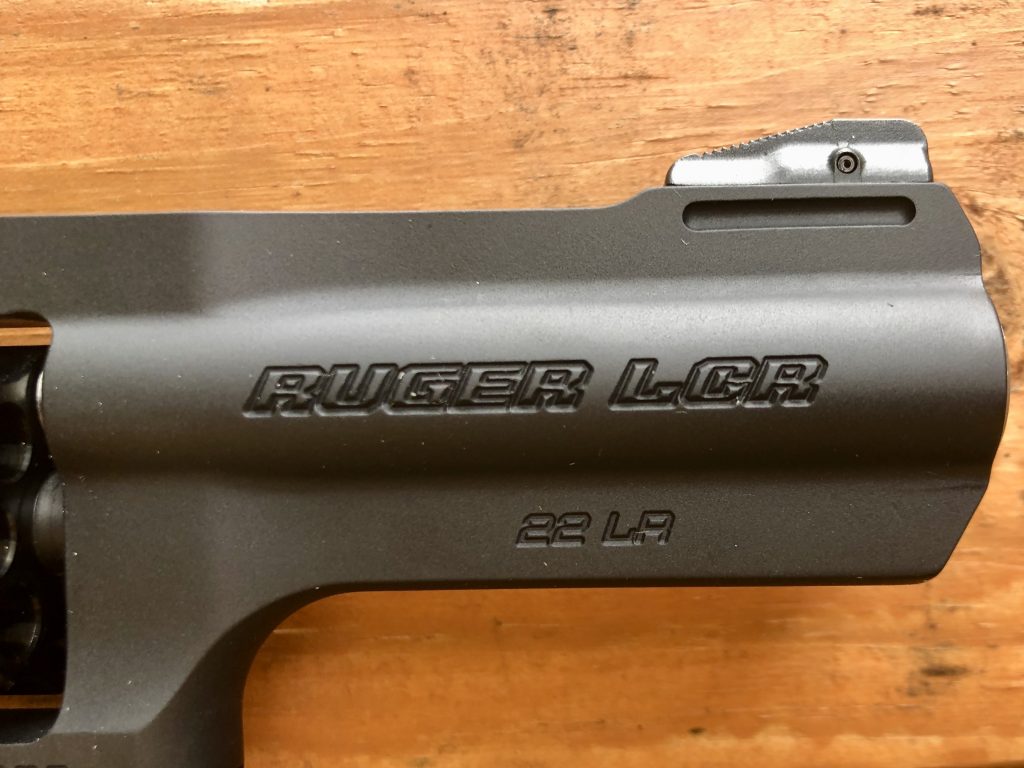
Of the three, the LCR is the one I’d undo if I could, and not because I own one. It’s because of who the 22 LR version served.
Where the LCR 22 LR Fit
I’ve written before about 22 LR as a defensive cartridge. The short version: it’s suboptimal next to 9mm, and for some people it’s the only cartridge they can practice with and carry. Arthritis, a wrist injury, age, a disability. My friend and mentor John Daub landed on an LCR in 22 LR after a wrist injury made his P365 XL painful to train with, and he’s still a source of knowledge I lean on. Now that Ruger has discontinued the LCR, the next shooter in his shoes has a harder search. For that shooter, a double-action revolver beats a 22 LR semi-auto for two reasons. Hands that struggle with recoil struggle with racking a slide too, and a revolver never asks for it. Rimfire ammo also fails to fire more often than centerfire, and in a revolver the fix is to press the trigger again instead of tap, rack, bang.
The LCR did that job at a price regular people could reach, in a package light enough to carry all day, with a double-action trigger that was better out of the box than anything else in its price class. Eight rounds, under 15 ounces, somewhere in the mid $500s on the street. Nothing else checks all of those boxes.
What I’d Look at Instead of the LCR
Here’s the field of double-action 22 LR revolvers still in production, as best I can tell, with the LCR for comparison. I’ve shot exactly one gun on this list, the Ruger, so the rest is spec sheets and other people’s range time. Prices are the makers’ list prices unless noted, and they’ll have moved by the time you read this.
| Revolver | Rounds | Weight | Barrel | List price |
|---|---|---|---|---|
| Ruger LCR 22 LR (while stock lasts) | 8 | 14.9 oz | 1.87 in | about $540–$580 street |
| Ruger LCRx 22 LR, 3 in (while stock lasts) | 8 | 17.3 oz | 3 in | about $560–$620 street |
| Taurus 942 | 8 | 23.6 oz | 2 or 3 in | $455–$470 |
| Smith & Wesson 43 C | 8 | 11.5 oz | 1.875 in | $799 |
| Smith & Wesson 317 Kit Gun | 8 | 11.8 oz | 3 in | $889 |
| Smith & Wesson 63 | 8 | 24.8 oz | 3 in | $909 |
| Smith & Wesson 617 | 10 | 40 oz | 4 in | $1,019 |
| Colt King Cobra Target 22 LR, 2 in | 10 | 28.9 oz | 2 in | $1,119 |
| Colt King Cobra Target 22 LR, 3 in | 10 | 31 oz | 3 in | $1,119 |
| Colt King Cobra Target 22 LR (also 6 and 8 in) | 10 | 33.8 oz | 4.25 in | $1,119 |
The Taurus 942
The Taurus 942 is the only one that undercuts the LCR on price, and on paper it’s the obvious stand-in. I’m not current on its track record, so I’ll pass along what I’ve read. RevolverGuy’s 2020 test got about 70 percent ignition on first strike across 350 rounds of mixed ammo, with CCI Stinger the only load that ran clean. Other reviews report no trouble at all. That spread is what I’d expect from a budget gun with uneven quality control, and ammo choice clearly matters. If you go this route, buy a few boxes of the ammo you plan to carry and run a couple hundred rounds through it before you trust it. Then again, that’s good advice for any rimfire carry gun.
That test is also six years old, and word is Taurus has been stepping up its quality control since. The evidence I can point to is circumstantial, but it’s recent. Karl Rehn, my other mentor and the owner of KR Training, where I’m on staff as an assistant instructor, put a Taurus G3 pistol through a 1,000-round torture test in 2023 and shot a police qualification course with it along the way.
Taurus signed my friend and fellow instructor Matthew Little of Greybeard Actual as a sponsored shooter and brand ambassador. And Caleb Giddings, who shoots revolver division and teaches at both of the revolver events I mentioned, runs marketing for Taurus USA. Does any of that make the 942 a good alternative on its own? No. It does mean the company building it is paying closer attention than it was in 2020, and the people lending it their names aren’t the kind to put them on junk.
Where the 942 Falls Short of the LCR
None of that fixes the spec sheet, though, and two things on it matter for the shooter I have in mind. The grip is the small snub-nose kind that leaves the pinky dangling, and the irons are as atrocious as the LCR’s. Decreased grip strength is the very thing that makes a 22 LR revolver a good carry option, and a grip the whole hand can hold is the LCRx’s answer to it. The 942 doesn’t have that answer, and its 3-inch version doesn’t fix the grip either.
In fairness, John runs his snub LCR with a Hogue boot grip and no pinky rest. He picked it to conceal in a pocket and calls the trade acceptable on a 22. For him, comfort on the body came first. For the shooter I keep describing, the grip comes first, and which of those matters more is a call only you can make.

The Smith & Wesson J-Frames
Smith & Wesson is where I’d look first. I see more Smiths than any other revolver in classes and at matches, and my own Model 66 passed the 500-round reliability floor I hold a carry gun to. That’s not proof a 22 LR J-frame will do the same, but it’s the best evidence I have.
The 317 Kit Gun and the Model 63 are the closest matches to my Ruger LCRx I can find. Both are J-frames with 3-inch barrels and eight-round cylinders, and both wear a grip the pinky can hang on to. Both have better sights than the Ruger: a HI-VIZ fiber optic front over a blacked-out, serrated rear, which in my opinion, and in the opinion of most of my peers, is the best iron sight setup there is. And both cost more than the gun they’d replace.
The difference between them is weight. The 317 is an AirLite at 11.8 ounces, lighter than the LCRx. The 63 is the same gun in stainless steel at 24.8 ounces, heavier than the LCRx by about half a pound. The steel gun is nicer to shoot, but for carry I think the lighter 317 is the better of the two. It’s the one I’d steer folks toward, and the one I’m most likely to buy and test. The hang-up is the price: $889 list, roughly $300 over what an LCRx sells for.
The 43 C
The 43 C looks like the closer match to the snub LCR on paper. It’s an enclosed-hammer, double-action-only J-frame, eight rounds, 11.5 ounces, $799. Then I looked at it harder. It’s a short-barreled gun with the same two problems as the 942: a stubby grip with nowhere for the pinky to go, and irons that amount to a fixed front over a trench in the top strap. The LCRx’s grip gives the whole hand something to hold, and that’s the point for the shooter I described above. So I wouldn’t steer folks toward the 43 C. One more data point: John already owned a 43 C when he went looking, and the LCR won on price and word of mouth. Sample size of one, sure. But it’s a one I listen to, and it points the same way.
The Short-Barreled Colts
Colt builds the King Cobra Target in 22 LR with 2-, 3-, 4.25-, 6- and 8-inch barrels, all at the same $1,119 list price, and the 2- and 3-inch guns are the ones that line up with the LCR on size. Ten rounds instead of eight, all stainless, at about twice the LCR’s weight and price. I own a King Cobra in 357 Magnum and like it, but I wouldn’t steer folks this way. Modern Colts don’t have the reputation the old ones did. I think the quality control has improved since CZ bought the company, and even so, Smith & Wesson is the likelier bet, for the reasons above.
The Full-Size 22s
The 617 and the longer King Cobra Targets intrigue me more than they should. Ten rounds, real sights, triggers you can learn on. But they’re full-size, K-frame-and-up guns at 34 to 40 ounces, with price tags north of a grand. They’re trainers and plinkers, not carry guns for someone who picked 22 LR because recoil hurts. If I ever buy a full-size 22 LR revolver, it’ll be the 617, since it’s a K-frame and so is the Model 66 I already shoot. Neither gun is the LCR’s replacement, though.
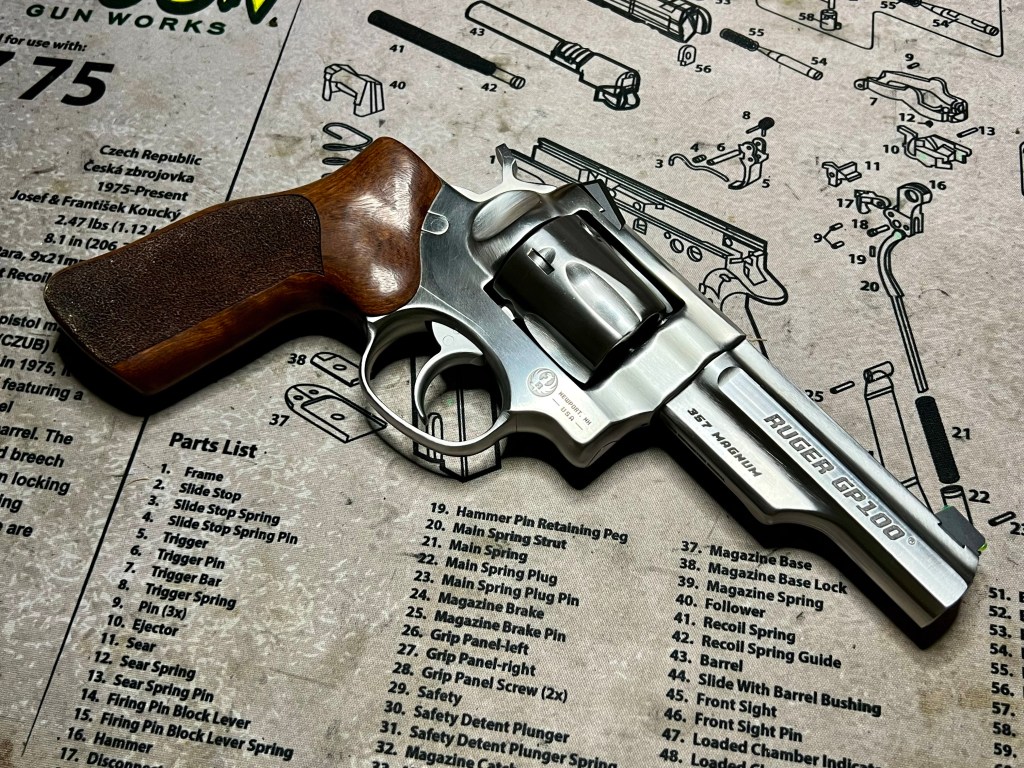
The Ruger GP100 and the Match Champion
I own a GP100 Match Champion, and I’ve been meaning to write it up for a while. It deserves its own post, so I won’t give much away here. What I’ll say is that it has always struck me as the budget way into a serious 357 Magnum: a 4.2-inch half-lug gun with a decent factory action and Hogue hardwood grips, for a few hundred dollars less than the Smith & Wesson it competes with.
What I Saw in the Revolver Block
Two things from the field are worth mentioning. First, when I attended the Rangemaster Master Instructor Development Course, one student ran a GP100 Match Champion through the revolver block. It was one of the revolvers that stopped working partway through and needed some impromptu work on the line to get running again. That’s not a knock on Ruger in particular. More revolvers went down in that one afternoon than semi-autos did in the rest of the three-day course, and a wheel gun that’s run hard needs a bench and tools in a way a Glock doesn’t. Second, in every revolver block I’ve been part of, Rugers have been a minority. The Smith & Wesson K-frames and J-frames outnumber them several to one. If I were Ruger looking at that bay, I’d see a product a few enthusiasts love that most buyers of the category walk right past.
The Match Champion was a variant of the GP100, so its odds of coming back are lower than the plain gun’s. Expect the used market to do what it always does with a discontinued gun. Prices go up for a year, then settle once everyone remembers there are a lot of them out there.
The Ruger SP101
I can’t tell you much about the SP101 from experience. I’ve handled a few at gun counters while shopping, and I’ve never fired one. What I can say is where it sat: a small-frame 357 Magnum snub built like a bank vault, for people who wanted something sturdier than an airweight J-frame and didn’t mind the ounces. If that’s you, the Smith & Wesson Model 640, which I do own and carry, Kimber’s K6s and Colt’s King Cobra Carry all live on that shelf. None of them is cheap, and the SP101 was the cheapest of the bunch. Like the LCR, the Ruger SP101 is discontinued in every way that matters to a buyer, even if the name comes back someday.
If You Want One, Buy It Now. Or Don’t.
If a buddy asked me what to do about the news, here’s what I’d say:
- If you need a 22 LR carry revolver, buy an LCR now. Dealer stock is all there is, and a $550 gun that does this job is not coming back soon. Check it over in the store, since there’s no more where it came from.
- If you want a GP100 or SP101 because you like them, don’t panic. Ruger made these for decades, and the used market is deep. Wait out the collector bump.
- If you own one, nothing changes today. Keep it clean, keep an eye on timing, and find a revolver smith you trust before you need one. That was true before the memo too.
- If you were going to buy a Blackhawk, Redhawk or SR1911, you have until the end of 2026. After that, it’s allocation and then nothing.
Closing Thoughts
I’ll miss seeing new Ruger double-actions in the case, and I’ll be curious whether the “not necessarily permanent” line turns into a new GP100 in a couple of years. I’d bet on a slimmed-down return of one or two names, and I wouldn’t bet on the LCR being one of them. Light, cheap and hand-fitted is a hard combination to make money on.
Mostly, though, I’m thinking about the folks who can’t shoot anything bigger than a 22. With the Ruger LCR discontinued, they have one fewer good option, and the options left cost more. Smith & Wesson, Taurus, if you’re listening: there’s a $500 hole in the market, and the people who need it filled aren’t the ones who make noise on the internet. My LCRx will keep coming out to introduce folks to revolvers, and to let someone who may need a 22 LR for self defense try one before they buy. The GP100 Match Champion stays in the safe, and the write-up it deserves is a topic for another post.


I love revolvers. Carry one primarily. And you know I’m not a Fudd.
I remember 20 years ago, you couldn’t give a revolver away. They were “old men guns” and “outdated”, said all the DudeWhere’sMyGlock guys.
But in the last 7 or 8 years, they have made something of a comeback. Colt continues to expand their revolver line every year. S&W does the same with much greeted enthusiasm (they just announced the new classic M1917 and M22 .45s). Quality control issues from gun companies notwithstanding (and it’s not unique to revolvers or even firearms in general).
I would not be surprised of Ruger rereleases a new Security Six classic and Service Six classic in the future.
Classic revolvers have character, a long story and they simple weapons that still work.