

I don’t write about politics, and over the years I’ve mostly quit arguing about them on social media. This blog has one job: grow the gun community and cultivate gun culture, and encourage the competence and proficiency that make all of us safer. Arguing politics does none of that, and explaining further would only start the argument. So this isn’t a politics post. It’s a buying post, and the midterms are the reason it exists.
On November 3, 2026, Democrats took the House and the Senate, won the Texas governor’s race, and flipped enough statehouses to matter. Wisconsin, Michigan, Minnesota and Nevada now have one-party control, Georgia’s House flipped, and the Texas House looked likely to as of November 4. Predictably, my phone lit up: should I buy now, before the ammo shortage? I get it. Every shift in control brings the same question, and the people asking aren’t wrong to ask. The honest answer takes a few minutes, so grab a coffee.
What the Background Checks Say About Panic Buying
The best proxy we have for gun sales is the FBI’s background check data, the NICS numbers. They’re not a sales count. Permit checks and rechecks are mixed in, and private sales mostly aren’t. Even so, handgun checks track retail demand well enough to spot a run when one happens. Here’s the November after each election against the November before it, with the two months after for good measure.
| Election | Outcome | November | December | January |
|---|---|---|---|---|
| 2008 | Obama wins | +95% | +45% | +41% |
| 2012 | Obama re-elected, then Sandy Hook on December 14 | +48% | +71% | +119% |
| 2016 | Trump wins | +12% | -30% | -29% |
| 2018 midterm | Democrats take the House | -14% | -9% | +3% |
| 2020 | Biden wins, in a pandemic | +53% | +24% | +75% |
| 2022 midterm | Democrats hold the Senate | +1% | -2% | +7% |
See the pattern? The runs follow a Democrat winning the White House, a mass shooting with a federal ban on the table, or a pandemic. Midterms? Nothing. Two midterms where Democrats gained ground, 2018 and 2022, and the checks went flat or down. Panic buying needs a credible threat to federal law, and a midterm doesn’t supply one. One footnote: the 2016 drops look worse than they were, since they’re measured against the spike after San Bernardino in late 2015.
One more number. The National Shooting Sports Foundation’s adjusted October 2026 figure, the industry’s cleaner cut of the same data, came in at 1.4 million checks, up 7.9% from October 2025 and the best October since 2021. Translation? A good share of the folks who were going to buy ahead of this election already did. The shelves took that hit in October, and they held.
What Can Change Before 2029
Here’s the part the panicked texts skip. Any federal gun bill needs President Trump’s signature until January 20, 2029, and a Democratic House and Senate are nowhere near the two-thirds of both chambers it takes to override him. He posted a red VETO cap on election night and told Fox News he’d veto anything “insane.” He also told the New York Times he’d “work something out” with Democrats, and he called the veto a negotiating tool. Remember, the bump stock ban was his. The ATF answers to him too. So the likeliest outcome is that the federal gun law you live under today is the one you’ll live under through 2028, and the thing to watch isn’t a bill passing. It’s a deal forming, and a president at a second-term low in the polls has reasons to make one.
Does that mean nothing changes? No. Hearings, bills with scary names, press conferences, all of it is coming, and most of it is noise until 2029. What happens after that depends on the 2028 election, and I’ll worry about 2028 in 2028.
The States Are Where to Look
State law is a different animal, and that’s where the real risk lives. Virginia is the template. Democrats took full control of its state government in November 2025. Virginia’s checks jumped into the top five states that month while the national number fell 7%, and then the real rush came in the spring of 2026 as the assault-firearm ban moved through Richmond. Virginia State Police ran 72,956 checks in May 2026, double the 35,571 from May 2025, ahead of the July 1 effective date. The shelves emptied when the bill advanced, not on election night.
Who should pay attention now? Readers in Wisconsin, Michigan, Minnesota and Nevada, where one party holds the governor’s office and both chambers. Georgia, where the House flipped. And here in Texas, where Governor-elect Hinojosa will have a House that leans her way and a Senate that doesn’t, which means most bills die in the Senate. The Texas Legislature convenes on January 12, 2027, and the others gavel in around the same time. If you live in one of those states and you’ve been putting off an AR, standard-capacity magazines or a suppressor, the Virginia lesson is simple. The window closes when a bill moves, not when the results come in. Decide now, buy calmly, and don’t let the panic make the decision for you.
The NFA Window
Which brings me to suppressors. On October 28 I wrote about what the ATF’s NFA changes mean for a suppressor owner: the tax stamp is $0, the ATF quit enforcing registration on October 9, and I’m keeping my two cans registered and not buying a third. That post listed the three ways enforcement comes back. Congress imposes a tax, the injunction gets overturned, or the Department of Justice rescinds its guidance.
The election changed the odds on one of those. A Democratic Congress can pass a bill that restores the tax, but it needs a signature he says he won’t give, and the DOJ guidance belongs to this administration. The court path is the wild card, and it was before the election too. So the $0 window runs at least through January 2029 unless a court or a deal closes it, and what happens after that is the next election’s problem. My advice stands. If you want a can, buy it, file the $0 Form 4, and let the registry be your hedge. A registered can stays legal no matter who signs what next. An unregistered one is a bet. Your can, your bet.
Is an Ammo Shortage Coming?
Not today. I check the trackers and the retailers the way some folks check the weather, and as of early November 2026 there is no ammo shortage. Most calibers are on the shelf, primers are back for those of us who roll our own, and the production capacity the industry added after 2020 is still running. What there is, is price. The Kinetic Group, which makes Federal, CCI and Remington, raised prices on October 1, 2025 and again on April 1, 2026, and the other makers followed. Nobody is cutting prices.
Could a panic create an ammo shortage anyway? Sure. Panic buying is the one thing that reliably empties shelves on its own, and when it does, 9mm, 5.56 and 22 LR go first, same as 2020. Those outages tend to be short now because the supply behind them is deeper than it was. Short isn’t zero, though, and the buddy who waits until the shelf is bare to buy his first case is the buddy who pays the panic price.
Full disclosure, because the readership deserves it. I called an ammo shortage in July 2024 that never showed up. The vendors I trust were seeing a demand spike, I passed it along, and ten months later I was writing about a buyer’s market instead. I’d rather not go two for two. So this time I’m not predicting a damn thing. I’m telling you what the data says. The data says the shelves are fine right now, and the risk is a stampede, not a supply problem.
Take Inventory Before You Panic Buy
So what do you do with all that? Not run to the store. Open the safe and the ammo cabinet and take an honest inventory. Not a vague look, y’all. A count. Then rank the gaps in this order, which is close to the order I laid out during the 2020 ammo shortage.
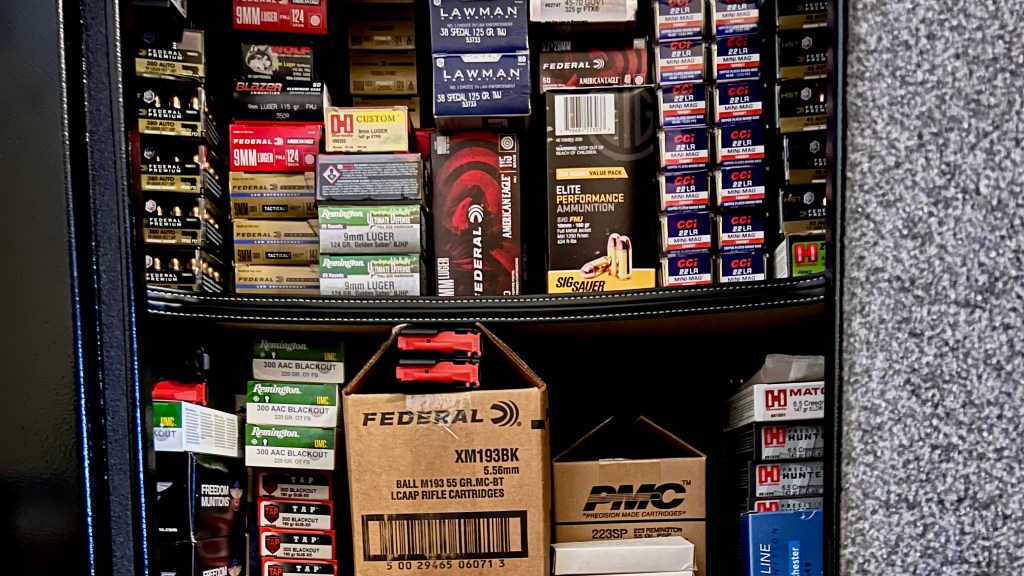
- Defensive tools. Do you have a reliable carry gun that fits your hand, with a holster you actually wear? Is the home-defense gun in working order, with a light and sights you can use in the dark? If yes, you don’t need another gun because of an election. If no, that’s your first purchase, and Qualities of a Defensive Handgun and What Gun Should I Get First will keep you from buying the wrong one in a hurry.
- Defensive ammo. Enough quality defensive rounds to fill every magazine or speedloader for each defensive gun, plus a spare set. My own goal runs a good deal deeper than that, but filled magazines are the floor.
- Magazines. Count them, and read how many magazines are enough if the count surprises you. Standard-capacity magazines are the first thing a state bill goes after and the first thing to vanish when it does.
- Training and practice ammo. This is the one most folks skip. Figure out what you’ll shoot in the next three to six months, meaning classes, matches and a monthly range day, and make sure it’s on the shelf. Ammo you don’t shoot doesn’t make you better.
Buy the Gap, Not the Store
If the inventory says you’re set, be set. If it says you’re short on one thing, fix that one thing. And do it within your means. I said it in October 2024 and it still holds: don’t take on debt to prepare for a maybe. The financial risk of a panic buy is real, and it lands on your household long after the panic blows over.
Then the part I care about most. Don’t blow the whole budget on guns and ammo. Set some of it aside for a class, and for the range time to practice what the class taught you, especially if anything on that list is new to you. A new carry gun you haven’t trained with is a new problem, not a solution. Less than 1% of gun owners ever train beyond the legal minimum. Be the exception. The skill is what keeps you and the people around you safe, which is the reason this blog exists and the main reason I teach.
What I’m Doing About It
Nothing new. That’s not me being smug. It’s the inventory talking. I budget every year for training and for ammunition, and the ammunition line includes keeping several months of practice and match ammo on hand and restocking it as I shoot it. My defensive needs are met. The carry gun, the home-defense gun and the ammo for both are where I want them. So the election has me reviewing my priorities and my budget, same as I’d do in any November, and unless one of those changes, which I don’t expect, I’m not doing anything I wasn’t already doing.
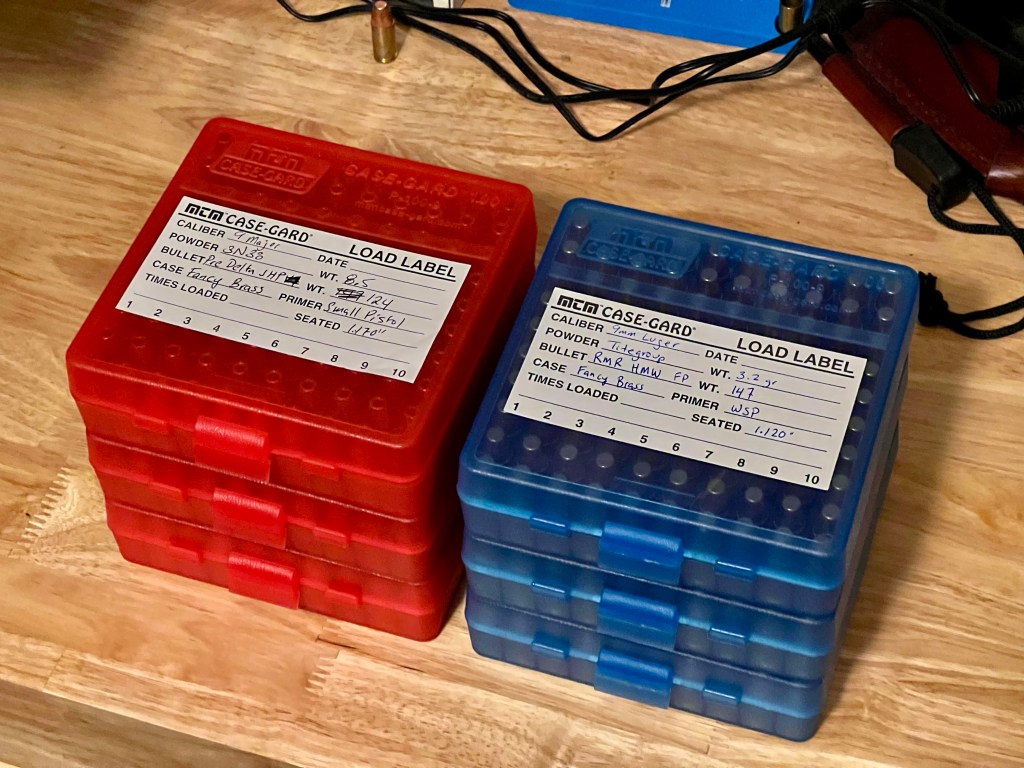
If they weren’t in place? Then I’d do exactly what I just told you. Shore up the defensive tools first, then the defensive ammo, then the practice supply, inside the budget and without the financial risk that comes with a panic buy. Guns and ammo bought in a hurry at a panic price are the most expensive kind.
Closing Thoughts
Elections come every two years, and the question comes with them. The answer doesn’t change much. The data says relax, the states say pay attention, and the inventory says what to buy, if anything. Check it, fix what’s real, keep money back for a class, and let the folks stampeding the counter stampede without you. Your inventory, your budget, your call.


Comments